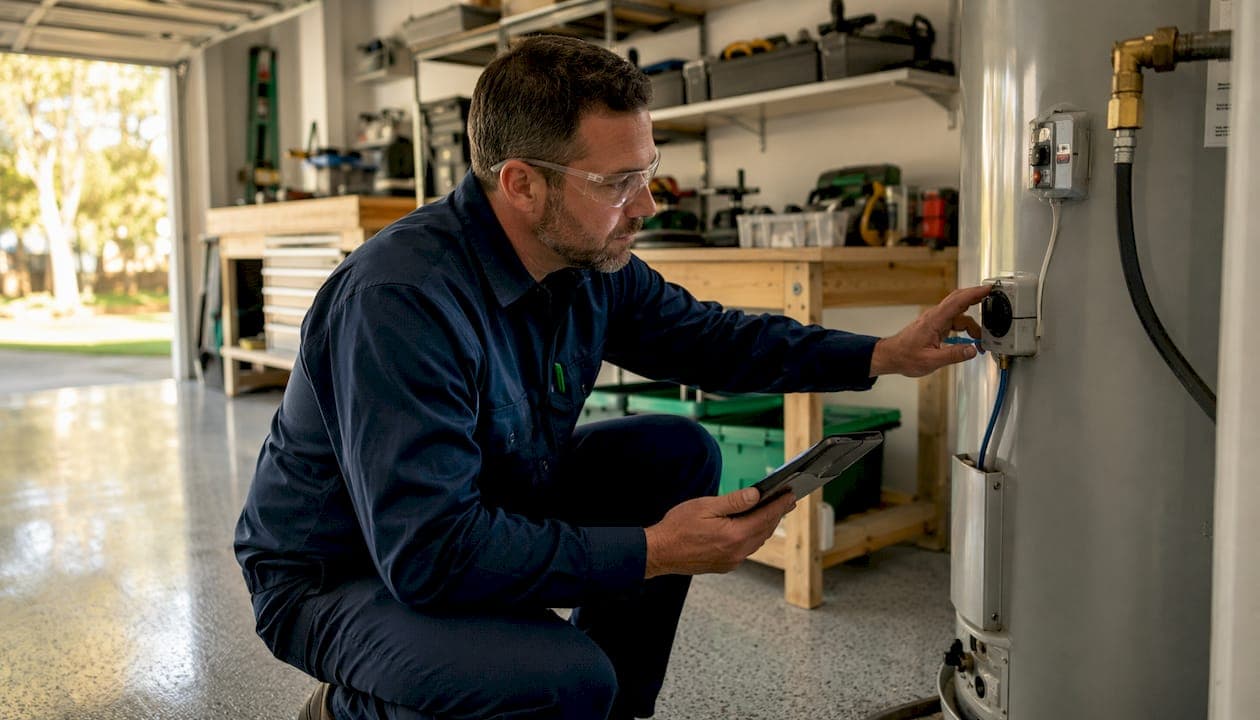
Set your thermostat to 120°F (or between 115–120°F for homes with young children) as recommended by the Portland Water Bureau, flush the tank regularly (every 6 months in hard-water areas, annually in others), and test the pressure-relief valve annually. Those three steps cover the core of water heater maintenance for most homes. If you manage two or more properties, add this to your maintenance software right now: log the last service date for each unit, schedule the next flush, and note the unit type so you apply the right procedure. Tank units need sediment flushing; tankless units need descaling. The quick-start tasks below take under 15 minutes per property.
- Check for visible leaks around the base and supply connections
- Confirm thermostat setting is at 120°F (or between 115–120°F for homes with young children)
- Test the T&P valve by lifting the lever briefly and confirming water flows, then stops
- Note the last service date in Mypropertycommandcenter and set a recurrence reminder
- Schedule the next flush or descaling based on unit type and local water hardness
Pro Tip: Hard-water areas (much of the Southwest, Midwest, and Mountain West) should run on a 6-month cadence. If you're unsure about your water quality, your municipal water report will tell you.
Table of Contents
- Your water heater maintenance schedule: monthly to annual
- Tank vs. tankless: the maintenance differences that matter
- How to flush a tank water heater safely
- Signs your water heater needs service or replacement
- Thermostat settings, Legionella risk, and anti-scald solutions
- When to call a licensed plumber and what to ask
- How to automate water-heater care across multiple properties
- Key Takeaways
- The case for treating water heaters like a scheduled asset, not a forgotten appliance
- Mypropertycommandcenter keeps your water heater schedule running itself
- Useful sources for owners and technicians
Your water heater maintenance schedule: monthly to annual
A consistent schedule is the single best way to avoid emergency repairs. The table below maps tasks to frequency, time, and rough cost.
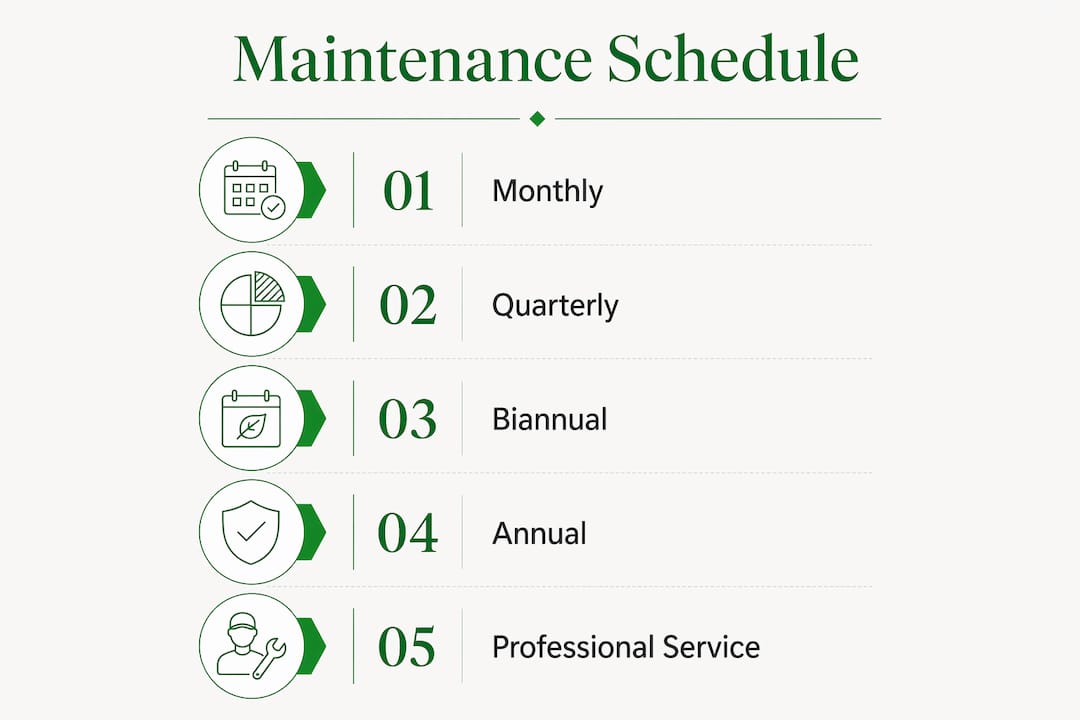
| Frequency | Task | Time | DIY Cost | Pro Cost |
|---|---|---|---|---|
| Monthly | Visual leak check, corrosion scan | under 15 min | — | N/A |
| Monthly | Check area around unit for moisture | 5 min | — | N/A |
| Quarterly | Test T&P valve (lift lever, confirm flow) | under 15 min | — | N/A |
| Quarterly | Clean inlet filter (tankless only) | 15–20 min | — | N/A |
| Annual | Flush tank (tank units) | 1–2 hrs | —–$15 | — |
| Annual | Inspect/replace anode rod | 30–60 min | $20–$50 | $150–$250 |
| Annual | Professional descaling (tankless) | 45–60 min | N/A | $150–$250 |
| Annual | Check burners/electrical connections | 15 min | — | Included in service |
| Every 6 mo. | Flush or descale (hard-water properties) | 1–2 hrs | —–$15 | — |
According to Rheem, tank units should be flushed at least once a year, with a 6-month cadence for hard-water homes. A.O. Smith confirms that hard-water homes may need service every 6 months to maintain efficiency and avoid warranty issues.
Log every completed task in Mypropertycommandcenter. Attach receipts and photos to the property record so you have warranty proof on hand if you ever need it.
Tank vs. tankless: the maintenance differences that matter
The single biggest difference: tank units accumulate sediment at the bottom and need periodic flushing to remove it; tankless units build mineral scale inside the heat exchanger and require descaling with a circulating pump and cleaning solution. Applying the wrong procedure to the wrong unit type wastes time and can void your warranty.
Tank units:
- Annual full flush (6-month in hard-water areas)
- Anode rod inspection every 3–5 years; replace when more than 50% corroded
- T&P valve test annually; professional inspection every 5 years
- Typical lifespan: 8–13 years
Tankless units:
- Annual descaling via pump-circulated vinegar or commercial solution (45–60 minutes)
- Inlet filter cleaning at every service visit
- Venting and gas/electrical inspection by a pro annually
- Typical lifespan: up to 20 years with consistent maintenance
Pro Tip: Many tankless manufacturers, including Navien, Rinnai, and Bradford White, require professional descaling to keep the warranty valid. Check your unit's documentation before attempting a DIY descale.
How to flush a tank water heater safely
The goal is simple: drain the tank completely, then run fresh water through it until it comes out clear, removing settled sediment from the bottom.
What you need: garden hose, work gloves, safety goggles, access to a floor drain or outdoor drainage area.
- Shut off the heat source. Turn off the circuit breaker (electric) or set the gas valve to "pilot" mode.
- Close the cold-water inlet valve at the top of the tank.
- Let the water cool for at least 2 hours, or overnight for safety.
- Open a hot-water faucet somewhere in the house to allow air into the system.
- Connect a garden hose to the drain valve at the tank's base and run it to a drain or outside.
- Open the drain valve and let the tank empty. Water will be discolored at first.
- Reopen the cold-water inlet once the tank is empty. Let fresh water flush through and out the hose until it runs completely clear.
- Close the drain valve, remove the hose, and let the tank refill fully.
- Restore power or gas only after the tank is full. Turn off the open hot-water faucet once water flows steadily.
A.O. Smith notes that draining is not the same as flushing: a true flush runs water through the tank until clear, which can take hours if sediment buildup is heavy. Budget 1–2 hours for the full process.
Stop and call a pro if: the drain valve is stuck or leaking, the water never runs clear after 30 minutes of flushing, or you see rust flakes in the discharge.
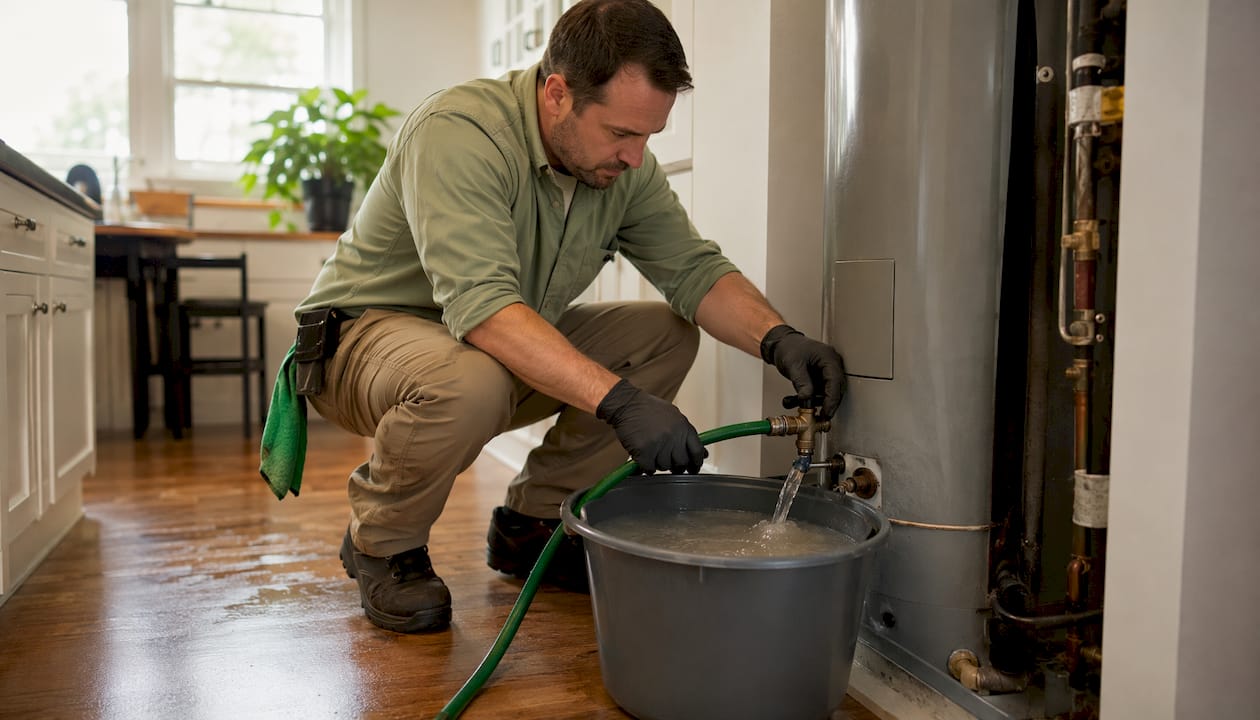
Pro Tip: After completing the flush, attach a photo of the drain water and the date to the property record in Mypropertycommandcenter. That photo is your warranty documentation.
Signs your water heater needs service or replacement
Most units give clear warnings before they fail completely. Catch these early and you can schedule a repair on your terms, not in a panic.
Red flags that need prompt attention:
- Rumbling, popping, or banging sounds (heavy sediment)
- Rusty or discolored water from hot taps
- Visible leaks or moisture pooling at the base
- Hot water running out faster than usual
- Repeated error codes on a tankless unit
- Strange sulfur or metallic smell from hot water
- Visible corrosion on the tank body or connections
| Unit type | Expected lifespan | Key shorteners |
|---|---|---|
| Tank (gas or electric) | 8–13 years | Hard water, skipped flushes, burned-out anode rod |
| Tankless | Up to 20 years | Hard water, skipped descaling, blocked venting |
Replacement costs vary widely by region and unit type, but a new tank water heater typically runs $600–$1,200 installed; tankless units run $1,000–$3,000 or more. If a unit is within 2 years of its expected end-of-life and showing symptoms, replacement usually beats repair on a cost-per-year basis. Prioritize replacements in your multi-property budget by flagging aging units in your maintenance dashboard.
Thermostat settings, Legionella risk, and anti-scald solutions
Set the thermostat to 120°F for most residential properties. Portland Water Bureau guidance places the practical range at 115–120°F to reduce scald risk and energy use. Raising the setting to 135–140°F can suppress Legionella bacteria, but only makes sense when anti-scald mixing valves are installed at points of use, because water at that temperature causes burns in seconds.
For vacation rentals or short-term rental properties where you can't monitor occupants directly, 120°F is the safer default. If you raise the temperature temporarily for Legionella mitigation, install a thermostatic mixing valve at the water heater outlet or at each fixture, and notify occupants before they arrive.
Safety checklist before any service:
- Shut off power or gas before touching any components
- Test the T&P valve annually; replace it if it leaks or fails to open
- Confirm venting is clear and unobstructed (gas units)
- Wear gloves and goggles when draining hot water
Pro Tip: Log every thermostat adjustment in Mypropertycommandcenter with a date and reason. If you manage multiple properties with different occupancy profiles, the notes field keeps you from second-guessing settings months later.
When to call a licensed plumber and what to ask
Call a pro immediately if you encounter any of these:
- Gas smell near the unit
- Persistent leak that doesn't stop after tightening connections
- T&P valve that won't open or won't stop dripping after testing
- Drain valve that is stuck or cracked
- Tankless unit throwing repeated error codes after a reset
- Visible corrosion on the tank body or gas line
A professional service visit typically covers a full drain and flush, T&P valve test, anode rod inspection, burner or electrical check, and pressure verification, according to Rheem's maintenance guidance.
Questions to ask before booking:
- Are you licensed and insured in this state?
- What does your standard inspection checklist include?
- Do parts and labor carry a warranty, and for how long?
- Does my manufacturer require certified service to keep the warranty valid?
- What is your estimated time on-site and total cost?
For multi-property owners, group service visits by season. Spring and fall avoid peak-demand windows and make scheduling easier. Store each plumber's contact, license number, and service history in your vendor directory so you're not searching for a number at 9 PM when a unit fails.
How to automate water-heater care across multiple properties
Automation prevents missed services and keeps warranty documentation current without relying on memory. Here's how to build the workflow in Mypropertycommandcenter:
- Create a master maintenance template with monthly, quarterly, and annual tasks for each unit type (tank vs. tankless)
- Attach manufacturer manuals and warranty documents to each property record so they're accessible from any device
- Add your plumber's contact to the vendor directory with notes on their service area and specialty
- Set recurring reminders for each task with automatic alerts before the due date
- Use the photo attachment feature to document completed flushes, anode rod condition, and T&P valve tests
The Spruce recommends grouping multi-property maintenance by season and keeping a central record of last service dates, invoices, and photos to preserve warranties and reduce emergency calls.
Pro Tip: Group your properties by water-quality profile in Mypropertycommandcenter. Hard-water properties get a 6-month recurrence rule; soft-water properties get annual. One setting change, and the reminders handle the rest.
Key Takeaways
Consistent water heater maintenance, a 120°F thermostat baseline, and documented service history are the three things that protect your units and your warranties across every property you own.
| Point | Details |
|---|---|
| Core schedule | Flush tank units annually (every 6 months in hard-water areas) and descale tankless units annually (every 6 months in hard-water areas); follow local water-quality recommendations for optimal frequency. |
| Thermostat baseline | Set to 120°F for most homes; use anti-scald valves if raising to 135–140°F for Legionella control. |
| Tank vs. tankless | Tank units need sediment flushing; tankless units need pump-circulated descaling and inlet filter cleaning. |
| When to call a pro | Gas smell, stuck drain valve, failed T&P valve, repeated error codes, or visible tank corrosion. |
| Mypropertycommandcenter | Use recurring task templates, vendor directory, and document vault to automate schedules and store warranty proof across all properties. |
The case for treating water heaters like a scheduled asset, not a forgotten appliance
Most multi-property owners I talk to treat water heaters reactively: they notice a problem, call a plumber, pay more than they should, and then forget about the unit for another few years. The math on that approach is bad. A $150 annual flush extends a unit's life by years. A missed anode rod replacement can mean a corroded tank that fails at the worst possible time, usually when a property is occupied.
What actually changes behavior is having the task in a system that reminds you. Not a sticky note. Not a mental note. A scheduled, recurring task tied to the specific property and unit, with the plumber's number one click away and the last service photo already attached. That's the difference between managing properties and just owning them.
Proactive documentation also matters more than most owners realize. Rheem, A.O. Smith, and most major manufacturers require documented maintenance to honor warranty claims. A photo and a date in your property record costs you nothing. Proving service history when a $2,000 tankless unit fails at year four is worth a great deal.
Mypropertycommandcenter keeps your water heater schedule running itself
Owning multiple properties means water heater maintenance can slip through the cracks, especially when each unit has a different age, type, and service history. Mypropertycommandcenter gives you one place to track all of it: recurring maintenance tasks for every property, automated alerts before service is due, a vendor directory for your plumbers, and a document vault for manuals, warranties, and service receipts.
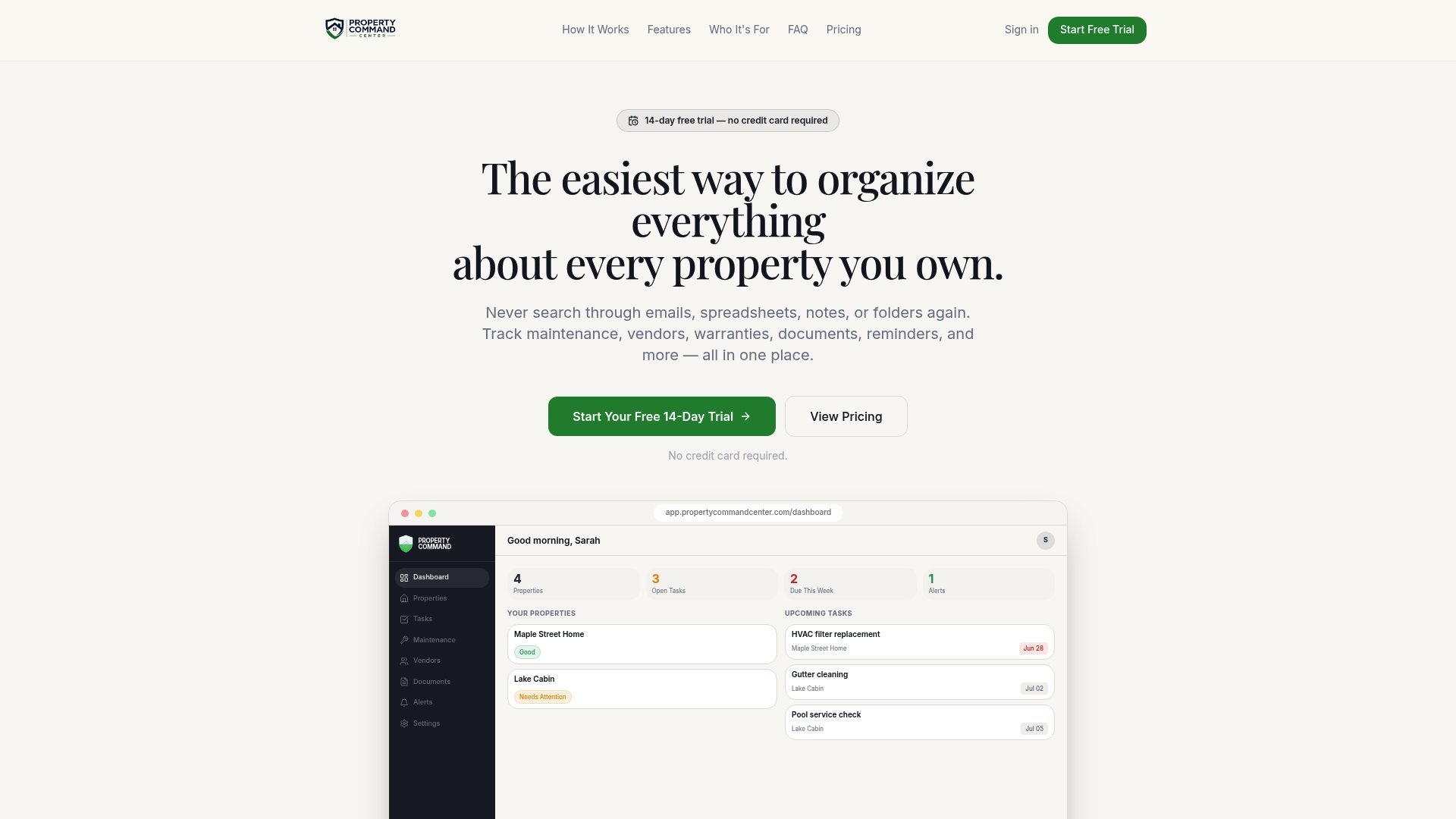
Set up your properties once, attach your unit manuals, and let the platform send you reminders when a flush or descaling is coming up. No spreadsheets, no missed services, no scrambling for a plumber's number at midnight. Start your free 14-day trial at Mypropertycommandcenter and have your first maintenance schedule running before the end of the week.
Useful sources for owners and technicians
- Energy Trust of Oregon: Water Heater Maintenance 101 — Clear step-by-step flush instructions with safety guidance; good for first-time DIYers.
- A.O. Smith: How to Drain & Flush a Water Heater — Manufacturer-level guidance on flushing tank units and descaling tankless models.
- Rheem: How Often to Flush Your Water Heater — Frequency recommendations from a major manufacturer, including hard-water adjustments.
- Portland.gov: Maintaining Your Water Heater — Municipal guidance on thermostat settings, Legionella risk, and safe temperature ranges.
- Lowe's: How to Maintain a Water Heater — Practical overview of T&P valve testing, anode rod inspection, and annual checklist items.
Always check your specific unit's owner manual before attempting any maintenance your manufacturer restricts to licensed technicians. Warranty terms vary by brand and model, and some tasks, particularly tankless descaling and gas-line inspection, require certified service to remain valid.
This article is general information for educational purposes. Confirm current safety codes, warranty requirements, and local regulations with your manufacturer, a licensed plumber, or your local building authority before performing work on your water heater.