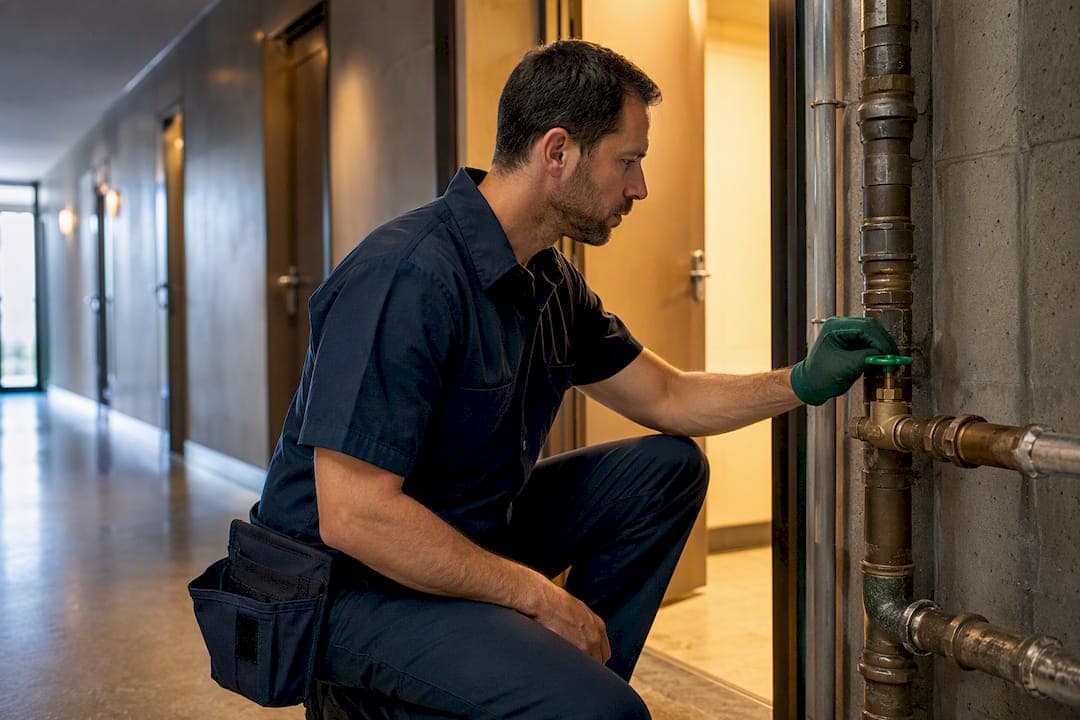
A condo maintenance checklist is a recurring schedule of monthly, seasonal, and annual tasks that catches small problems before they become expensive ones. The first move isn't buying supplies or booking a technician. It's reading your association bylaws or CC&Rs to confirm what you're actually responsible for, then setting recurring reminders around monthly, seasonal, and annual cadences.
TL;DR:
- Regularly checking and cleaning dryer vents, caulking, and HVAC filters can prevent costly damage and reduce fire and water intrusion risks.
- Seasonal priorities should focus on water-related issues, like leaks and seals, especially in fall and winter to avoid hidden damage.
- Annual professional inspections for HVAC, water heaters, and roofs are crucial for maintaining system reliability and supporting insurance claims.
- Owners must clarify responsibilities with their association through bylaws and reserve fund reports before spending on ambiguous repairs.
- Using a consolidated management platform helps track tasks, vendor contacts, warranties, and costs, making multi-property upkeep more manageable.
Table of Contents
- Why a Condo Maintenance Schedule Actually Matters
- Monthly and Quarterly Condo Upkeep Tasks
- Seasonal Condo Maintenance: What to Prioritize Each Quarter
- Annual Inspections Worth Hiring a Professional For
- Who Fixes What: Owner vs. Association Responsibilities
- Building a Maintenance Schedule You'll Actually Keep
- Small Habits That Prevent Big Losses
- A Practical Routine for Owners Juggling More Than One Property
- Keep Every Vendor, Reminder, and Warranty in One Place
- Checklists and Templates Worth Downloading
- Sources
Why a Condo Maintenance Schedule Actually Matters
A stuck condensate line or a dryer vent full of lint doesn't stay small. It becomes a costly ceiling repair or a fire department visit. Routine maintenance protects your unit's value and keeps small failures from cascading into structural or water damage that your insurer may scrutinize closely, especially if a claim reveals neglected upkeep. Insurance carriers increasingly expect documented HVAC service and vent cleaning as part of a claims-ready record, not an afterthought.
A few failures deserve special attention because of how fast they escalate:
- Slow leaks under sinks that rot cabinetry and subfloor before anyone notices
- Clogged dryer vents that raise fire risk with every missed cleaning
- Failed caulking around windows or tubs that lets water into shared walls
- Neglected HVAC systems that fail mid-summer or mid-winter, when repairs cost the most
Monthly and Quarterly Condo Upkeep Tasks
Frequency is the whole game here. Small, regular checks are what keep a condo upkeep checklist from turning into a repair list. Weekly and monthly attention to vents, drains, and seals is what stops minor wear from becoming a major expense, according to guidance on creating a maintenance schedule for your condo unit.
Monthly tasks:
- Check or replace your HVAC filter (every 1 to 3 months depending on type)
- Test smoke and carbon monoxide detectors by pressing the test button
- Inspect under sinks, around the water heater, and behind the washer for leaks
- Clear slow drains before they clog completely
- Clean the range hood filter to keep grease from building up
Quarterly tasks:
- Clean the dryer lint trap and check the vent hose for buildup
- Inspect caulking around tubs, showers, and windows for cracks
- Vacuum refrigerator coils to help the compressor run efficiently
- Test GFCI outlets in the kitchen and bathroom by pressing "test" and "reset"
Pro Tip: A stuck toilet flapper or a $15 faucet washer is a five-minute DIY fix. Anything involving your electrical panel, gas lines, or refrigerant should go straight to a licensed technician. Small repairs like these typically run $50 to $200; skip them and you're often looking at $500 or more once the damage spreads.
For a broader unit-by-unit breakdown you can adapt to your own space, this home maintenance checklist covers many of the same fixtures condo owners deal with.
Seasonal Condo Maintenance: What to Prioritize Each Quarter
Weather drives failure patterns, and matching your tasks to the season is the difference between catching a problem early and discovering it after it's already expensive. Seasonal maintenance should track weather patterns directly: spring for cooling and drainage, summer for pests and outdoor wear, fall for heating and seals, winter for pipes and drafts, according to this seasonal condo maintenance guide.
- Spring: Test your A/C before the first hot week, check balcony railings for rust or looseness, clean window screens, and confirm whether gutters near your unit fall under owner or association care.
- Summer: Watch for pest entry points around door seals, do a mid-season HVAC filter check, and keep outdoor furniture and vents clear of debris.
- Fall: Schedule heating system service before the cold hits, replace worn weather stripping around doors and windows, and insulate any exposed pipes near exterior walls.
- Winter: Check for drafts around windows, monitor your heating system for uneven output, and protect plumbing near unheated areas like a balcony closet.
Pro Tip: Prioritize water first. Leaks, clogged drains, and failed seals cause more expensive damage than almost anything else on a seasonal condo maintenance schedule, because water intrusion spreads quietly for weeks before it's visible. Owners applying this same seasonal logic to vacation properties will recognize the pattern from this beach house maintenance guide.
Annual Inspections Worth Hiring a Professional For
Some tasks are worth the service call every single year, both for reliability and for the paper trail insurers want to see. An annual HVAC tune-up that checks refrigerant levels, electrical connections, and drainage is one of the most commonly recommended items on a condominium preventive maintenance checklist, partly because insurance eligibility can hinge on documented service.
Build your annual list around these:
- Full HVAC tune-up, including refrigerant and electrical checks
- Professional dryer vent cleaning, which meaningfully cuts fire risk compared to DIY lint removal alone
- Water heater flush to clear sediment and extend its lifespan
- Roof and gutter inspection, or written confirmation that your association handles this
- A saved folder of service reports, warranties, and receipts tied to each system
That last item matters more than owners realize. A dated HVAC service report isn't just record-keeping. It's often what stands between a covered claim and a denied one when an adjuster asks whether the system was maintained.
Who Fixes What: Owner vs. Association Responsibilities
This is where most condo disputes start, and it's the one section you shouldn't skim. The general split is that owners handle everything inside their unit while the association covers the building envelope and shared spaces, but the exceptions are common enough that assuming isn't safe, per HomeLight's breakdown of condo maintenance items.
Typically owner-responsible: interior appliances, unit plumbing fixtures, interior electrical, flooring, and sometimes windows or the entry door.
Typically association-covered: roofs, exterior walls, shared plumbing lines, elevators, and common-area landscaping.
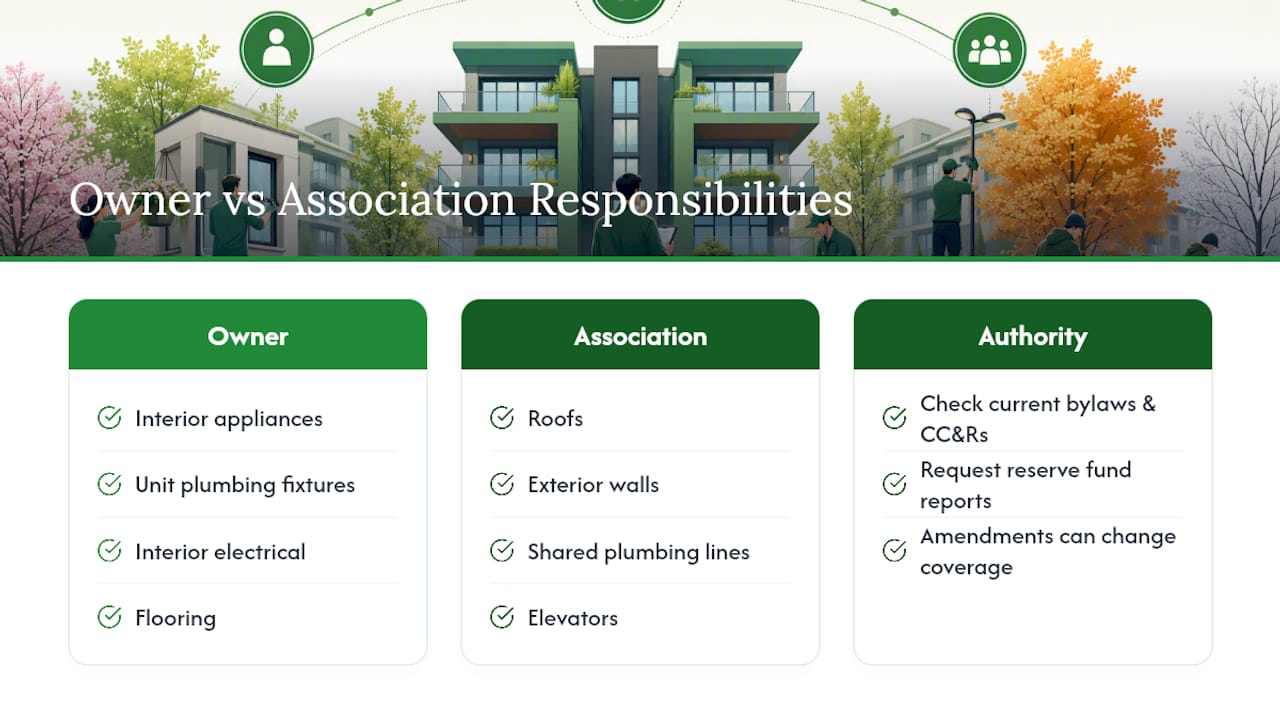
Association fees vary widely by building age, amenities, and reserve fund health, and a repair that seems routine, like a shared pipe behind your wall, can fall entirely on the association or trigger a special assessment depending on how your bylaws define it. Before you spend a dollar on anything ambiguous, pull the current bylaws and CC&Rs rather than relying on an old copy or hearsay from a neighbor. Reserve fund reports matter too. Ask for the most recent version, since responsibilities and coverage can shift after amendments.
Building a Maintenance Schedule You'll Actually Keep
A checklist only works if it survives contact with real life. The simplest system is four steps: list every task, assign it a frequency, set a recurring reminder, then log the date completed and the cost. Building a proper maintenance calendar that tracks vendor names, contract terms, and renewal dates helps you budget and avoids getting stuck in an automatic contract renewal you didn't mean to accept, according to guidance on building maintenance schedules.
At minimum, your tracking system needs these fields:
- Task name and frequency
- Last completed date
- Assigned vendor or contractor
- Cost paid
- Warranty expiration, if applicable
A spreadsheet works until you're managing more than one property, at which point vendor contacts and warranty documents scatter across email threads and paper folders fast. A consolidated dashboard, the kind Property Command Center is built around, keeps schedules, vendor records, and documents in one place instead of six. If you're building your first system from scratch, this month-by-month maintenance calendar is a reasonable starting template.
Small Habits That Prevent Big Losses
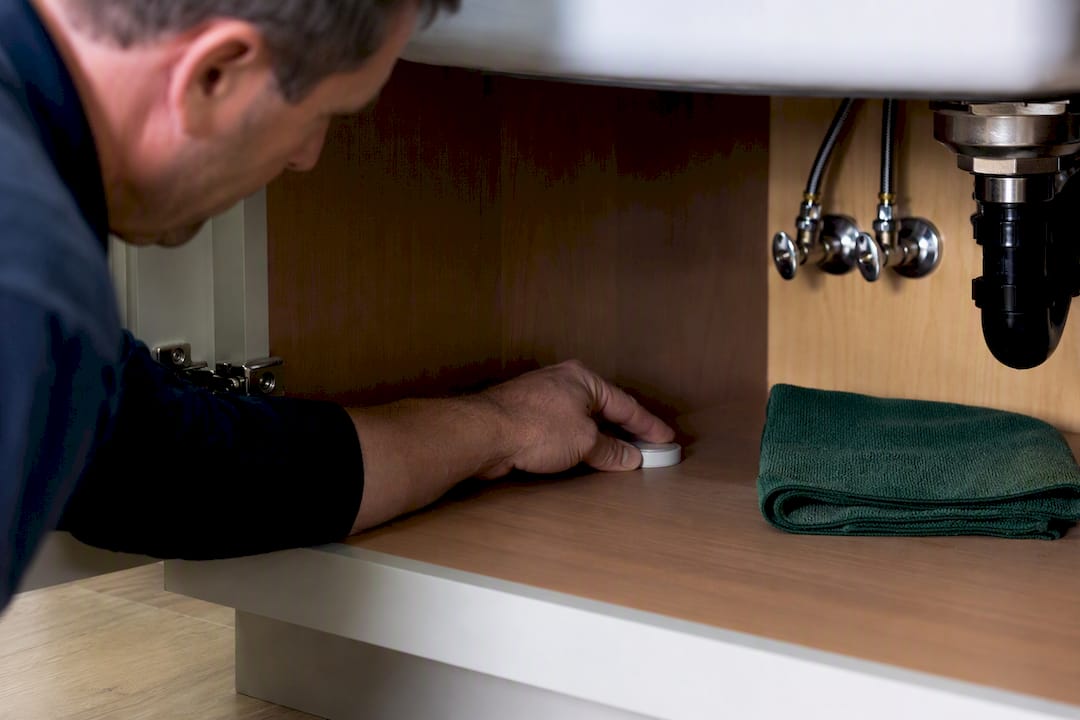
A $20 leak detector placed under the sink and behind the washing machine catches a slow leak weeks before it soaks through drywall. Dryer vent cleaning matters for the same reason: lint buildup is one of the more preventable fire hazards in a condo unit, and it's an easy one to ignore until it isn't.
Document everything. Photos and dated receipts turn a disputed insurance or association claim into a fast one.
Pro Tip: Treat these as immediate red flags, not maintenance items to schedule later: a persistent musty odor, an outlet that sparks or smells hot, or water intrusion that keeps returning after you've "fixed" it. Any of these means call a professional now, not next weekend.
A Practical Routine for Owners Juggling More Than One Property
The owners who stay ahead of repairs aren't doing more work. They're running a tighter loop: monthly checks, a seasonal prep pass, and one annual professional service call, tracked in a single place instead of three. What changes outcomes isn't effort, it's whether your vendor contacts and warranty documents are findable in thirty seconds or buried in an inbox. I've watched that one difference turn a stressful claim dispute into a five-minute phone call, just because the service report was already on file.
— Francisco
Keep Every Vendor, Reminder, and Warranty in One Place
Spreadsheets and sticky notes work until you own more than one property, then something always slips through. A specialized property management dashboard can help condo owners consolidate maintenance schedules, vendor contacts, and warranty documents in one place instead of using multiple scattered systems.

This type of platform is designed for owners managing multiple properties who want one accessible place to track tasks and reminders without learning complicated software. You can store your vendor directory alongside contracts and service history, so nothing depends on memory. If a recurring reminder system and a document vault sound like what your condo checklist has been missing, check the pricing plans and start a free trial, no credit card required.
Checklists and Templates Worth Downloading
A few external resources are worth bookmarking alongside your own tracking system:
- Fannie Mae's seasonal condo/apartment maintenance checklist offers a free, printable PDF broken into spring, summer, fall, and winter tasks.
- The termite inspection checklist gives a useful model for pest-specific inspection routines, particularly for owners in humid or wooded regions.
- State Farm's seasonal condo maintenance guide walks through owner responsibilities alongside seasonal tasks.
Sources
- Condo maintenance checklist: a practical guide for condo associations
- Condo maintenance checklist for every season — State Farm
- 6 Condo maintenance items homeowners need to know — HomeLight