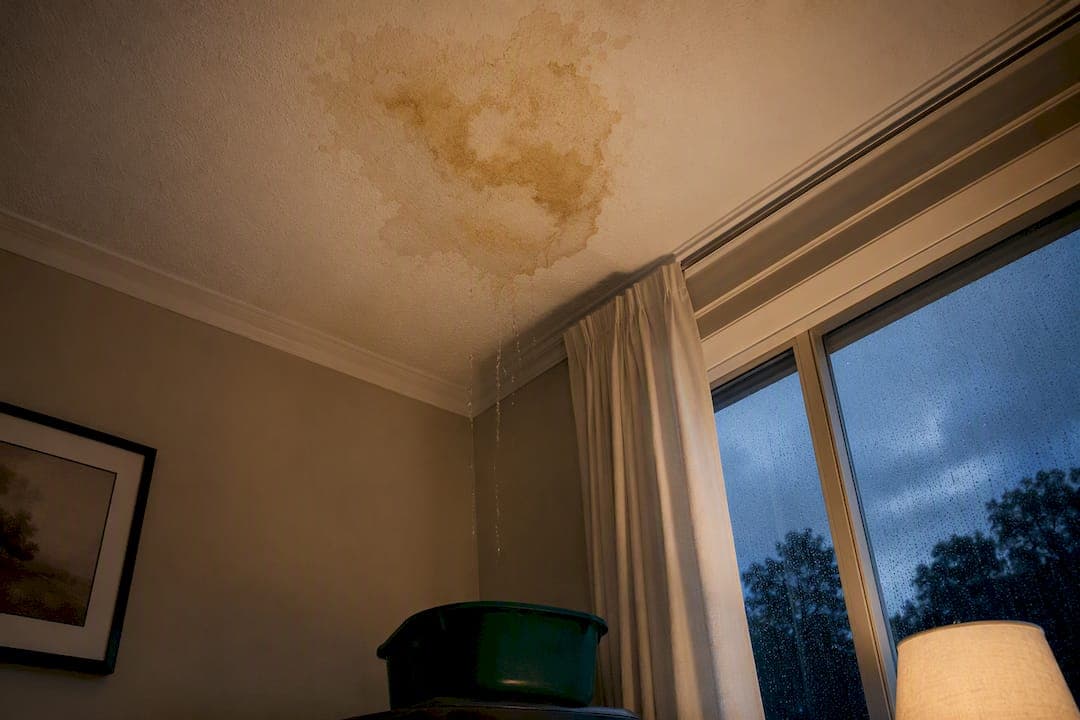
Fix hazards before comfort and comfort before appearance. The order that protects both your family and your equity is: life-safety issues (smoke, carbon monoxide, gas, exposed electrical), then active water intrusion and exterior protections, then structural or foundation concerns, then critical systems like HVAC and plumbing, then prevention work, then function, and cosmetics dead last. When a problem is unclear, diagnostics such as moisture mapping, a sewer camera, or a structural engineer's assessment should come before you spend a dollar on repair. Mypropertycommandcenter's dashboard exists to keep that order visible when three different contractors are calling you back at once.
TL;DR:
- Water intrusion and foundation issues should be addressed within days to weeks, with structural evaluations typically costing between $500 and $800.
- Safety hazards like faulty electrical wiring or gas odors demand immediate attention, requiring licensed professionals within the same day or week.
- Plumbing problems, especially ongoing backups or sewer odors, should be prioritized within weeks, with sewer camera inspections costing a few hundred dollars.
- HVAC or water heater failures need to be handled within weeks to months, with older water heaters over 10 years old recommended for proactive replacement.
- Cosmetic repairs, such as paint or fixtures, should only be tackled after addressing all safety, water, structural, and system concerns.
Table of Contents
- Building Your Home Repair Priority List: 8 Categories Ranked
- How to Inspect and Document Problems the Right Way
- Why Safety and Water Beat Everything Else
- Timing, Budget, and Who to Call for Each Fix
- Seasonal Maintenance That Keeps Big Repairs Off the List
- Turning Your Priority List Into a Trackable Plan
- What Homeowners Get Wrong About Prioritizing Repairs
- Stay Ahead of the List Instead of Chasing It
- Sources
Building Your Home Repair Priority List: 8 Categories Ranked
Most homeowners rank repairs by how annoying they are, not by how much they'll cost if ignored. That's backwards. The list below follows the sequence inspection professionals and remodel experts actually recommend: safety first, then structural integrity, code compliance, critical systems, and cosmetics last.
-
Life-safety hazards. Dead smoke or carbon monoxide detectors, gas odors, sparking outlets, or exposed wiring. Red flags: detectors that don't chirp on test, a hissing smell near appliances, breakers that trip repeatedly. Call the gas company or an electrician immediately; this is a same-day problem, not a weekend project. Detector replacement costs vary by unit; an electrical panel inspection generally involves a moderate professional fee.
-
Active water intrusion. Roof leaks, damaged flashing, overflowing gutters, or grading that pushes water toward the foundation. For detailed guidance, see our building envelope maintenance overview to protect your home's exterior. Look for water stains on ceilings, peeling exterior paint near rooflines, or standing water after rain. This is a "now" problem because water damage compounds fast. Minor flashing and gutter repair costs can range to several hundred dollars; full roof replacement may cost multiple thousands depending on size and materials.
-
Structural and foundation issues. Cracks wider than a quarter inch, doors that stick out of nowhere, sloping floors, or a bowing basement wall. A structural engineer's evaluation typically costs $500 to $800 and is worth every dollar before you commit to a fix. This is a weeks-not-months timeline; foundation repairs range from $2,000 for minor crack injection to $15,000 or more for piering.
-
Electrical and gas system concerns. Outdated panels, aluminum wiring, or knob-and-tube wiring, which is a known fire hazard in older homes and often requires a licensed electrician's full evaluation. If your home was built before 1950 and still has original wiring, treat this as urgent even without visible symptoms.
-
Plumbing and sewer problems. Slow drains throughout the house, gurgling sounds, or sewage odors in the yard often point to a main line problem, not a clogged sink. A sewer camera inspection usually costs a few hundred dollars and helps determine if repairs are minor or require much larger investment. Treat repeated backups as a weeks, not months, priority.
-
HVAC and water heater failures. No heat in winter or no cooling in a heat wave is a comfort issue that becomes a safety issue fast for very young, elderly, or medically vulnerable residents. A water heater past 10 to 12 years old that's rusting at the base should be replaced proactively, not after it floods a closet.
-
Perimeter, access, and safety items. Loose railings, broken steps, failing locks, or a driveway that ices dangerously. These matter for insurance and liability even when they don't threaten the structure itself.
-
Cosmetic and finish work. Paint color, worn countertops, outdated fixtures. These wait, full stop, until everything above is stable. A cracked foundation you painted over is still a cracked foundation.
How to Inspect and Document Problems the Right Way
A priority list is only as good as the walkthrough behind it. Spend one Saturday morning doing this before you call a single contractor, and you'll negotiate from a position of knowledge instead of panic.
Work room by room, outside to inside:
- Exterior first. Walk the perimeter looking for cracked siding, gaps in flashing, gutters pulling away from the fascia, and grading that slopes toward the house instead of away from it.
- Attic second. Check for daylight through the roof deck, dark stains on rafters, compressed or wet insulation, and any sign of pests.
- Basement or crawlspace third. Note efflorescence (that white chalky residue on foundation walls), musty odors, standing water, and any visible cracks with a tape measure on hand.
- Mechanical rooms fourth. Photograph the water heater's age label, the HVAC filter's condition, and the electrical panel's breaker labeling.
- Interior last. Walk every room checking for ceiling stains, sticking doors, soft spots in flooring, and outlets that feel warm to the touch.
Photograph everything, even things that seem minor. A hairline crack photographed in March and again in September tells you whether it's growing, which matters enormously for foundation decisions.
When to escalate to a diagnostic:
- Persistent musty smell with no visible source → moisture mapping by a certified inspector.
- Slow drains in multiple fixtures → sewer camera inspection by a plumber.
- Cracks that are growing, doors that newly stick, or visible wall bowing → structural engineer, not a general contractor.
- Breakers tripping on specific circuits → licensed electrician with a load test.
Sort every item you found into three buckets: immediate (safety or active damage), short-term (fix within 60 to 90 days), and deferred (cosmetic, or dependent on a bigger decision). That worksheet becomes your actual repair sequence.
Why Safety and Water Beat Everything Else
The logic behind putting safety and water ahead of structure, and structure ahead of systems, isn't arbitrary. It follows a formal sequence: safety, then active water, then structure, then code compliance, then major systems, then prevention, then function, then appearance. Skip a step and you're often paying twice, once for the symptom and again for the cause you ignored.
Certain signals should jump any item up the list regardless of category:
- Visible sparks or a burning smell near outlets or panels.
- Active water dripping or pooling, not just a stain from an old leak.
- Sewage odor anywhere near the house or yard.
- Foundation cracks wider than a quarter inch or growing measurably.
- Breakers that trip more than once in the same week.
Once something's escalated, the next question is repair or replace. The commonly used 50% rule states that if a repair costs more than half the price of full replacement, and the component is past its expected lifespan, replacement is the smarter move. A water heater at year 11 needing a $600 fix is a replace, not a repair. A furnace at year 4 needing the same fix is a repair.
Pro Tip: Don't patch symptoms before you find the cause. A stained ceiling patched with drywall mud looks fixed for exactly as long as it takes the next rain to prove otherwise. A short diagnostic often narrows the scope dramatically and saves you from paying for the same repair twice.
That combination keeps decisions consistent whether you're managing one house or five.
Timing, Budget, and Who to Call for Each Fix
Different problems move at different speeds, and matching the right trade to the right urgency saves both money and stress.
- Life-safety items: same day to same week. Call a licensed electrician or your gas utility. Ask for a current license number and proof of insurance before anyone touches a panel.
- Active roof or water intrusion: days to weeks. A roofing contractor should provide a written scope and photos of the damage, not just a verbal estimate.
- Structural concerns: weeks. Hire a structural engineer independently from the repair contractor. An engineer with no stake in the repair contract gives you an unbiased number.
- Sewer and major plumbing: weeks. Ask for the camera footage, not just a verbal description of what the plumber saw.
- HVAC and water heater: weeks to a couple of months for planned replacement, same day if there's no heat in freezing weather.
- Electrical panel upgrades: plan for $2,000 to $4,500 depending on amperage and permit requirements in your area.
For every trade you hire, request three things: a current license number, a certificate of insurance (COI), and either a permit or a written explanation of why one isn't needed. References from the last 90 days matter more than a five-star average from three years ago.
Short-term mitigation while you wait for a pro: a tarp and sandbags on an active roof leak, a wet-dry vac and dehumidifier for basement moisture, and turning off the water supply to a fixture with a slow leak rather than living with a bucket underneath it.
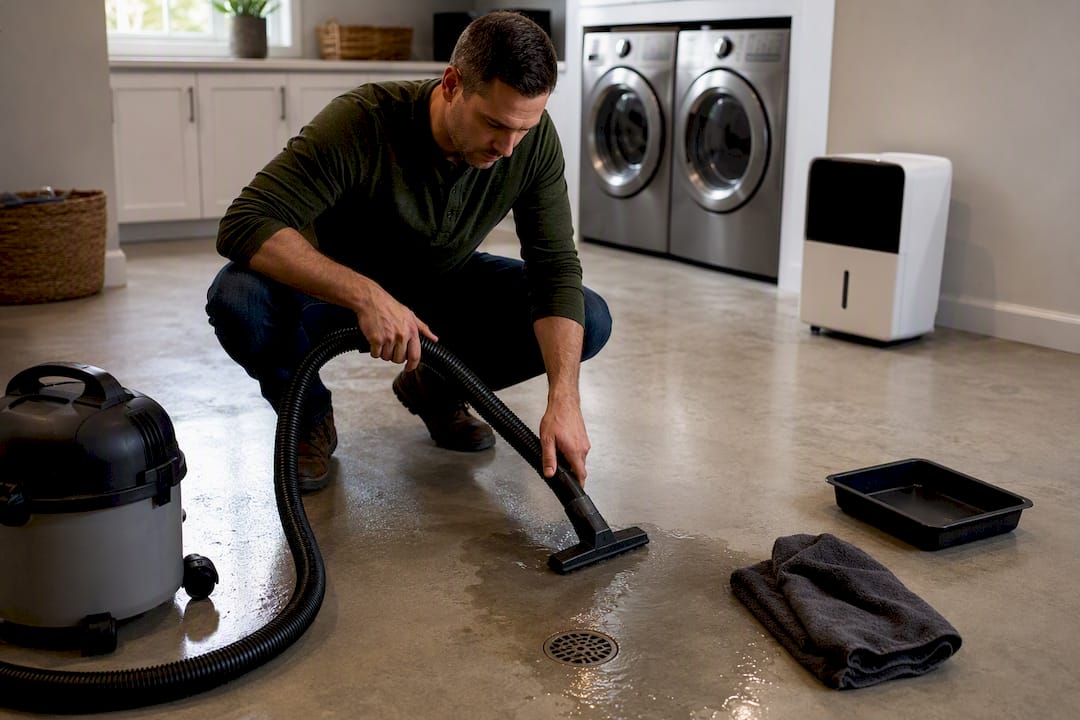
If money's tight, phase the work rather than delaying the whole list. Fix safety items now regardless of cost, patch water intrusion enough to stop active damage, and schedule structural or system replacement for the next pay cycle or season. Deferring cosmetic work costs you nothing; deferring a leaking roof costs you a ceiling, insulation, and possibly drywall and mold remediation on top of the original repair.
Seasonal Maintenance That Keeps Big Repairs Off the List
Most of the expensive items on any priority list started as a small maintenance item nobody got around to. Exterior maintenance like gutters, caulk, and grading prevents the interior damage that turns into a five-figure repair.
Monthly, year-round:
- Test smoke and carbon monoxide detectors.
- Check or replace the HVAC filter.
- Run water in unused fixtures to keep drain traps sealed.
- Look at the water heater's base for rust or moisture.
Seasonal priorities, following the rhythm most maintenance calendars recommend:
- Fall: Clean gutters before leaves clog them, inspect roof flashing, and winterize exposed pipes.
- Winter: Watch for ice dams and check attic insulation depth.
- Spring: Inspect the roof for winter damage and check grading after snowmelt.
- Summer: Service the HVAC system before peak heat and inspect exterior caulk and seals.
The connection between small maintenance and big failures is direct: clogged gutters overflow onto the fascia, water works behind the siding, and eighteen months later you're looking at rot repair instead of a $30 gutter cleaning. If you own more than one property, a shared calendar with recurring vendor reminders removes the "I'll get to it" excuse that turns cheap fixes into expensive ones. Our own monthly maintenance calendar breakdown walks through exactly which task belongs in which month.
Turning Your Priority List Into a Trackable Plan
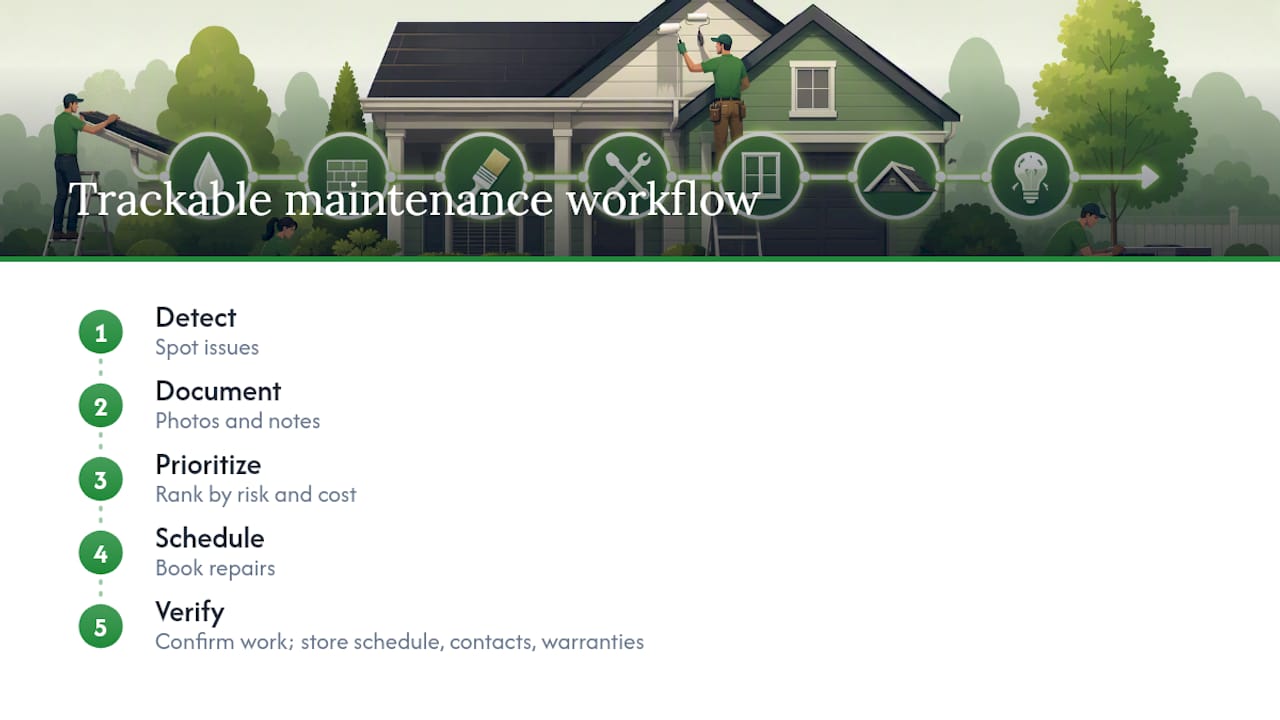
A priority list only works if you can find it again in three months. A printable checklist or a shared dashboard that holds your maintenance schedule, vendor contacts, and warranty documents in one place turns "detect, document, prioritize, schedule, verify" from a mental note into a repeatable workflow.
What Homeowners Get Wrong About Prioritizing Repairs
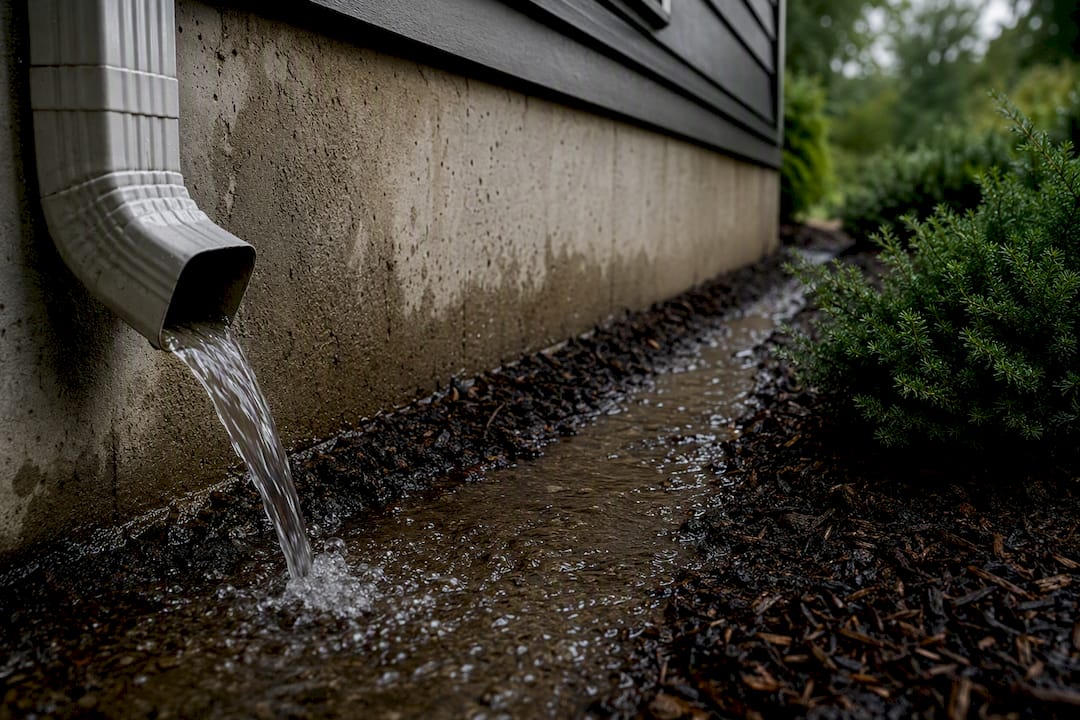
Homeowners consistently overestimate structural risk and underestimate slow water damage. A hairline foundation crack gets photographed and worried over for months, while a gutter dumping water against the same foundation gets ignored for years. Preserving housing quality through consistent maintenance investment protects long-term value more reliably than any single big fix, and that consistency is the part most people skip.
Keep receipts and inspection reports for everything you fix. Documentation is what turns a repair into proof of value for insurance and resale.
— Francisco
Stay Ahead of the List Instead of Chasing It
Sticky notes and a shared family group chat work fine until you own a second property or a vacation rental, and then nothing survives the chaos. Mypropertycommandcenter gives you one dashboard for property status, task tracking, maintenance schedules, and a vendor directory so you're not digging through old texts to find the electrician who fixed the panel last year.

Every warranty, inspection report, and invoice lives in a document vault instead of scattered emails, which matters when an insurer or buyer asks for proof. Smart alerts flag maintenance before it becomes an emergency repair, whether you're managing one home or five. If you're ready to put this article's priority order into a system you'll actually use, check pricing plans and start the free trial. No credit card required, and no more guessing what's supposed to happen this month.
Sources
- Home maintenance checklist | Chase
- Prioritizing Repairs After an Inspection: A Cost vs. Risk Guide | Alert Home Inspections
- What Should I Fix First? A Smarter Way to Prioritize Home Maintenance - Indiana Home Inspection Hub
- InterNACHI: Knob and Tube Wiring