
BLUF: a monthly 15 to 20 minute habit loop plus four focused seasonal sessions prevents most of the expensive home failures you'd otherwise face. Home preventive maintenance isn't a weekend project you tackle once a year. It's a rhythm, and three tasks carry most of the weight.
- Change or check your HVAC filter (5 minutes, monthly)
- Test smoke and carbon monoxide detectors (5 minutes, monthly)
- Check under sinks and around appliances for slow leaks (5 to 10 minutes, monthly)
Pro Tip: Set three recurring calendar reminders right now, before you keep reading. Then start a simple log, even if it's just a notes app entry with the date, what you checked, and what you found. That log is what turns good intentions into an actual habit.
Key Takeaways
Consistent, low-effort monthly checks combined with four seasonal sessions prevent the majority of costly home repairs homeowners otherwise face.
| Point | Details |
|---|---|
| Run the monthly loop | Check filters, test detectors, and inspect for leaks in under 20 minutes each month. |
| Follow the seasonal calendar | Schedule HVAC and furnace tune-ups before peak heat or cold hits your area. |
| Know your limits | DIY the visual and routine tasks; hire licensed pros for electrical, gas, and refrigerant work. |
| Budget and log everything | Set aside monthly maintenance funds and record date, system, findings, and next due date. |
| Centralize the system | Mypropertycommandcenter consolidates reminders, vendor contacts, and documents so the habit doesn't depend on memory alone. |
Table of Contents
- What Does a Home Preventive Maintenance Checklist Look Like?
- How Do You Maintain HVAC, Plumbing, Electrical, and Roofing Systems?
- When Should You DIY vs. Hire a Professional?
- How Much Should You Budget for Home Maintenance?
- What Should You Do the Moment You Find a Problem?
- How Does Landscaping Affect Home Maintenance?
- How Do You Troubleshoot Common Home Maintenance Problems?
- How Should You Prioritize Tasks by Home Age and Climate?
- What Tools and Supplies Do You Need for Preventive Maintenance?
- Why a Maintenance Rhythm Beats a Maintenance Project
- An Easier Way to Keep the Habit Going
- Frequently Asked Questions
- Sources
What Does a Home Preventive Maintenance Checklist Look Like?
A working preventive home maintenance checklist has two layers: a short monthly loop you repeat year round, and four seasonal sessions that catch the bigger stuff before it becomes a bigger bill. Extension programs like NC State Extension break tasks down by frequency and by who should actually do them, and that division matters more than most homeowners realize. Some jobs take five minutes. Others need a licensed technician with equipment you don't own.
The monthly habit loop
Run through this every month, ideally on the same day so it becomes automatic:
- Check or replace your HVAC filter (monthly for standard filters, up to every 90 days for higher-MERV pleated filters).
- Test smoke and CO detectors by pressing the test button. Detectors need battery checks twice a year at minimum and full replacement every 10 years, so mark the manufacture date on each unit.
- Look under every sink and behind the washing machine and dishwasher for moisture, warping, or a musty smell.
- Wipe down or run your range-hood filter through the dishwasher.
- Run water in any drain you don't use often (a guest bathroom, a basement floor drain) to keep the trap sealed against sewer gas.
Spring: wake the house up
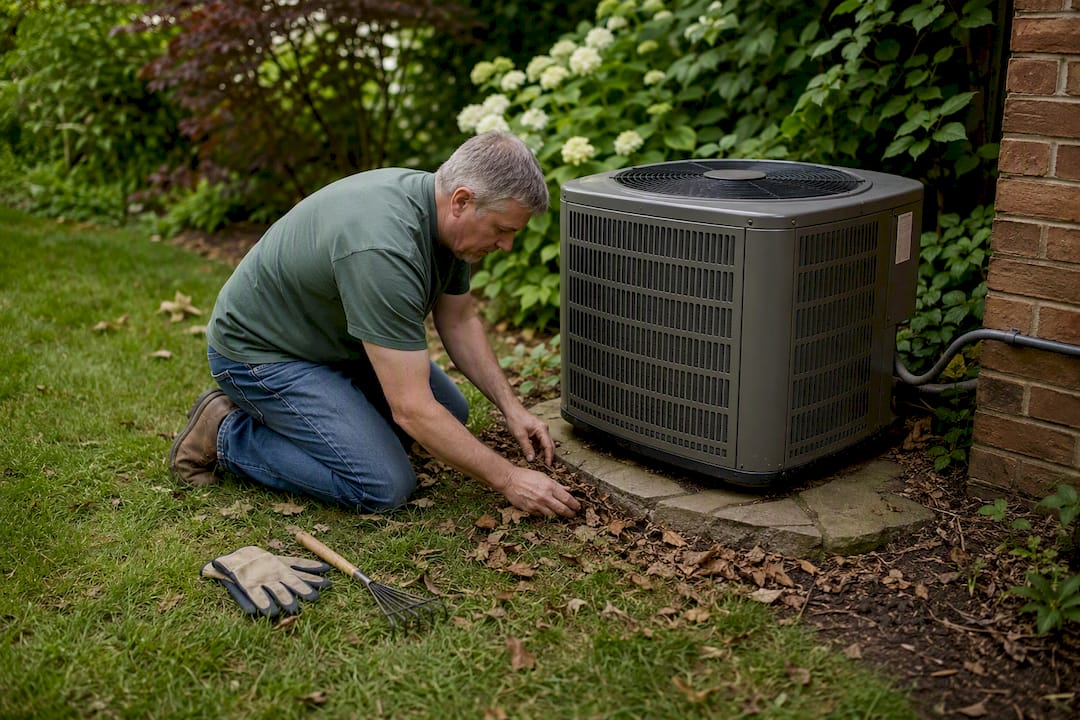
Spring is when you undo winter's damage and prep cooling systems before the heat hits. Schedule an AC tune-up before the first hot week, when technicians aren't booked solid. Clear leaves and debris from around the outdoor condenser unit, leaving at least two feet of clearance. Walk the roofline with binoculars looking for lifted or missing shingles, and check gutters for sagging or pulling away from the fascia. Touch up exterior caulk around windows and doors where winter cold may have cracked it. If you have a sump pump, pour a bucket of water into the pit to confirm it kicks on and drains properly.
Summer: heat, water, and pests
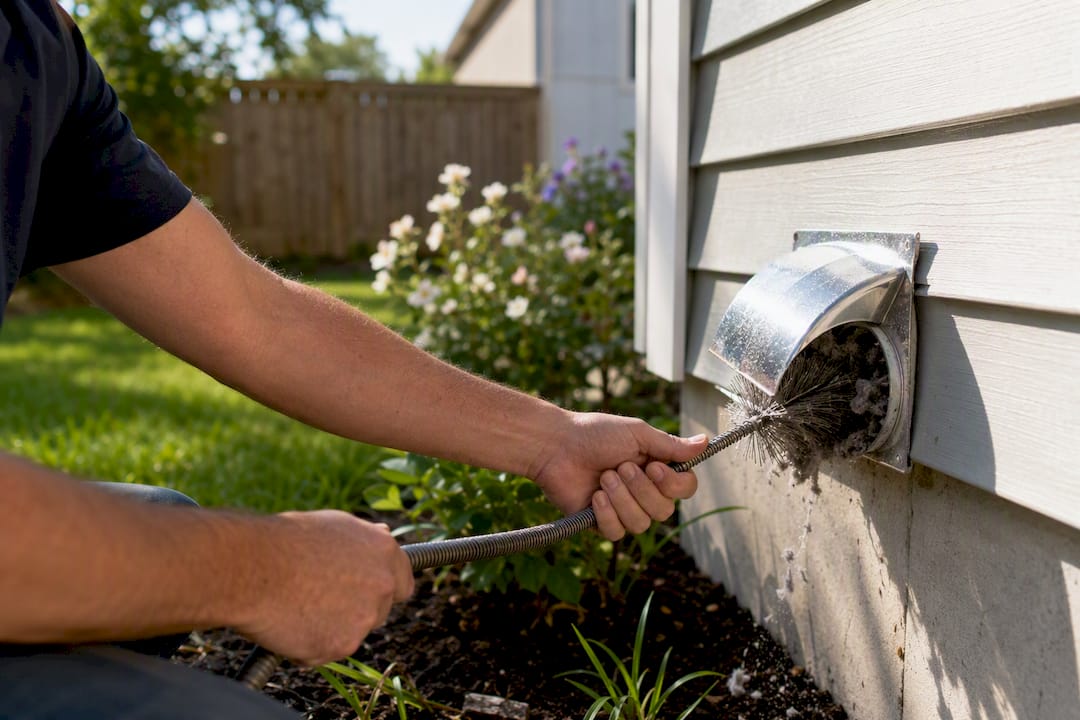
Clean the dryer duct, not just the lint trap. A clogged dryer vent is one of the more common home fire risks and it builds up faster than most people expect. Walk your yard's grading and check that soil slopes away from your foundation. Inspect washing machine supply hoses for bulging or cracking. Check window and door seals for the AC leaks that quietly inflate your summer utility bill.
Fall: prep for the freeze
Get a furnace tune-up before the first cold snap. If you have a wood-burning fireplace, schedule a chimney sweep. Clean gutters again after leaves drop, since a clogged gutter in October becomes an ice dam in January. Disconnect and drain garden hoses, and shut off water to exterior spigots if your home has that shutoff.
Winter: defend against freeze and stale air
Keep cabinet doors under exposed plumbing open during cold snaps so warm air can reach the pipes. Stay alert for carbon monoxide risk since furnaces, water heaters, and any fuel-burning appliance work harder this time of year. Monitor indoor humidity. Too dry cracks wood trim and irritates sinuses; too damp invites mold behind walls.
How Do You Maintain HVAC, Plumbing, Electrical, and Roofing Systems?
Each major system fails in its own slow, quiet way long before it fails loudly. The trick is catching the early signature instead of waiting for the loud one.
HVAC. Filters are the homeowner-feasible part, but the invisible part is what actually kills compressors. Technicians measure refrigerant pressure and capacitor strength during a tune-up, and those numbers reveal a system drifting toward failure months before you'd notice a warm room. That's the value of a pre-season professional visit: it catches a $200 fix before it becomes a $6,000 compressor replacement.
Plumbing. Flush your water heater annually to clear sediment, and check the anode rod every two to three years since a spent anode lets the tank corrode from the inside. Inspect washing machine and dishwasher supply hoses yearly. Small warning signs, a slightly discolored ceiling patch, a cabinet that swells when it shouldn't, usually mean a slow leak has been running for weeks.
Electrical. Test GFCI and AFCI outlets monthly using their built in test buttons. Warm outlet covers, flickering lights, or a burning smell near a panel are not "keep an eye on it" situations. Loose connections behind an outlet are one of the more common causes of electrical fires, and you can't see them without pulling the cover.
Roof and gutters. Inspect flashing around chimneys and vent pipes twice a year since flashing fails before shingles usually do. Clean gutters at least twice annually, more if you have overhanging trees, and confirm downspouts direct water at least four feet from the foundation.
Exterior envelope. Recaulk around windows and doors as seals dry out, replace worn weatherstripping, and check that siding has no gaps where water could get behind it. Grading that slopes toward the house instead of away from it is one of the most overlooked causes of basement moisture.
Interior finishes. Beyond the dryer duct, clean the range-hood filter and check that bathroom exhaust fans actually move air (hold a tissue near the grille; it should stick). Neglected system failures compound: progressive issues in HVAC and water heaters often show detectable signs months before catastrophic failure, which is exactly why the pre-season professional check earns its cost.
When Should You DIY vs. Hire a Professional?
Most monthly and seasonal checklist items are homeowner-feasible: filters, detector tests, caulking, gutter cleaning, visual inspections. Anything involving gas lines, electrical panel work, refrigerant, or roof structure belongs to a licensed pro.
- DIY territory: filter changes, detector testing, caulk touch-ups, hose inspection, drain flushing, visual roof checks from the ground.
- Pro-only territory: HVAC refrigerant work, electrical panel repairs, gas line work, structural roof repair, water heater installation.
- Red flags needing a pro immediately: water intrusion you can't source, a burning smell near outlets or the panel, sagging floors or new cracks in foundation walls, or a gas smell.
Before hiring anyone, confirm their license number, ask for proof of insurance, get a written estimate, and ask what's warrantied.
Pro Tip: A contractor who won't produce a certificate of insurance on request is a contractor you don't hire, no matter how good the quote looks.
How Much Should You Budget for Home Maintenance?
Setting aside a fixed amount monthly, even a modest one, beats scrambling when the water heater fails. NC State Extension recommends a dedicated maintenance line in your household budget, with unused funds rolling into a separate account for bigger items down the road. The payoff is real: homeowners who handle their own critical maintenance tasks save close to $2,000 a year compared to hiring out every service.
A maintenance log doesn't need to be complicated. It needs six fields, filled in consistently:
| Field | Why it matters |
|---|---|
| Date | Establishes the service timeline for warranties and resale disclosures. |
| System | Identifies what was serviced (HVAC, water heater, roof, etc.). |
| Performer | Notes whether it was DIY or a named contractor, for accountability. |
| Findings | Records the condition observed, not just "done." |
| Action taken | Documents the fix or task completed. |
| Next scheduled date | Keeps the loop going instead of relying on memory. |
Recording who performed the work and why anything was deferred is what actually protects resale value and gives a future contractor useful context instead of guesswork.
What Should You Do the Moment You Find a Problem?
Speed and documentation matter more than perfection here. Follow three steps in order:
- Contain or mitigate. Shut off the water valve, unplug the appliance, or move items out of the way, whatever stops the damage from spreading.
- Document. Take photos, note model numbers, and save any receipts, since insurers and contractors both need this to move fast.
- Schedule the right level of urgency. Active water intrusion or a burning smell is urgent, call today. A slow drip under a sink is near-term, within the week. A hairline foundation crack you're monitoring is planned, get it looked at on your next inspection.
How Does Landscaping Affect Home Maintenance?
Landscaping isn't cosmetic when it comes to protecting your foundation and siding. The single biggest factor is grading: soil should slope away from your foundation at roughly six inches of drop over the first ten feet. Water pooling against a foundation wall is one of the more preventable causes of basement moisture and long-term structural stress, yet it's rarely on anyone's mental maintenance list.
Tree roots deserve more respect than most homeowners give them. Plant large trees at least 15 to 20 feet from the foundation, since aggressive root systems (willows, silver maples, cottonwoods) can crack slabs and invade sewer lines over a decade. If a mature tree already sits close to the house, monitor for new cracks in the foundation rather than assuming it's fine because nothing's happened yet.
Trim branches back from the roofline. Overhanging limbs scrape shingles during wind, drop debris into gutters, and give squirrels and raccoons an easy route into your attic. Mulch beds should stay a few inches below siding, not banked up against it, since wood mulch against siding traps moisture and invites termites.
Downspout extensions matter as much as the gutters they're attached to. A downspout that dumps water two feet from the house undoes half the benefit of clean gutters. Extend them at least four feet, further if your yard doesn't slope well on its own.
How Do You Troubleshoot Common Home Maintenance Problems?
Most home problems announce themselves quietly before they get expensive, if you know what to listen for.
Musty smell in one room. Usually points to hidden moisture, check the closest exterior wall for a roof or flashing leak, or the floor below for a plumbing leak in a wall cavity.
Water heater making popping or rumbling sounds. That's sediment buildup at the bottom of the tank. Flush it. If the noise persists after flushing, the tank may be near end of life.
HVAC running constantly without reaching set temperature. Check the filter first, it's the cause more often than people expect. If a clean filter doesn't fix it, refrigerant level or a failing capacitor is likely, and that's a call to a technician.
Circuit breaker trips repeatedly. Don't just keep resetting it. A breaker that trips repeatedly is protecting you from an overloaded circuit or a short, and repeated resets without diagnosis is how electrical fires start.
Slow drains throughout the house (not just one sink). Points to a main line clog rather than a local one. A single slow drain is usually local buildup; multiple slow drains at once means the problem is downstream.
Doors and windows sticking seasonally. Often normal humidity swelling, but if it's new and paired with cracks near the frame, it can signal foundation settling worth monitoring.
When troubleshooting doesn't resolve the issue within one attempt, that's your cue to escalate to a professional rather than keep guessing.
How Should You Prioritize Tasks by Home Age and Climate?
A 5 year old home and a 50 year old home don't need the same attention, and neither do a Phoenix home and a Minneapolis one.
Newer homes (under 10 years): focus on warranty-covered systems and routine checks. Appliances and HVAC units are still under manufacturer warranty, so your job is mostly monitoring and documentation, not repair.
Mid-age homes (10 to 30 years): this is where water heaters, roofs, and HVAC compressors start reaching the end of their expected service life. Budget and plan for replacements rather than being surprised by them.
Older homes (30-plus years): electrical panels, galvanized or polybutylene plumbing, and original windows need closer scrutiny. Older homes often carry outdated systems that don't meet current safety codes, which raises the stakes on the electrical checklist above.
Climate shifts priorities too. Homes in freeze-thaw regions need pipe-freeze defenses and roof ice-dam prevention near the top of the list. Homes in humid, coastal, or high-UV climates should prioritize caulk and weatherstripping checks, since materials degrade faster there. Homes in wildfire-prone regions need gutter and roof debris removal treated as a safety task, not a cosmetic one.
What Tools and Supplies Do You Need for Preventive Maintenance?
You don't need a contractor's van full of gear. A basic kit covers most of the checklist above:
- A quality flashlight and a multi-bit screwdriver
- A stud finder and a basic multimeter for checking outlets
- Caulk gun with silicone caulk, plus weatherstripping tape
- A wet/dry shop vacuum for spills and gutter debris
- Furnace filters sized for your unit, bought in bulk
- A moisture meter (inexpensive and useful for catching hidden leaks early)
- A ladder rated for your height and roof access needs
- Fresh batteries and spare detector units on hand for the 10 year replacement cycle
Keep supplies in one labeled bin near your utility area rather than scattered across the garage. The five minutes you save not hunting for a screwdriver is the same five minutes that keeps the monthly habit from feeling like a chore.
Why a Maintenance Rhythm Beats a Maintenance Project
Homeowners tend to treat maintenance like a project: a weekend blitz once a year, followed by months of nothing. That approach fails because houses don't deteriorate in bursts, they deteriorate continuously. A consistent, imperfect monthly habit outperforms an occasional perfect overhaul, because the small checks catch problems while they're still cheap; see more about this essential upkeep in The necessary home maintenance nobody talks about | Texas FHA.
Managing several properties taught me that the homeowners who avoid disasters aren't the most skilled, they're the most consistent. A 15 to 20 minute monthly loop plus one seasonal weekend session is genuinely all it takes. The habit is the whole strategy.
An Easier Way to Keep the Habit Going
Spreadsheets and sticky notes work until you own more than one property, or life gets busy for a month and the whole system quietly falls apart. Mypropertycommandcenter exists for exactly that gap: it's a dashboard that centralizes your maintenance schedule, vendor contacts, and service documents in one place, so nothing depends on you remembering it.

Instead of digging through email threads to find your last HVAC tune-up receipt or a plumber's phone number, everything lives in one accessible view. Recurring task reminders handle the monthly filter check and seasonal sessions automatically, a vendor directory keeps your contractor's license and contact info a click away, and a document vault stores warranties and manuals so you're never searching a junk drawer during an emergency call. If you manage more than one home, this replaces the scattered notes entirely. Start a free trial through onboarding, no credit card required, and see whether it fits before you commit to a plan.
Frequently Asked Questions
How often should you do home preventive maintenance? Run through monthly checks (filters, detectors, leak spots) every month, plus one focused seasonal session in spring, summer, fall, and winter for bigger system checks.
What is the most important home maintenance task? Testing smoke and CO detectors ranks highest for safety, since they need battery checks twice yearly and full replacement every 10 years. For cost avoidance, HVAC filter changes and pre-season tune-ups prevent the most expensive single failures.
How much should I budget monthly for home maintenance? There's no universal figure, but extension guides recommend a dedicated line item you adjust to your home's age and systems, rolling unused funds into a reserve for larger repairs.
Can I do most home maintenance myself? Many tasks are homeowner-feasible: filters, caulking, gutter cleaning, and visual inspections. Electrical panel work, gas lines, and refrigerant handling need a licensed professional.
What's the difference between preventive and reactive home maintenance? Preventive maintenance catches small issues on a schedule before they fail; reactive maintenance means fixing something only after it breaks, typically at a much higher cost and often with additional collateral damage.
Sources
- Home Upkeep Guide | AARP Foundation
- Kidde — Carbon monoxide alarm replacement guidance
- Preventative Home Maintenance | NC State Extension