
The naming template we recommend is PropertyID-YYYYMMDD-Description-v##.ext, for example BEACH01-20260115-InsurancePolicy-v01.pdf. Putting the property code first groups every document by home, and the YYYYMMDD date forces correct chronological order no matter how many files pile up. Pair this with annual reviews, as the FTC recommends, and a dashboard like Property Command Center to keep it all searchable.
TL;DR:
- Using the PropertyID-YYYYMMDD-Description-v## format ensures files are grouped by property and sorted chronologically, aiding quick retrieval.
- Dates must follow the YYYYMMDD structure with leading zeros, and version numbers should increment instead of overwriting for clear document history.
- A folder system with properties, categories, and year subfolders enhances organization, while metadata tags improve searchability beyond filenames.
- Annual reviews, digital backups, and physical copies in a fireproof safe are essential to maintain data integrity after a disaster or major property change.
- Property Command Center supports this naming system, offering automated grouping, tagging, and reminders for warranty and expiration management at affordable plans.
Table of Contents
- Breaking Down the Template With Real Examples
- Folder Structure and Metadata That Work With Your Filenames
- Dates, Versions, File Formats, and Common Naming Mistakes
- Backups, Annual Reviews, and Your Grab-and-Go Packet
- Putting This Naming System Into Property Command Center
- Why Simple Naming Beats a Complex System
- Try Property Command Center for Your Properties
- FAQ
- Sources
Breaking Down the Template With Real Examples
Each part of PropertyID-YYYYMMDD-Description-v##.ext does a specific job, and skipping one breaks the system for someone managing more than one home.
Your PropertyID should be short, consistent, and unique across every property you own. A beach house might become BEACH01, a downtown condo might be 123MAIN, and a cabin might be LAKE01. Pick one format and stick with it; mixing street addresses and nicknames defeats the purpose.
The date always follows YYYYMMDD. This format sorts correctly in any file browser, unlike MM/DD/YYYY, which scrambles once you cross a year boundary. Harvard's data management guidance backs this exact structure, including leading zeros in version numbers so v01 sorts before v10 instead of after it.
Descriptions should use a short, standardized vocabulary you reuse every time: deed, policy, receipt, inspection, warranty, invoice. Avoid full sentences or personal shorthand that only makes sense to you today.

Version numbers matter whenever a document gets updated, re-signed, or rescanned. Increment the version instead of overwriting the old file, so you can always trace what changed.
Examples that follow this pattern:
- BEACH01-20250612-Deed-v01.pdf
- 123MAIN-20260110-InsurancePolicy-v02.pdf
- LAKE01-20250830-RoofWarranty-v01.pdf
- BEACH01-20260215-HVACReceipt-v01.pdf
- 123MAIN-20251105-InspectionReport-v01.pdf
- LAKE01-20260301-MortgageStatement-v03.pdf
- BEACH01-20250920-ApplianceWarranty-v01.pdf
- 123MAIN-20260704-Receipt-ContractorInvoice-v01.pdf
Folder Structure and Metadata That Work With Your Filenames
A good filename still needs a logical home. We recommend a simple folder layout:
- Properties (top level)
- [PropertyID] (one folder per home)
- Documents (second level under each property)
- Category (legal, financial, warranties, maintenance, floor plans, vendor contacts)
- Year (final subfolder, so files from 2024 don't mix with 2026)
Within each category, metadata or tags add a second layer of searchability that filenames alone can't carry: vendor name, model number, warranty expiration date, and contract ID. These fields let you filter instantly instead of opening every file to check a detail.
If you're starting from scratch, the 90 Day Setup for Owners of Multiple Homes walks through building a property information sheet that doubles as your folder index, and One Capture Point covers how to funnel new documents into this structure without losing momentum after week one.
Pro Tip: Keep your category list to six items or fewer. More categories mean more decisions every time you file something, and that's usually where the system breaks down.
Dates, Versions, File Formats, and Common Naming Mistakes
Stick to YYYYMMDD and hyphens as separators every time. Spaces, slashes, and written-out dates like "June 2026" create inconsistent sorting and make batch searches unreliable.
Leading zeros matter for any numeric field, not just dates. Write v01 instead of v1, and unit01 instead of unit1, so single digits don't sort after double digits.
For file formats, PDF/A is the more durable choice for legal and financial documents since it's designed for long-term archiving. Photos and scanned floor plans work better as PNG or JPEG, and you should keep original scans even after creating a cleaned-up PDF version.
Common pitfalls worth fixing early:
- Special characters like &, #, or % that some systems reject or misread.
- Inconsistent abbreviations, such as switching between "Ins" and "Insur" for insurance documents.
- Vague descriptions like "misc" or "stuff" that can't be searched later.
- Overwriting files instead of incrementing the version number.
Backups, Annual Reviews, and Your Grab-and-Go Packet
The FTC recommends reviewing your organized papers at least once a year, plus a quick check after any major life or property change: a refinance, a new policy, a major renovation. Keep a digital backup and physical copies in a fireproof box or safe-deposit box, since either format alone leaves a gap if disaster strikes.
A dual-backup approach covers most scenarios: an encrypted cloud backup for everyday access, and an off-site physical copy or safe-deposit box for the worst-case scenario where your home itself is inaccessible.
Your grab-and-go packet should include:
- The deed and current insurance policy.
- Recent photos of each property for a working home inventory.
- Physical keys or access codes.
- Vendor contacts for emergency repairs.
- Written emergency access instructions for anyone helping you remotely.
A well-documented home inventory helps verify losses when filing an insurance claim, and keeping receipts and photos organized before a disaster means you're not reconstructing records from memory afterward.
Putting This Naming System Into Property Command Center
A naming convention only works long-term if it's easy to maintain, and that's where a dedicated dashboard earns its place.
- Record each PropertyID once in your property profile, and every document uploaded under that property inherits the grouping automatically.
- Add tags for vendor, warranty expiration, and category alongside the filename itself, so a search for "HVAC" or "expires 2027" surfaces the right file even if the filename is slightly off.
- Expiring warranty tags can trigger maintenance reminders automatically, which turns your document vault into an early warning system instead of a static archive.
- Setup templates like the 90 Day Setup and service history tracking give you a starting structure instead of building folders from zero.
Property Command Center is built specifically for owners juggling more than one home, which is why the grouping logic in the dashboard follows the same property-first principle as the filename template itself.
Why Simple Naming Beats a Complex System
Most people abandon elaborate filing systems within a month, not because the system is wrong but because it demands too much thought per file. A naming convention only works if you can apply it half-asleep after a long day of moving boxes.
Start with one property and a 90-day pilot before rolling the habit out everywhere. Add receipts the day you get them, not the week you remember, and schedule one annual audit on your calendar now. Track the minutes you save finding a document next year. That number will tell you more than any amount of folder planning ever could.
— Francisco
Try Property Command Center for Your Properties
Our dashboard groups documents by property, keeps a vault for warranties and insurance papers, tags vendor contacts and expiration dates, and sends reminders before anything lapses, which covers the exact naming and retrieval problem this article walks through.
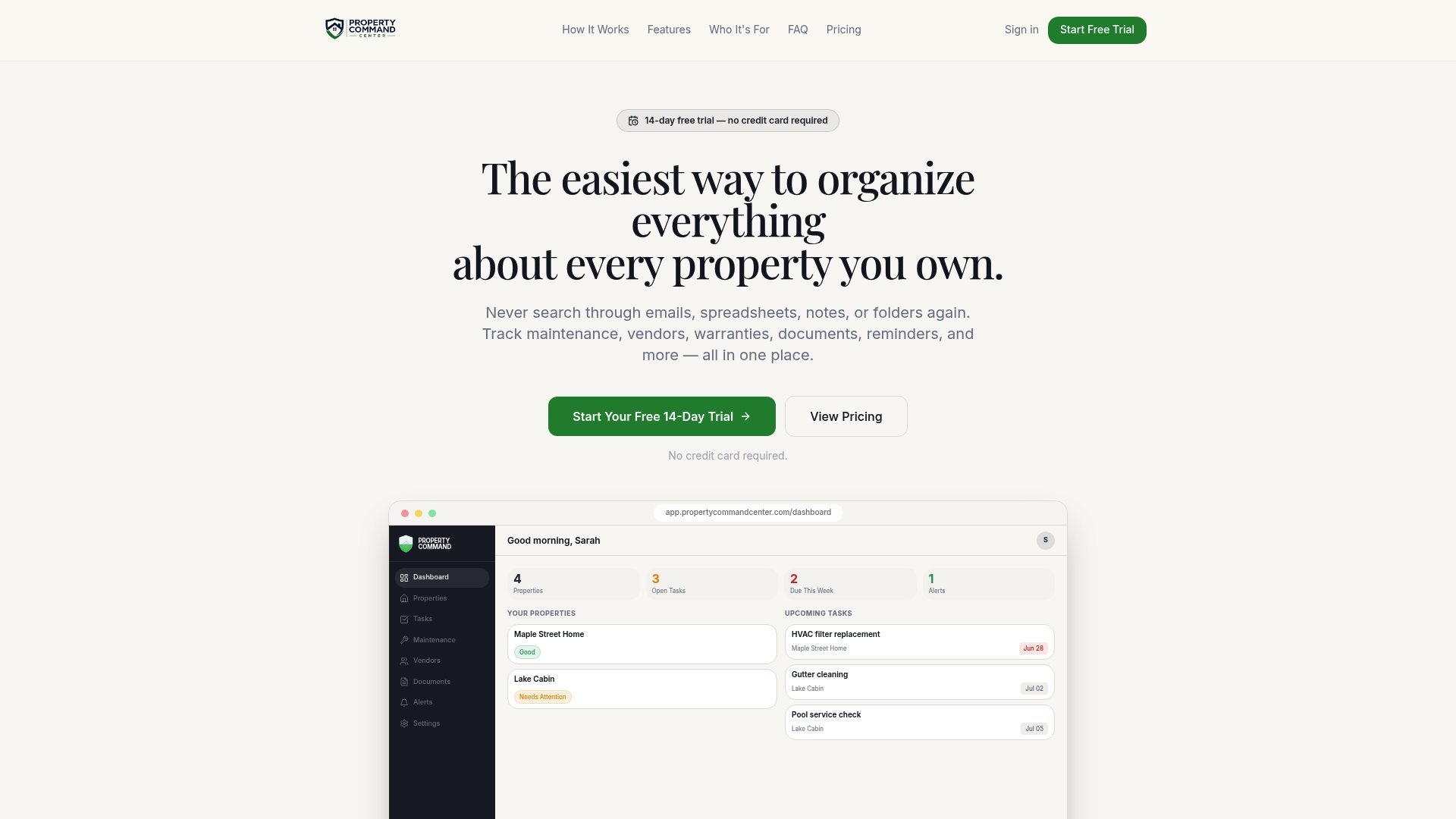
- Starter plan starts organizing a single property's documents and tasks for $19 per month.
- Pro plan adds support for managing several properties at once for $49 per month.
- Both plans include a free trial period.
If spreadsheets and scattered folders have gotten unmanageable, see the current plans and start a free trial today.
FAQ
What is the best filename format for property documents?
The most reliable format is PropertyID-YYYYMMDD-Description-v##.ext, which groups files by property first and sorts them chronologically within each folder. This structure follows the naming principles outlined in Harvard's data management guidance and works whether you manage one home or several.
Why should dates use YYYYMMDD instead of MM/DD/YYYY?
YYYYMMDD sorts correctly in any file system because the largest unit, the year, comes first. MM/DD/YYYY breaks sorting once files span more than one year, which becomes a real problem for anyone keeping multi-year maintenance records.
How often should I review and back up my property files?
The FTC recommends reviewing organized papers at least once a year, plus after any major change like a refinance or renovation. Keep both a digital backup and a physical copy in a fireproof box or safe-deposit box.
What should be in a grab-and-go emergency document packet?
Include the deed, current insurance policy, recent property photos for your home inventory, keys, and vendor contacts. Keeping these together speeds up both evacuation and any insurance claim that follows.
Does Property Command Center support this naming convention?
Property Command Center groups documents by property automatically and lets you add tags like vendor and expiration date alongside filenames. Plans start at $19 per month and include a free trial period.
Sources
- How to organize your important papers before a disaster strikes | Consumer Advice (FTC)
- File naming conventions | Harvard Data Management