
The fastest way to reduce landlord stress is to set firm boundaries, run every recurring task through one system, and automate rent and maintenance requests. Do this within the next 72 hours: set fixed "office hours" for tenant contact, turn on automatic rent collection, and build a two-vendor roster for your most common repair. Combine that with a written triage workflow and a tool like Property Command Center, and most of the daily mental load disappears.
TL;DR:
- Automating rent collection, building a vendor roster, and establishing fixed office hours can significantly reduce daily landlord mental load within 72 hours.
- Implementing a message triage system that categorizes requests by urgency prevents burnout caused by responding to unnecessary emergencies and ensures critical issues are prioritized.
- Using a single property management dashboard and standardized operating procedures ensures tasks are tracked, assigned, and followed up systematically, reducing oversight and duplication.
- Consistent tenant screening with verified income, references, eviction history, and credit checks prevents future conflicts and legal issues.
- Maintaining three to six months of reserves and scheduling preventive maintenance minimizes cashflow shocks and emergency repair calls.
Table of Contents
- What Causes Landlord Stress in the First Place?
- How Do You Triage Landlord Emergencies vs. Everyday Problems?
- What Systems Actually Cut the Mental Load?
- How Does Tenant Screening Prevent Future Stress?
- How Do You Build a Maintenance Plan That Prevents Emergencies?
- How Do You Build Financial Reserves That Prevent Money Stress?
- When Should You Outsource or Hire a Property Manager?
- How Property Command Center Puts These Systems Into Practice
- Setting Boundaries Is What Makes Any System Work
- Try Property Command Center: What to Test First
- Sources
- FAQ
What Causes Landlord Stress in the First Place?
Landlord stress rarely comes from one catastrophic event. It builds from dozens of small, unresolved tasks stacking up in the background: a maintenance request you haven't scheduled, a compliance deadline you half remember, a rent payment you're not sure cleared. A practical guide on managing landlord stress identifies this cumulative micro-task load, not any single crisis, as the primary driver of burnout among independent owners.
The main triggers tend to fall into a few buckets:
- Cashflow uncertainty — not knowing if rent will arrive on time or whether a big repair will wipe out this month's margin.
- Maintenance surprises — a water heater failing on a Friday night, or a small leak nobody caught in time.
- Tenant conflict — noise complaints, late payments, disputes over responsibility for damage.
- Compliance load — inspection deadlines, safety certifications, local rental registration rules that change without warning.
- Decision fatigue — the sheer number of small choices (which vendor, which response, which form) that never stop arriving.
That last one is the sneakiest. It's not the big decisions that wear landlords down. It's answering the same 15 small questions over and over, with no system to route them automatically.
Watch for early burnout signs: trouble sleeping, dreading your phone, snapping at tenants over minor issues, or avoiding your own rental paperwork for weeks. Mayo Clinic's guidance on stress management notes that unmanaged stress affects sleep and physical health long before it shows up as an obvious crisis. If stress starts affecting your daily functioning, resources like Samaritans offer 24/7 support for anyone in emotional distress, landlord or not.
How Do You Triage Landlord Emergencies vs. Everyday Problems?
Not every tenant message deserves the same urgency, and treating them all as emergencies is what burns landlords out fastest. A simple triage mindset fixes this in minutes.
- Sort by the "fire, flood, or blood" rule. If there's an active fire hazard, active flooding, or a safety risk to a person, that's a true emergency. Respond within the hour, day or night.
- Flag urgent but non-emergency issues. No heat in winter, a broken lock, a failed appliance. These need same-day acknowledgment and a repair scheduled within 24 to 48 hours.
- Bucket routine requests. Squeaky doors, cosmetic complaints, general questions. These belong in your regular weekly review, not an immediate response.
- Handle late rent on a fixed schedule. Send an automated reminder at day one, a personal note at day five, and follow your lease's stated late-fee process. Don't improvise each time.
- Document everything the moment it happens. Note the date, the tenant's message, your response, and any photos. Best-practice guidance on handling tenant complaints shows that acknowledging an issue within 24 hours, even before it's resolved, measurably reduces escalation and tenant turnover.
For lease violations or disputes that might head toward eviction, resist the urge to respond emotionally in text messages. Send a short, neutral acknowledgment ("I've received your message and will follow up by [date]"), then handle specifics in writing where you can keep a paper trail. That single habit prevents more landlord anxiety than almost anything else on this list, because it removes the guesswork of "did I say the right thing?"
What Systems Actually Cut the Mental Load?
Most landlord stress isn't about the tasks themselves. It's about holding every task in your head at once. The fix is boring but effective: get everything out of your memory and into one system you check on a schedule, not on impulse.
Start with a single dashboard where you can see property status, open maintenance items, and upcoming deadlines in one place instead of across five apps, a notebook, and your email inbox. Layer standard operating procedures (SOPs) on top of that for anything that repeats: a fixed response for maintenance requests, a fixed script for late rent, a fixed checklist for move-out inspections.
A message triage workflow keeps you from reacting to every ping the moment it arrives:
- Classify the message (emergency, urgent, routine, informational).
- Assign it a next action and a deadline.
- Acknowledge receipt to the tenant immediately, even if the fix takes longer.
- Follow up on a set schedule rather than whenever you remember.
Operational research on tenant issue triage workflows shows this exact sequence, classify, assign, acknowledge, follow up, prevents duplicated work and missed escalations far better than handling requests as they come in.
From there, automate what you can:
- Online rent collection with automatic reminders before the due date.
- Automated late-fee enforcement built into your lease terms, so you're not the one delivering bad news.
- Photo or video intake required with every maintenance request, so you can assess severity before dispatching a vendor.
- Recurring maintenance reminders tied to the calendar, not your memory.
Your first week checklist: 1) Pick one dashboard or tool and commit to it. 2) Move every open task into it. 3) Set office hours and a dedicated contact line. 4) Turn on automatic rent reminders. 5) Draft three SOPs for your most common issues. 6) Add two vendors per trade to your roster. 7) Schedule a recurring 20-minute weekly review.
Pro Tip: Don't try to build every system in one weekend. Pick the single most annoying recurring task, usually rent chasing or maintenance scheduling, and automate that one thing first. Momentum beats a perfect plan you abandon by week two.
How Does Tenant Screening Prevent Future Stress?
Most tenant-related stress traces back to a screening decision made too fast. Consistent, written screening criteria protect you legally and save you months of headaches later.
A solid screening checklist includes:
- Verified income, typically two to three times the monthly rent.
- Landlord references from at least the past two residences, not just the most recent.
- An eviction history search through a tenant screening service.
- A credit check with a clear, written minimum threshold you apply to every applicant equally.
Applying the same criteria to every applicant isn't just fair. It's your best defense if a rejected applicant ever claims discrimination.
Move-in communication matters just as much as screening. Your welcome packet or lease addendum should spell out your office hours, exactly how to submit a maintenance request, and what counts as an emergency versus something that waits until Monday. Tenants who know the rules upfront file fewer confused, anxious messages later.
For rent reminders and any friction point, keep the tone neutral and factual: "This is a reminder that rent was due on the 1st and is currently outstanding. Please contact us if you're experiencing a hardship." No urgency, no accusation, just the facts and a documented timestamp.
How Do You Build a Maintenance Plan That Prevents Emergencies?
Preventive maintenance is the single best lever against 2 a.m. phone calls. A seasonal schedule—gutters and furnace filters in fall, HVAC servicing in spring, water heater checks annually—catches small problems before they become expensive ones. Guidance on stress reduction for landlords points to preventive scheduling as one of the most reliable ways to cut unnecessary emergency calls.
Your vendor roster matters just as much as your schedule:
- Keep at least two vendors per trade (plumber, electrician, HVAC, general handyman) so a single unavailable contractor doesn't stall a repair.
- Set clear expectations upfront on rates, typical response time, and invoicing format before you need them urgently.
- Require photos or short videos with every maintenance request. This cuts unnecessary trips, helps vendors quote accurately before arriving, and creates a record if a dispute ever comes up.
An intake form that captures the issue, location, and visual evidence before you contact a vendor turns a vague "something's wrong with the sink" into a five-minute diagnosis instead of a wasted service call.
How Do You Build Financial Reserves That Prevent Money Stress?
Cashflow shocks cause more sleepless nights than difficult tenants. A basic reserve rule solves most of it: keep three to six months of operating expenses per property in a separate account, and treat that money as untouchable except for genuine emergencies.
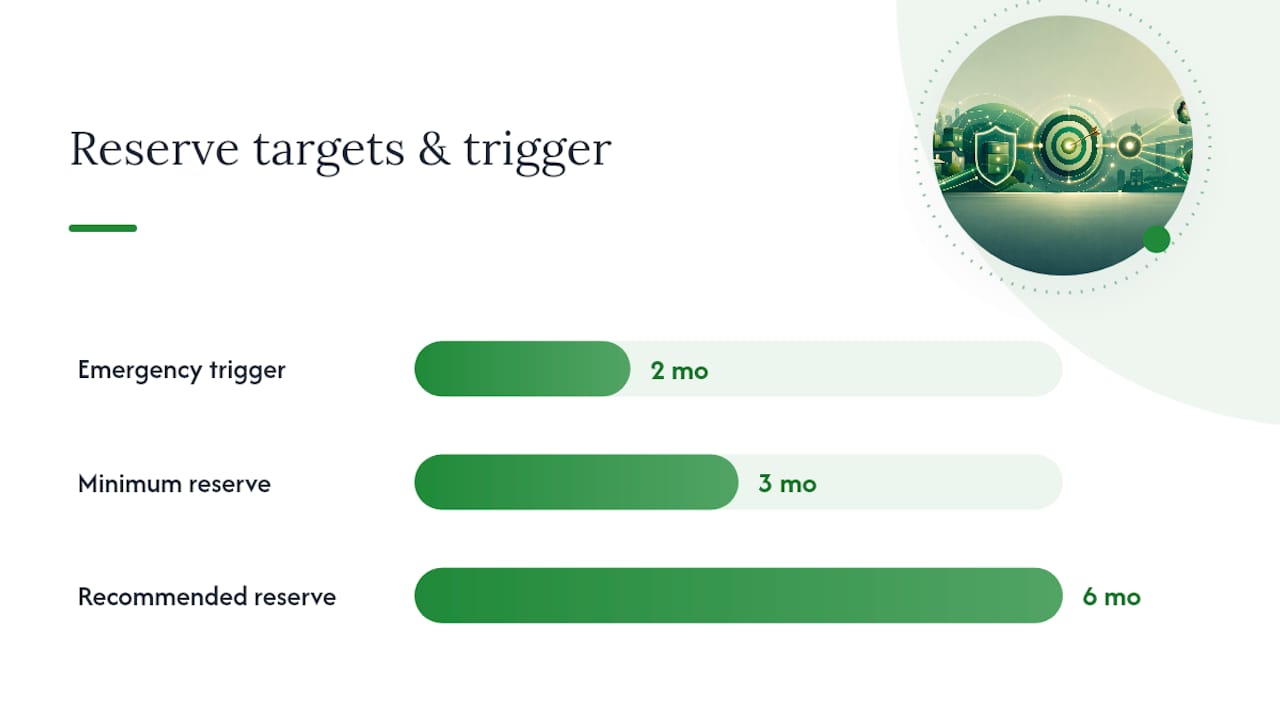
Run a simple monthly cashflow check: total rent collected minus mortgage, insurance, taxes, and a set-aside for maintenance. If that number goes negative two months running, address it immediately rather than hoping the next month fixes itself.
Insurance deserves an annual look, not a "set it and forget it" policy. A periodic review of coverage limits, liability protection, and any exclusions tied to property age or maintenance history prevents the kind of surprise gap that turns a bad situation into a financial one. Insurance guidance tied to home maintenance explains why insurers increasingly expect documented upkeep, which is one more reason a maintenance log pays for itself.
For recordkeeping, keep it simple:
- One digital folder per property for receipts and invoices.
- One spreadsheet or software feed tracking income and expenses.
- Categorize expenses monthly, not at tax time, so nothing gets lost or misremembered.
When Should You Outsource or Hire a Property Manager?
Self-management works well for many owners until the hours quietly add up. A few thresholds signal it's time to consider help:
- You're spending more than 8 to 10 hours a month on landlord tasks per property, and that time keeps growing.
- You own four or more units, or your properties are spread across different neighborhoods or time zones from where you live.
- The emotional cost outweighs the financial benefit. If tenant conflict or late-night calls are affecting your sleep or your other work, that's a real cost even if it doesn't show up on a spreadsheet.
If full management feels premature, start by outsourcing the tasks that create the most stress and the least value from doing them yourself: after-hours emergency response, routine maintenance coordination, tenant screening, and rent collection. These are the highest-friction, most time-sensitive jobs, and handing them off first delivers the fastest relief.
If you do evaluate a property manager, judge them on response time guarantees, transparent fee structure, and exactly what's included in scope. Vague promises about "full service" without specifics are a warning sign regardless of who's offering it.
How Property Command Center Puts These Systems Into Practice
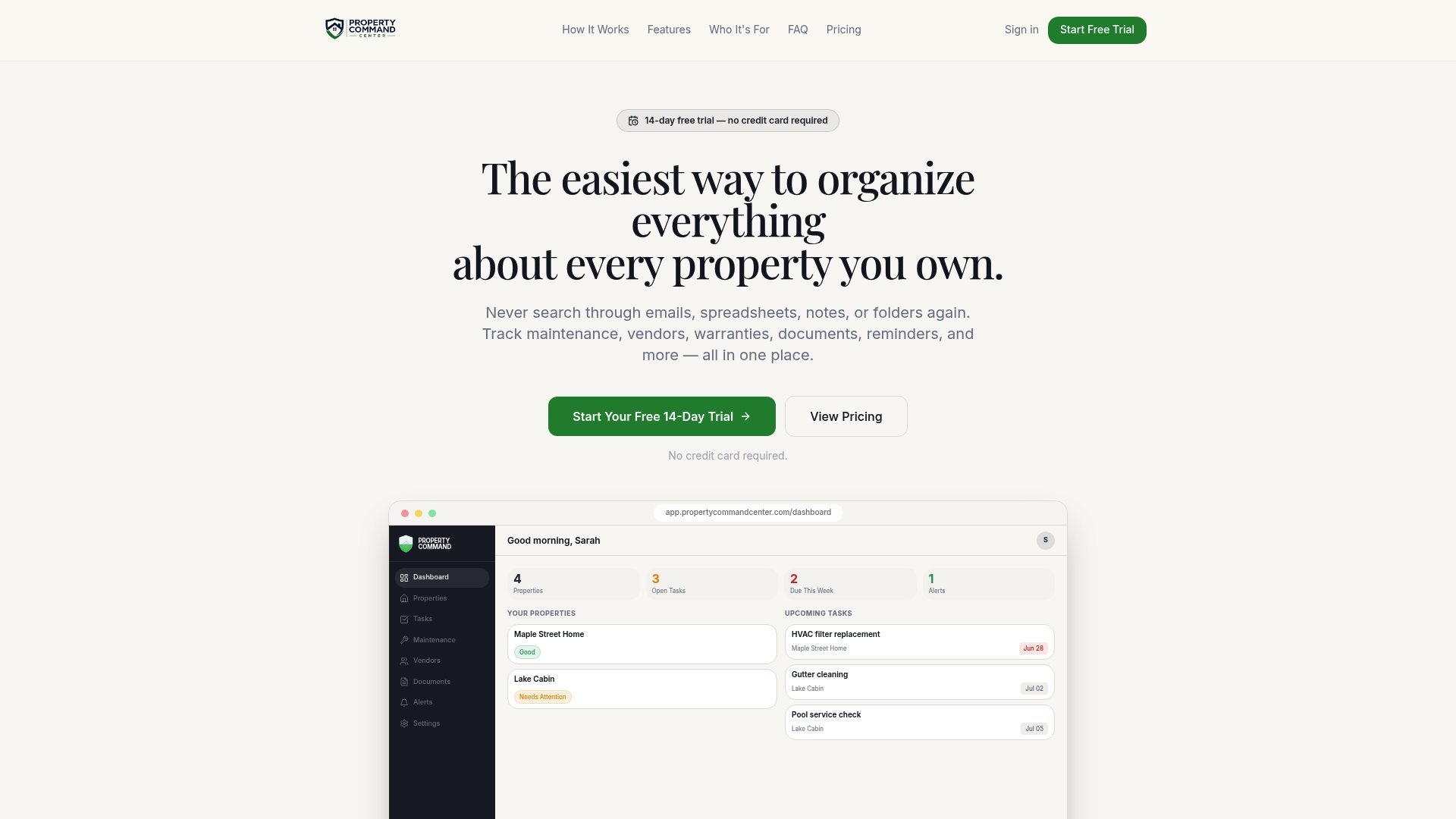
Everything above, the single dashboard, the SOPs, the vendor roster, the maintenance schedule, is easier to sustain with a tool built around it. Property Command Center consolidates property status, maintenance schedules, vendor contacts, and a document vault for warranties, manuals, and insurance papers into one place, so you're not piecing together the picture from five different apps.
The workflow mirrors the triage principles covered earlier: a maintenance request comes in, you assign it to a vendor from your roster, you track it through to completion, and the record files itself automatically. Four steps, no scattered notes, no forgotten follow-up.
That kind of document and task tracking is what turns "systems" from a good idea into something you actually keep doing past week two.
Setting Boundaries Is What Makes Any System Work
Every system in this guide fails without one thing: enforced boundaries. Set office hours, publish a dedicated line for non-emergencies, and actually let calls go to voicemail outside those hours. A written rule you don't follow isn't a boundary, it's a suggestion.
Don't try to fix everything this week. Pick one change, automated rent or a vendor roster, and get it fully working before adding the next one. Incremental beats overwhelming every time.
— Francisco
Try Property Command Center: What to Test First
Property Command Center gives individual owners a straightforward way to put these systems in place without learning enterprise software built for property management companies. Two plans are available, both starting with a 14-day free trial and no credit card required; current prices are on the pricing page.
If you're ready to try it, don't rebuild your entire process on day one. Start small:
- Set up your maintenance schedule for the next quarter, including any seasonal tasks you tend to forget.
- Add two vendors per trade to your roster so you're never stuck waiting on a single contractor.
From there, expand into document storage and reminders at your own pace. Check current plan details and pricing, or browse the vendor management features to see how the roster tool fits into the maintenance workflow covered earlier in this guide.
Sources
- Tenant complaints: best practices, processes & templates
- Tenant issue triage workflow for property managers
- Stress reduction tips for landlords
- Mayo Clinic — Stress management expert answers
FAQ
What Is the 7% Rule for Rental Property?
If you've seen it referenced, it's likely a variation of a cashflow or return-on-investment guideline specific to one investor's approach, so treat it as informal advice rather than an industry standard.
What Counts as Emotional Distress From a Landlord?
Emotional distress claims against a landlord typically involve conduct like harassment, illegal entry, retaliation, or failure to address serious habitability issues that cause documented psychological harm. Laws vary significantly by state, so a tenant pursuing this kind of claim should consult a local attorney rather than rely on general guidance.
What Is the 50% Rule in Rental Property?
The 50% rule is a rough budgeting shortcut some investors use, estimating that operating expenses (excluding the mortgage) will consume about half of gross rental income. It's a quick planning tool, not a guarantee, and actual costs vary by property age, location, and how well you've maintained it.
How Do You Deal With a Landlord (or Tenant) Situation That Feels Unreasonable?
Document every interaction in writing, stick to neutral factual language, and reference your lease terms directly rather than reacting emotionally in the moment. If a dispute escalates toward legal territory, most local tenant unions, housing authorities, or an attorney can clarify your rights and next steps before things get worse.