
Every landlord needs seven document categories on hand at all times: rental application and screening files, a signed lease with its addenda, move-in and move-out inspection records, formal notices (late rent, lease violation, rent increase), payment and security deposit records, maintenance logs, and a clear storage and retention plan. Templates and a centralized document vault make all seven faster to produce and easier to defend if a tenant disputes a charge or a deposit deduction.
TL;DR:
- Maintaining comprehensive screening files, including signed authorizations and background reports, ensures compliance and supports fair tenant selection processes.
- A detailed move-in inspection with photos, videos, and signed acknowledgments provides crucial evidence for deposit disputes and unit condition at turnover.
- Organizing all documents by property, unit, and tenant with a digital vault facilitates quick access and reduces legal and operational risks.
- Consistently following a step-by-step turnover and onboarding process shortens vacancy times and prevents missing or misplaced paperwork.
- Using templates, local notice rules, and a centralized platform streamlines legal compliance, record keeping, and reduces administrative errors.
Table of Contents
- Rental Application and Tenant Screening Records
- Signed Lease Agreement and Common Addenda
- The Move-in Walk-Through and Inventory File
- Welcome Letter and Tenant Information Packet
- Notices: Late Rent, Lease Violations, and Rent Increases
- Renewals, Amendments, and Move-Out Documentation
- Maintenance, Payment, and Ownership Records
- How to Store and Retain Rental Paperwork
- Building a Simple Onboarding to Turnover Workflow
- Why Paper Discipline Pays Off at Turnover
- Put the Checklist on Autopilot With a Document Vault
- Templates and Guidance Worth Bookmarking
- Sources
- FAQ
Rental Application and Tenant Screening Records
A tenant application should collect contact information, employment and income details, rental history, personal references, and information on co-applicants or pets. That paperwork is what you refer to later if a tenant claims you rejected them unfairly or a court asks why you chose one applicant over another.
Beyond the application itself, keep the full screening file:
- Signed screening authorization giving you permission to pull credit and background reports
- Credit report and criminal background check results
- Income verification (pay stubs, offer letters, or bank statements)
- Eviction history report, where available
These records support your tenant application checklist and prove you followed a consistent screening process. Because credit and background reports count as consumer reports, the FTC requires businesses to dispose of that information securely once you no longer need it. Shredding paper copies and permanently deleting digital files isn't optional. It's a federal privacy expectation for anyone handling consumer-report data.
Signed Lease Agreement and Common Addenda
The lease is the backbone of every rental document checklist, and a weak one causes more disputes than any other single document. At minimum, it needs to record:
- Names of all parties and the lease term
- Rent amount, due date, and accepted payment methods
- Security deposit amount and the conditions for its return
- Who pays which utilities
- Repair and maintenance responsibilities
- Landlord entry and access rights
- Remedies for default, including late fees and lease termination triggers
Most tenancies also need addenda attached to the base lease: a pet addendum, a lead paint disclosure for properties built before 1978, a parking or storage addendum, HOA rules if applicable, and appliance warranty documentation. When you amend a lease later, keep the old version alongside the new one. A standard checklist for lease documents needed at signing always includes the signed original (or a verifiable e-signature audit trail) plus every addendum, stored together, never scattered across separate folders.
The Move-in Walk-Through and Inventory File
Do this before you hand over the keys, not after. A move-in inventory with room-by-room notes and dated photos is the single strongest piece of evidence you'll have if a tenant disputes a deposit deduction eighteen months from now.
- Walk each room and note existing damage, wear, or missing items.
- Photograph and video every room, including close-ups of flooring, walls, appliances, and fixtures.
- Record utility meter readings on the day the tenant takes possession.
- Log which keys, fobs, or garage remotes you handed over.
- Get the tenant's signature confirming they agree with the condition noted.
Label every photo and file using a consistent pattern: property, unit, room, and date. A file named "Oakview203_Kitchen_20260214" is searchable in seconds; "IMG_4471.jpg" is useless a year later. That labeling habit matters even more at move-out, when you'll run the same walk-through again and compare it line by line against the move-in file to justify any charges.
Pro Tip: Shoot a slow, narrated video sweep of the whole unit in addition to still photos. Video captures context (light, smell of fresh paint, overall condition) that a single still photo can't, and it's harder for a tenant to argue the images were staged or cropped.
Welcome Letter and Tenant Information Packet
A welcome packet handed over at move-in cuts down on the "who do I call" texts you'll otherwise get for the next twelve months. Include:
- Utility provider contact information and account setup instructions
- Trash pickup days and parking rules
- Step-by-step instructions for submitting a maintenance request
- Emergency contact numbers, including yours and a backup
- A copy of the signed move-in inspection checklist
Attach appliance manuals and warranty information for anything the tenant will use directly, like the washer, dryer, or HVAC system. Note your preferred communication channel (text, email, or a portal) so tenants don't default to calling at odd hours. File a signed copy of the packet in the tenancy folder along with the date and method you used to deliver it.
Notices: Late Rent, Lease Violations, and Rent Increases
Formal notices are where sloppy paperwork actually costs you money in court. Every notice template should include:
- The specific lease clause being enforced
- Exact dates: when the violation occurred, when the notice was served, and the deadline to cure or vacate
- The specific action required of the tenant to resolve the issue
- Your signature and the date
- The method of service (hand delivery, certified mail, posting, or email)
Timing rules vary sharply by state and even by city, so verify local requirements before you serve anything. A three-day pay-or-quit notice is standard in some jurisdictions and legally meaningless in others if the timeline is wrong. Whatever notice you send, keep proof of service: a signed delivery receipt, a certified mail tracking number, or a timestamped email. Without that proof, a judge has no way to confirm you followed the required process at all.
Renewals, Amendments, and Move-Out Documentation
Ending or renewing a tenancy generates its own paper trail, and skipping any piece of it weakens your position later.
- Send a written renewal offer letter with the new rent and lease term before the current lease expires.
- If the tenant accepts changed terms, document it as a signed amendment rather than a verbal agreement.
- Around 30 days before move-out, send a move-out instruction letter covering cleaning expectations, key return, and the final inspection date.
- Conduct the final inspection using the same checklist format as the original move-in walk-through.
- Send an itemized security deposit return letter showing the math: deposit amount, deductions, supporting invoices, and photos backing each charge.
That last step is where most disputes actually happen. A vague deduction ("cleaning fee: $200") invites a challenge. An itemized one with a dated invoice and a comparison photo rarely does.
Maintenance, Payment, and Ownership Records
Beyond tenant-facing paperwork, a handful of operational records protect you at tax time and during any ownership dispute.
- Maintenance requests, work orders, and contractor invoices with completion dates
- A rent ledger tracking every payment date, amount, and method
- Documentation of any payment plans you've agreed to
- Insurance certificates and renewal dates
- Mortgage or ownership records
- Copies of any required local rental licenses or permits
These aren't just filing exercises. A contractor invoice from eight months ago is what proves you addressed a repair request promptly if a tenant later claims neglect. A complete rent ledger is what settles a "I already paid that" argument in about ten seconds.
How to Store and Retain Rental Paperwork
Organize rental paperwork in four layers: portfolio, property, unit, and tenancy. Scan specifically because it lets you find any file fast, whether you own two units or twenty.
A simple folder map looks like this:
- Portfolio level: business licenses, master insurance policy, tax records
- Property level: insurance certificates, permits, warranties, and vendor contracts tied to that address
- Unit level: appliance manuals, unit-specific inspection history
- Tenancy level: application, lease, notices, payment history, move-in/move-out files for that specific tenant
Aim to answer any tenant or unit question in under one minute. That's a realistic retrieval target once your folder structure and file names are consistent. If you're still scanning legacy paper files, run them through OCR software so they're searchable by text, not just browsable by folder. Keep encrypted backups in at least two locations, and hold onto signed originals if your state requires it for eviction proceedings.
On timing: keep tenancy records for at least three years after a lease ends, and hold financial records like rent ledgers and tax documents for up to seven years. Once a consumer report (credit or background check) has served its purpose, dispose of it according to FTC data-security guidance rather than letting it sit indefinitely in a drawer or an unsecured folder. For a deeper walk-through of naming conventions and backup routines, see this guide to storing property documents.
Building a Simple Onboarding to Turnover Workflow
The checklist above only works if you follow it in the same order every single time. A repeatable sequence beats a mental checklist you're rebuilding from memory each time a tenant moves in or out.
- Before marketing the unit: confirm the property file is current (insurance, permits, warranties).
- Tenant onboarding: collect the application, run screening, execute the signed lease, and complete the move-in inventory with photos.
- Ongoing tenancy: log every maintenance request and payment as it happens, not in a batch at month's end.
- Turnover: run the move-out inspection, collect final invoices, and produce the itemized deposit letter.
Every file should carry consistent metadata: property, unit, tenant name, and date. That's what makes a document vault searchable instead of a dumping ground. A sequenced turnover checklist that ties inspections, invoices, and photos to one tenancy file shortens vacancy periods because you're not hunting for missing paperwork while a new tenant is waiting to move in. Owners running short-term or vacation rentals benefit from a similar two-layer inspection process that catches condition issues before guests or new tenants ever see the unit.
Pro Tip: Bundle everything from a single turnover, photos, invoices, cleaning receipts, and the deposit accounting, into one packet rather than four separate files. When a tenant disputes a charge six weeks after moving out, you want one folder to open, not four.
Why Paper Discipline Pays Off at Turnover
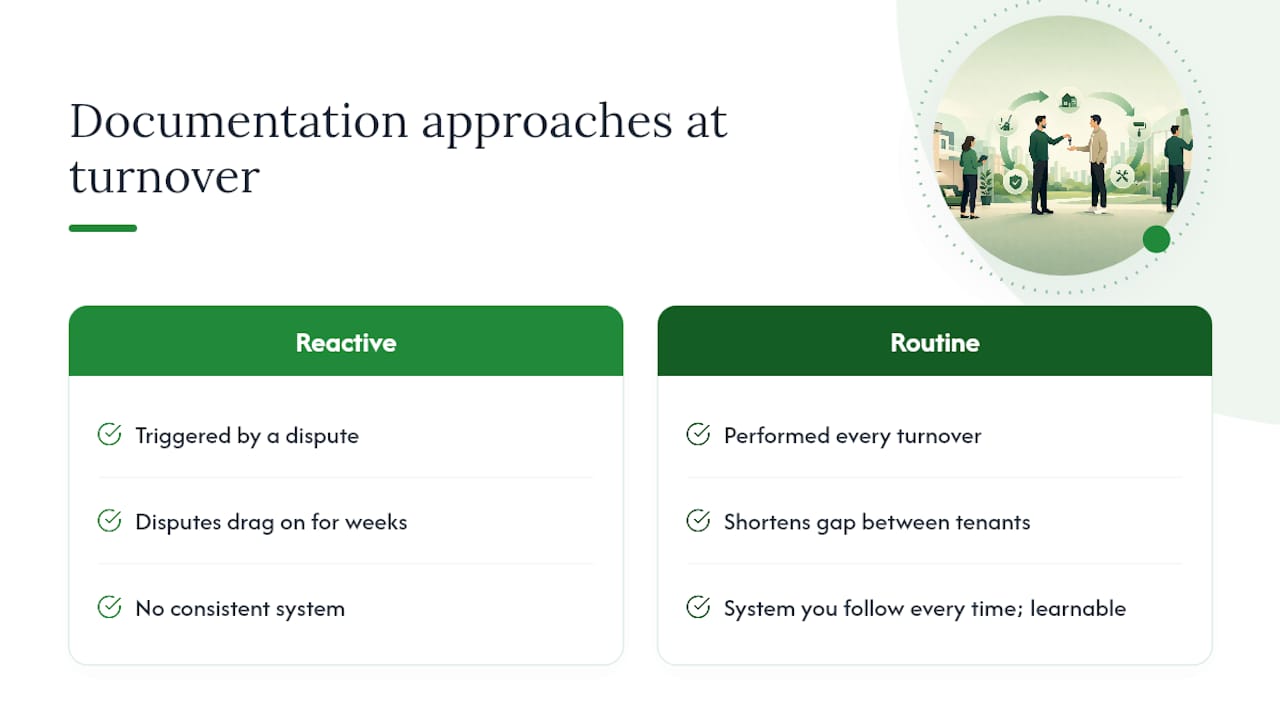
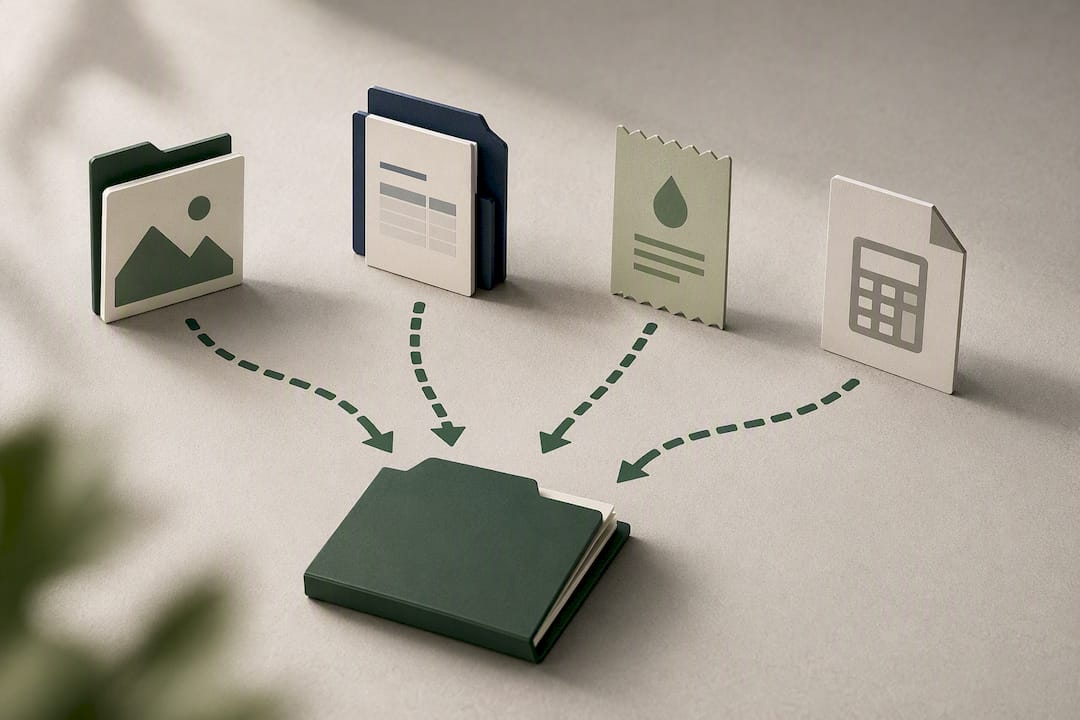
Most landlords learn document discipline the hard way, usually after a deposit dispute drags on for weeks because nobody can find the move-in photos. A consistent filing habit doesn't just protect you legally. It shortens the gap between one tenant leaving and the next one moving in, because you're not scrambling to reconstruct a paper trail from memory and old text messages.
The owners who handle turnover fastest treat documentation as a routine step, not an afterthought triggered by a dispute. That habit is learnable, and it doesn't require legal training. It requires a system you actually follow every time.
— Francisco
Put the Checklist on Autopilot With a Document Vault
Running this checklist across even three or four properties by email and spreadsheet is where most landlords lose track of something important, whether it's a missing move-in photo or a maintenance invoice that never got filed. A platform was built specifically for owners juggling multiple properties who want the organization of a full system without the complexity of enterprise property management software.
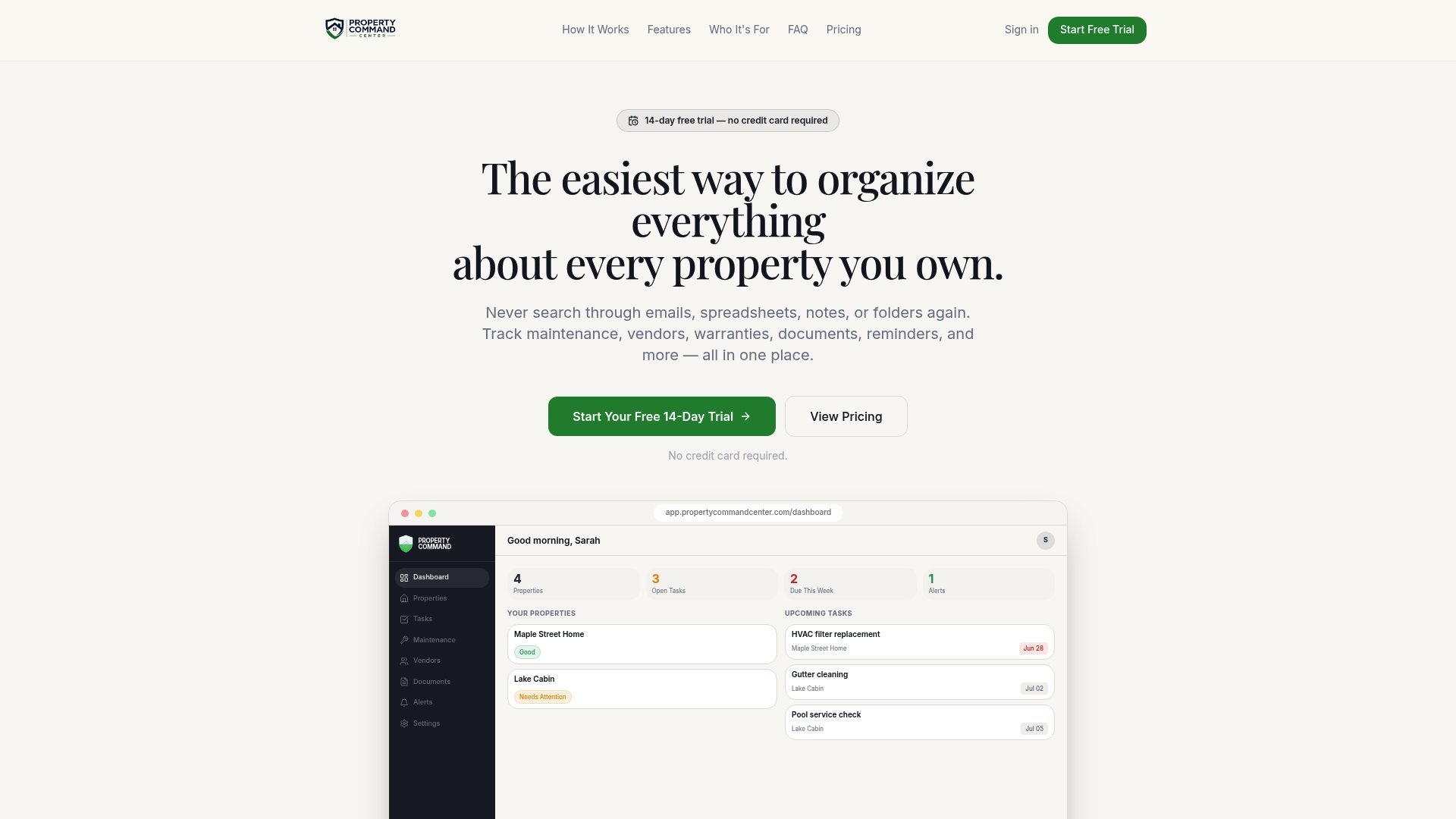
The dashboard gives you one place to store lease documents, warranties, and inspection photos in a document vault, track maintenance requests and vendor contacts, and set reminders so a renewal deadline or license expiration never slips past you. You don't need training to set it up, and there's no tenant or rent management bloat you'll never use. Start with a free trial, or check the Starter and Pro plans on the pricing page to see which fits the number of properties you manage.
Templates and Guidance Worth Bookmarking
Before serving any notice, confirm your state and local rules, since timing and required language vary widely. For downloadable forms, MySmartMove's rental documents guide offers template links, and the FTC's consumer-report disposal guidance covers screening-record privacy rules directly.
Sources
- Apartments
- Scan
- 10 Rental Documents to Keep on File | MySmartMove
- Disposing consumer-report information: what the rule tells you | FTC
FAQ
What should I include in a rental property walkthrough checklist?
A walk-through checklist should cover room-by-room condition notes, dated photos and video of every space, current utility meter readings, a record of keys and fobs issued, and the tenant's signature confirming agreement. Run the same checklist format at move-out so you can compare both records side by side.
What is the 50/30/20 rule for rent?
The 50/30/20 rule is a personal budgeting guideline, not a rental document requirement.
Can I write up my own rental agreement?
Yes, landlords can write their own lease, but it must include the core terms courts expect: parties, rent, term, deposit conditions, and repair responsibilities, and it needs to comply with your state's landlord-tenant law. Many landlords start from a vetted template and customize the addenda rather than drafting from scratch.
What documentation do I need to rent out a property?
At minimum, you need a rental application, screening authorization and reports, a signed lease with relevant addenda, a move-in inventory, and any required local rental license or permit. A centralized system like Mypropertycommandcenter helps keep all of it in one place instead of scattered across email and spreadsheets.
How long should landlords keep rental documents?
Keep tenancy records for at least three years after a lease ends, and hold financial records like rent ledgers and tax documents for up to seven years. Dispose of consumer-report data like credit and background checks according to FTC guidance once it's no longer needed.