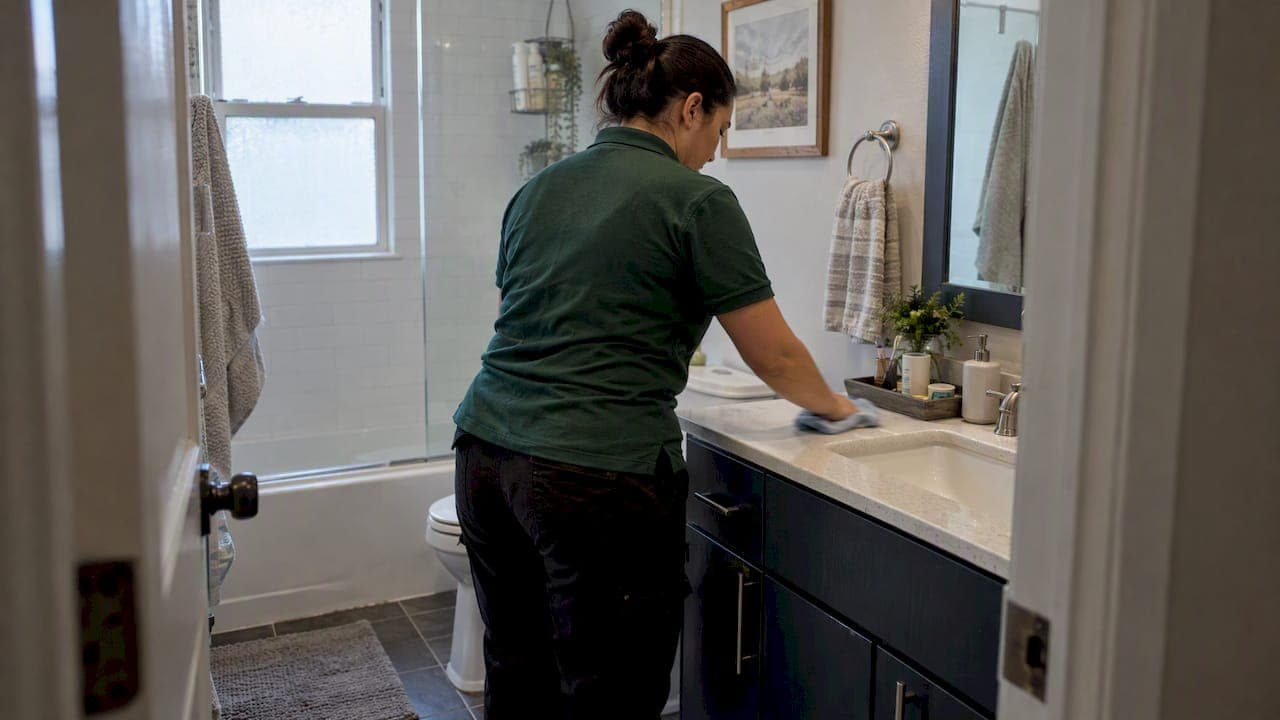
The best approach to coordinate cleaning vendors combines one centralized calendar, automated booking confirmations, written standard operating procedures, and a simple weekly quality check. If you manage more than one property, start today by blocking a master calendar slot for your next turnover clean and sending the vendor a written confirmation with arrival time and access instructions.
TL;DR:
- Reserve 2 to 3 hours for turnover cleans at least 24 hours before arrival; schedule 4 to 6 hour deep cleans during vacancies over two days.
- Confirm bookings immediately, remind vendors 24 hours before arrival, and require an arrival text; cancellations must be reported at least two hours ahead.
- Collect insurance, pricing, access details, and emergency contacts before the first job; address any trial clean that misses more than two SOP items before rebooking.
- Track on time, first inspection pass, rework, and photo submission rates; review performance over 90 days before expanding a vendor’s workload or replacing them.
- Give each vendor a unique code for each job, revoke it after completion, and log access; allow a 30 minute buffer after guest checkout.
Table of Contents
- How to set scheduling rules for recurring, turnover, and deep cleans
- Messaging rules that prevent misunderstandings and speed up fixes
- Onboarding checklists and SOPs that lock in consistent quality
- Standardizing supplies and following basic chemical safety rules
- Tracking vendor performance with a lightweight scorecard
- What a 90-day vendor tracking cycle actually shows
- Managing keys, lockboxes, and codes without guest conflicts
- Coordinating several vendors on the same property without gaps
- Building a backup vendor list before you need one
- Connecting your workflow to property management software
- Legal and insurance basics before you sign a vendor
- The one change most owners skip until it costs them
- How Property Command Center supports the workflows above
- FAQ
- Sources
How to set scheduling rules for recurring, turnover, and deep cleans
Scheduling chaos usually comes from treating every clean the same way. Separate your cleaning calendar into three labeled service types, each with its own default duration and buffer, so nobody guesses how long a job should take.
- Recurring cleans (weekly or biweekly upkeep): block a typical duration with a buffer before the next booking.
- Turnover cleans (between short-term rental guests): block 2 to 3 hours and lock the slot at least 24 hours before guest arrival.
- Deep cleans (quarterly or seasonal): block 4 to 6 hours and schedule during vacancy windows longer than two days.
Build one master calendar that every vendor can see, color-coded by property and service type. This single view prevents the most common failure: two vendors assuming they both have the same afternoon slot. For short-term rental portfolios juggling back-to-back guest turnovers, a maintenance cadence framework built around four recurring intervals keeps cleaning, inspections, and repairs from colliding on the same day.
Lock turnover bookings as soon as a reservation is confirmed rather than waiting until checkout day. Recurring cleans should be locked at least a week ahead, and deep cleans a month out, since they often require coordinating around tenant or guest schedules.
Pair every locked booking with an automatic reminder sequence: a confirmation the moment the slot is booked, a reminder 24 hours before arrival, and a same-day text once the vendor is en route. That cadence alone eliminates most no-shows and late arrivals, because the vendor has three separate touchpoints instead of one easily missed message.
Messaging rules that prevent misunderstandings and speed up fixes
Pick one primary channel per purpose instead of scattering messages across apps. Text messages work best for same-day logistics like arrival times or lockbox codes. App-based messaging (through your property management platform) should hold the paper trail: confirmations, instructions, and SOP links. Email is reserved for contracts, invoices, and anything that needs a permanent record.
A simple three-message sequence covers most jobs:
- Booking confirmation sent the moment the slot is locked, including address, access method, and task list.
- Reminder sent 24 hours before the appointment, repeating access details.
- Arrival confirmation requested from the vendor by text once they are on-site.
When plans change, have one rule: the vendor who cannot make it is responsible for flagging it at least two hours before arrival, which triggers your backup vendor list. Guest overlaps and last-minute cancellations are the two most common disruptions, so decide in advance who gets notified and in what order.
Keep a simple record for every job: timestamped photos of finished rooms, and a short note for anything unusual (damage, missing supplies, access issues). Store these centrally rather than in individual text threads, since you will need them if a dispute or insurance claim comes up later. Automating these confirmation workflows across several homes cuts down the manual back-and-forth considerably.
Pro Tip: Save your confirmation and reminder messages as templates so onboarding a new vendor takes minutes, not a rewritten message every time.
Onboarding checklists and SOPs that lock in consistent quality
A new vendor should never start a job without a documented packet. Build one onboarding file per vendor containing contact information, proof of insurance, agreed pricing, contract terms, and step-by-step access instructions for every property they will service.
- Collect the paperwork first: insurance certificate, signed pricing agreement, and emergency contact details before scheduling the first job.
- Hand over a room-by-room SOP: list the tasks expected in each space, the target time per room, and reference photos showing an acceptable finish.
- Run a trial clean: score it against your SOP checklist, note any gaps, and walk through corrective actions with the vendor directly.
- Set a 30-day check-in: confirm the vendor is still meeting the SOP standard before moving them to a standard schedule.
- Store the SOP centrally and version it: update the file whenever a property's layout, supplies, or expectations change, and timestamp each revision.
Treat the trial clean as a real test, not a formality. If a vendor misses more than two SOP items on a trial run, address it before the next booking rather than hoping it improves on its own. For small portfolios, documented SOPs implemented in three steps tend to prevent the kind of inconsistent work that leads to costly repeat visits.
Standardizing supplies and following basic chemical safety rules
Letting each vendor bring their own products invites inconsistent results and safety risk. Set an approved product list and require vendors to use it, rather than discovering mid-contract that a vendor swapped in something harsher or cheaper.
- Favor products carrying EPA's Safer Choice or Design for the Environment certification, which documents the criteria products must meet for that label.
- Prosoco's Enviro Klean All-Purpose Cleaner is one example of a Safer Choice-certified commercial cleaner suited to varied facility tasks.
- Use centralized procurement or an auto-ship program so every vendor restocks from the same approved list instead of substituting products on their own.
- Require vendors to label every secondary spray bottle with the product name and hazard information before it touches a client's property.
OSHA's hazard communication guidance requires employers to maintain a written hazard communication program and keep Safety Data Sheets accessible on-site during every shift. Build that requirement into vendor onboarding: ask vendors to carry SDS sheets in the field, not just in an office binder, and confirm they provide basic PPE like gloves and eye protection for chemical handling.
Tracking vendor performance with a lightweight scorecard
A handful of consistent metrics tells you more than a long checklist nobody reviews. Track four numbers per vendor:
- On-time rate: rate of jobs started within the agreed arrival window.
- Pass rate: rate of cleans that meet your SOP on first inspection.
- Rework rate: rate of jobs requiring a return visit to fix an issue.
- Photo verification rate: rate of jobs where the vendor submitted required completion photos.
Match your inspection frequency to how often the property turns over. High-turnover short-term rentals warrant daily spot checks on finished units, recurring residential cleans can be reviewed weekly, and a full deep-clean audit once a month catches issues that daily checks miss.
Tracking these numbers over a 90-day window gives you enough data to decide confidently whether to expand a vendor's workload or replace them, rather than reacting to a single bad review.
What a 90-day vendor tracking cycle actually shows
Owners who track vendor performance over a 90-day window using a consolidated contact directory and a simple scorecard see fewer missed appointments and faster issue resolution than owners relying on scattered texts and spreadsheets. Organizing contractor contacts by property cuts the time it takes to reach the right vendor when something goes wrong. A practical five-step coverage plan, booking confirmation, backup vendor identification, SOP handoff, trial clean, and a 90-day review, gives you a repeatable structure instead of starting from scratch with every new property.
Managing keys, lockboxes, and codes without guest conflicts
Physical access is where coordination breaks down fastest, especially with short-term rentals where guest checkout and vendor arrival can overlap by minutes. Standardize one access method per property rather than mixing keys, lockboxes, and smart codes across your portfolio.
Smart lock codes work best because you can issue a unique, time-limited code per vendor per job, then revoke it automatically once the clean is logged complete. If a property still uses a physical lockbox, rotate the code regularly and never let a vendor memorize a permanent one.

Build a 30-minute buffer between guest checkout and vendor arrival whenever your booking system allows it, which avoids the awkward overlap of a cleaner walking in while a guest is still packing. When back-to-back bookings make that buffer impossible, notify both the vendor and the outgoing guest in advance so neither is caught off guard.
Keep an access log noting which code or key was issued, to whom, and when it was deactivated. This matters for liability as much as convenience: if an item goes missing or damage is reported, you need a clear record of exactly who had access and during what window. For condo or association properties, factor in building-specific access rules like front-desk sign-in or elevator reservations, since these add steps a vendor needs to know before the appointment day.
Coordinating several vendors on the same property without gaps
Multi-vendor jobs, a cleaner and a landscaper on the same turnover day, for instance, create two risks: overlapping schedules that get in each other's way, and gaps where nobody is accountable for a task. Sequence vendors with enough buffer that one team finishes and exits before the next arrives, rather than scheduling them to start at the same time.
Assign one vendor as the "last touch" contact responsible for final walkthrough and lockup, so there is no ambiguity about who confirms the property is guest-ready. Without that designation, two vendors can each assume the other handled the final check.
Use your master calendar to flag any day with more than one vendor scheduled at the same property, and review those days specifically for sequencing conflicts. A color-coded calendar makes these overlaps visible at a glance instead of requiring you to cross-reference multiple vendor schedules manually.
When gaps appear, such as a task nobody has claimed between a cleaning crew's departure and a maintenance visit, assign it explicitly rather than assuming it falls under someone's general scope. Document which vendor owns which task in your SOP so a gap in service does not get discovered only after a guest complains.
Building a backup vendor list before you need one
Vendor cancellations happen most often at the worst possible time, the morning of a guest turnover. Identify at least one backup vendor per property or per cluster of nearby properties before your primary vendor ever cancels, not after.
Keep backup vendor contact details, standard pricing, and access instructions in the same place as your primary vendor's file, so activating them takes minutes rather than a scramble through old text threads. Share your SOP with backup vendors in advance too, even if they rarely get called, so the first job they ever do for you is not also the first time they see your quality standards.
Set a clear trigger for activating backup coverage: if your primary vendor has not confirmed arrival by a set cutoff time (two hours before a guest checkout, for example), the backup gets contacted automatically rather than waiting for a cancellation text that may never come. A five-step coverage plan, confirm primary, set a cutoff, notify backup, confirm backup, log the outcome, keeps this process consistent across every property rather than improvised each time.

Connecting your workflow to property management software
Manually juggling vendor contacts, SOPs, and calendars across spreadsheets and email threads is the single biggest source of coordination failure as a portfolio grows past two or three properties. Centralizing this information in one dashboard removes the need to cross-reference five different places to answer a simple question like "who's cleaning unit 3 this Friday."
A property management platform should let you store vendor contact information by property, attach SOPs and access instructions to each job, and track completion history over time. Property Command Center organizes property status, vendor contacts, and documents like insurance certificates or SOPs in one dashboard, which removes the scattered-spreadsheet problem entirely for owners managing several homes.
Whatever platform you use, confirm it supports the basics covered in this article: a shared calendar vendors can see, a place to store SOPs and access instructions per property, and a simple way to log job completion and photos. A tool that only tracks maintenance tickets but ignores vendor contacts and documents will leave you maintaining a second system anyway.
Legal and insurance basics before you sign a vendor
Every cleaning vendor working in your properties should carry general liability insurance, and you should request a current certificate before the first job rather than taking their word for it. This protects you if a vendor damages property or causes an injury on-site.
Clarify in writing whether each vendor is an independent contractor, since misclassifying a vendor as an employee can create tax and labor obligations you did not anticipate. A simple written agreement covering scope of work, pricing, and cancellation terms protects both sides and gives you something concrete to reference if a dispute comes up.
Check your own property insurance policy to confirm it covers incidents involving third-party vendors, since some policies exclude damage caused by contracted service providers. For short-term rentals, also confirm whether your short-term rental insurance or host protection program has any requirements around vendor access or liability that affect how you schedule cleanings around guest stays.
Keep signed agreements, insurance certificates, and incident records in one place tied to each vendor's file. If a claim or dispute arises months later, having this documentation organized by vendor and property saves considerable time compared to searching through old emails.
The one change most owners skip until it costs them
I've watched more missed turnovers get traced back to one cause than any other: no single master calendar, just three group texts and a shared note nobody updated. The fix is not complicated. Pick one calendar, put every vendor on it this week, and watch how many conflicts simply stop happening.
— Francisco
How Property Command Center supports the workflows above
Every workflow covered here, the master calendar, vendor contacts by property, SOP storage, and performance tracking, maps directly to features inside Property Command Center. Instead of juggling spreadsheets and text threads, you get one dashboard holding your vendor directory, documents, and task history per property.
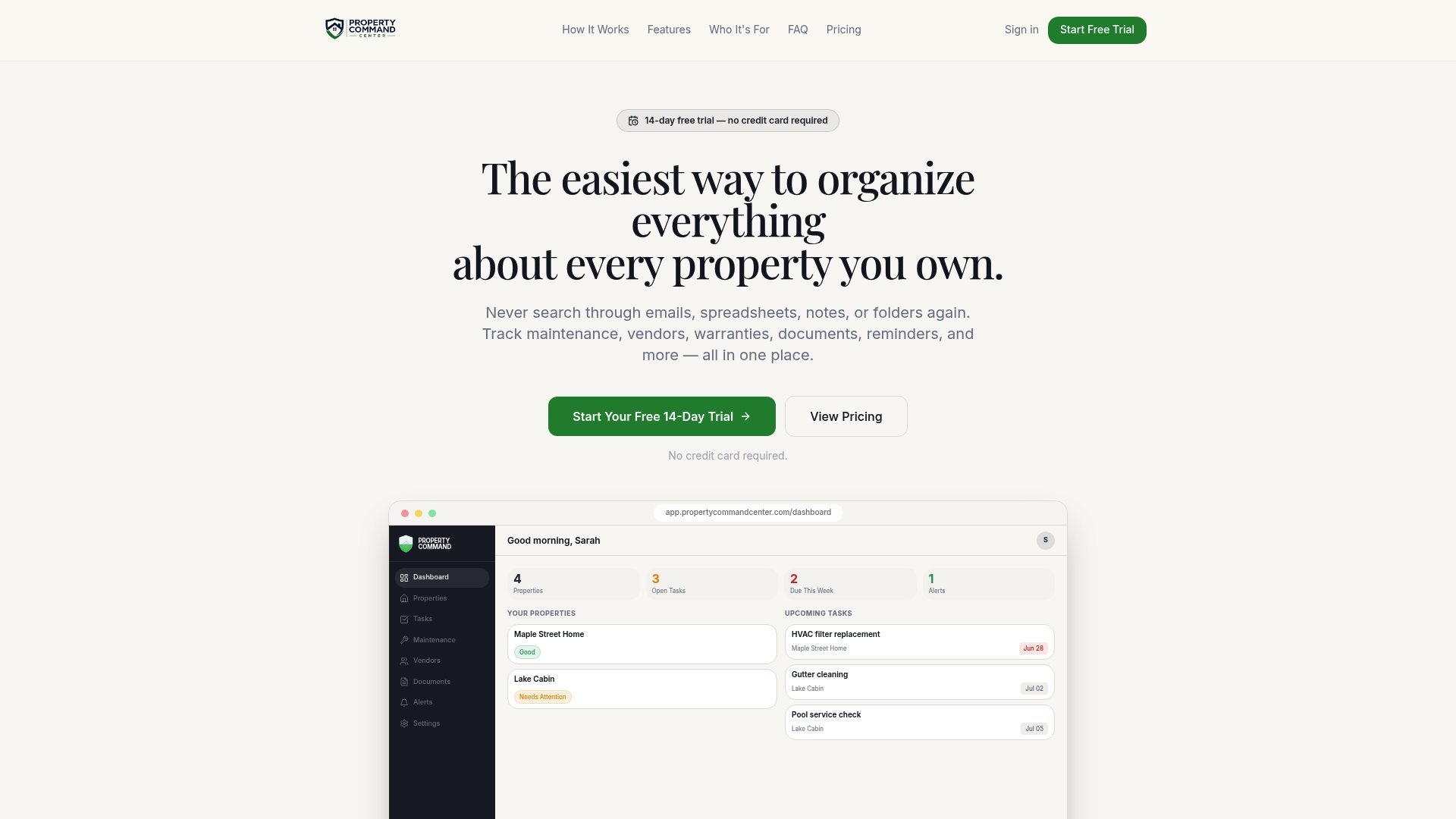
If you're managing more than one property and tired of chasing scattered vendor information, start a free trial or check the Starter and Pro plans to see which fits your portfolio size.
FAQ
How much should I charge for 2 hours of cleaning?
Pricing for a 2-hour cleaning job depends heavily on your market, property type, and whether it is a standard tidy-up or a turnover clean with laundry and restocking. Rather than setting a flat rate, compare quotes from vendors in your area and factor in the scope of tasks included, since a 2-hour turnover clean typically covers less ground than a 2-hour deep clean.
What is the 5-5-5 rule for cleaning?
Definitions of the "5-5-5 rule" vary across cleaning resources, and there is no single standardized industry definition. If a vendor references it, ask them to explain exactly what it means for your property so expectations are clear in your SOP rather than relying on an assumed standard.
Is $50 an hour for cleaning good?
Whether an hourly rate in the $40 to $50 range is good depends on your local market, the complexity of the job, and what is included, like supplies, laundry, or restocking. Compare it against at least two or three other vendor quotes in your area before deciding, since rates vary widely by region and service scope.
How much does a cleaner cost for 3 hours?
The cost of a 3-hour cleaning job varies by location, property size, and the specific tasks included, such as deep cleaning versus a standard turnover. Request itemized quotes from a few vendors so you can compare apples to apples rather than relying on a single hourly estimate.
How do I avoid double-booking cleaning vendors across properties?
Use one master calendar visible to every vendor, color-coded by property, so overlapping bookings are visible immediately rather than discovered after the fact. Locking turnover bookings as soon as a reservation is confirmed, rather than waiting until the last minute, further reduces the chance of a scheduling conflict.
Sources
- Protecting Workers Who Use Cleaning Chemicals (OSHA)
- EPA’s Safer Choice and Design for the Environment (DfE) standard