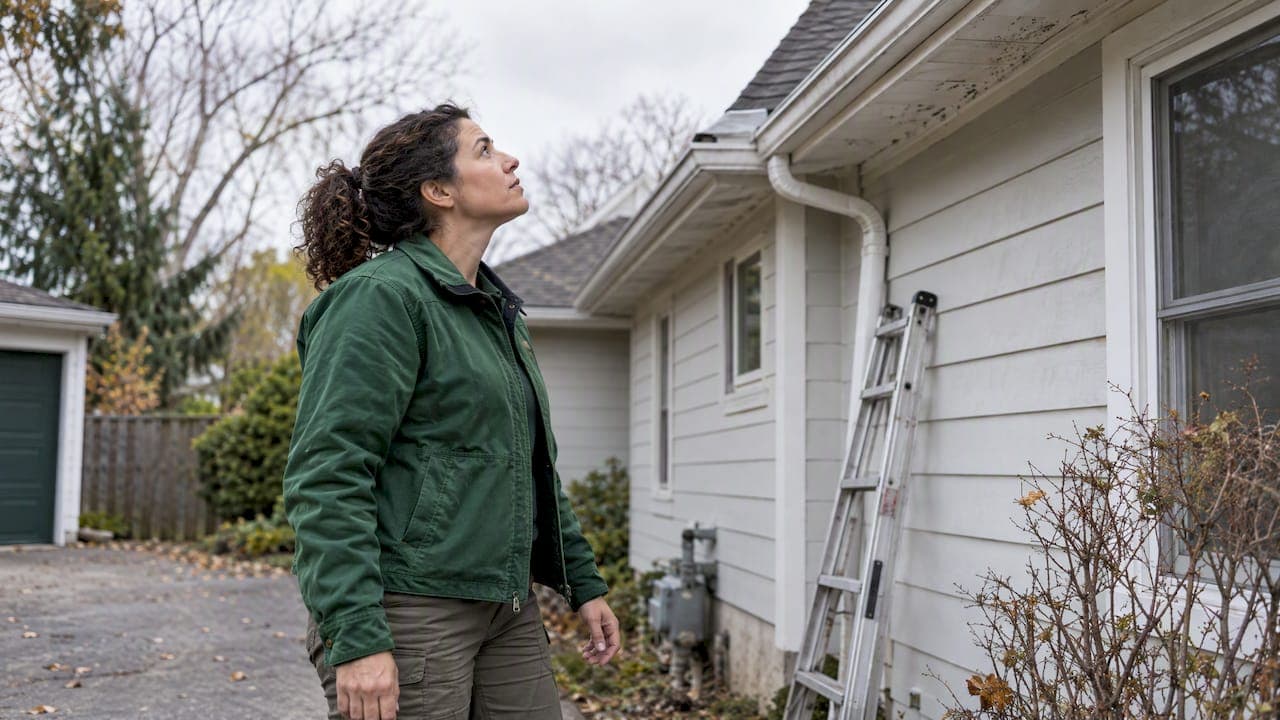
Property SOPs are short, repeatable checklists and recurring schedules that help homeowners keep track of maintenance, cleaning, and guest turnover without guesswork. The fastest way to start is to pick one property today and schedule one recurring monthly inspection plus one seasonal checklist. A property management tool can help you track both once you have the routine in place.
TL;DR:
- Inspect high-risk systems like the roof, HVAC, plumbing, and electrical every three to six months to catch small problems early and prevent costly repairs.
- Budget approximately 1% of your property's market value annually for maintenance and repairs, adjusting for property age and condition.
- Use standardized checklists for cleaning, guest turnover, and inspections, and track them consistently in one organized system, like software or a shared document.
- Rotate deep inspections across multiple properties to avoid overwhelming yourself in a single month, planning semiannual and annual reviews accordingly.
- Keep detailed, consistent records of vendor work, including dates, invoices, descriptions, warranties, and photos, to protect warranties and streamline future maintenance.
Table of Contents
- How to design homeowner-facing property SOPs in three steps
- Copy-ready checklist templates for cleaning, check-in, and inspection
- Spreading tasks across monthly, quarterly, and annual routines
- A vendor and recordkeeping workflow that protects your warranties
- How Property Command Center maps to these SOPs
- Why simpler SOPs win for small owners
- Try Property Command Center and start your free trial
- FAQ
- Sources
How to design homeowner-facing property SOPs in three steps
A good property SOP is boring on purpose. It names a task, a date, and a person responsible, nothing more. The goal is a routine you will actually follow at month ten, not a binder you build once and ignore.
Three steps get you there:
- List the high-risk systems in each property: roof, HVAC, plumbing, electrical, and exterior drainage.
- Assign a cadence and a responsible person to each item, whether that's you, a partner, or a hired vendor.
- Pick one place to track everything, a notebook, a shared document, or dedicated software, and commit to updating it the same day you complete a task.
University extension guidance recommends inspecting a home at least every 3 to 6 months, with the shorter end of that range preferred for owners who want to catch small problems before they become expensive ones. Budgeting matters just as much as timing. The Consumer Financial Protection Bureau's rule of thumb, cited by Utah State University Extension, suggests setting aside roughly 1% of your home's market value every year for maintenance and repairs.
Pro Tip: Set your monthly inspection reminder for the same date every month, like the first Saturday, so it becomes automatic instead of something you have to remember to schedule.
If you manage more than one property, stagger the deep inspections. A rotating schedule, covered in more detail below, keeps any single month from becoming overwhelming.

Copy-ready checklist templates for cleaning, check-in, and inspection
These three checklists cover the recurring work most homeowners and short-term rental hosts repeat every month. Copy them into a phone note, a shared document, or a property management app and adjust the order to match how you move through a property.
Cleaning checklist, in priority order:
- Check smoke and carbon monoxide alarms for test dates and replace batteries if needed.
- Wipe down kitchen and bathroom surfaces, then restock soap and paper products.
- Vacuum or sweep high-traffic floors and check for stains or damage.
- Empty trash and recycling, and reset bins for the next occupant or your own use.
- Check under sinks and around appliances for signs of leaks.
Guest check-in and check-out checklist:
- Confirm door codes or keys work before the guest's arrival window.
- Verify Wi-Fi, thermostat settings, and major appliances are functioning.
- Walk through the unit for damage and photograph anything questionable at check-out.
- Confirm supplies (towels, toiletries, coffee) are stocked for the next arrival.
- Note any maintenance issues a guest reports and add them to your task list immediately.
Monthly quick inspection checklist:
- Scan the roofline and gutters for debris, sagging, or visible damage.
- Check or replace the HVAC filter if it's been 30 to 90 days since the last change, per ENERGY STAR guidance.
- Look under sinks, near the water heater, and around appliances for active or past leaks.
- Walk the exterior and confirm drains and downspouts direct water away from the foundation.
A printable version of these tasks organized by frequency can save you from rebuilding the list from scratch.
Spreading tasks across monthly, quarterly, and annual routines
Not every task belongs on the same schedule, and trying to do everything every month is how SOPs fall apart. Spreading tasks across the year, and across properties if you own more than one, keeps the workload predictable.
- Monthly: test smoke and CO alarms, check HVAC filters, and do a quick visual walk-through.
- Quarterly: deep-clean gutters, inspect caulking around windows and doors, and test sump pumps or backup systems.
- Semiannual: schedule HVAC tune-ups in spring and fall, when contractors are less busy and systems need prep for the coming season.
- Annual: inspect the roof, service major appliances, and review insurance and warranty documents.
Extension checklists built around spring and fall inspections cover gutters, roof flashing, exterior trim, and HVAC prep together, since moisture and pest risks spike at those transitions.
If you own two or three properties, rotate the deep annual or semiannual review: property A in March, property B in April, and so on. This keeps any single month from requiring three roof inspections and three HVAC visits at once. A 90-day plan for small portfolios can help you sequence this rotation if you're starting from zero.

A vendor and recordkeeping workflow that protects your warranties
The simplest way to avoid disputes with contractors, manufacturers, or future buyers is to capture the same five pieces of information every time you pay for service: the date, the vendor's name, the invoice, a short description of the work, and any warranty or next-service date. Photos of completed work are a useful extra when something fails later and you need proof of condition.
A workable flow looks like this:
- Inspect the system or area and note what you find.
- Document the issue with a photo and a short description.
- Schedule the vendor and confirm the appointment in writing.
- Verify the work is complete before the vendor leaves.
- Store the receipt and any warranty paperwork in the same place every time.
Centralized records matter more than most owners expect. NC State Extension notes that manufacturers often require proof of professional maintenance to honor a warranty claim, so a missing receipt can mean a denied claim on an otherwise covered repair.
For plumbing-specific concerns like older sewer lines, a camera inspection before issues surface can catch root intrusion or pipe damage early. Tracking service history over time, rather than relying on memory, is also what separates owners who manage multiple properties smoothly from those who are constantly catching up.
How Property Command Center maps to these SOPs
Once your SOP framework exists on paper, software can take over the parts that are easy to forget: dates, reminders, and where you left that invoice. Property Command Center's Smart Setup walks you through adding each property so the dashboard reflects your actual portfolio from day one, rather than a generic template.
From there, the platform's property and task views are built around the same routines outlined above:
- Set recurring tasks for monthly inspections, filter changes, and seasonal checklists so they repeat automatically.
- Attach receipts, warranty documents, and photos directly to a task instead of storing them in separate folders or email threads.
- Keep a vendor directory so contact information and service history live next to the property they belong to.
The point of a single dashboard isn't the dashboard itself. It's that a recurring schedule only works if it's somewhere you'll actually check, instead of scattered across sticky notes and old text messages.
Why simpler SOPs win for small owners
The owners who stick with maintenance routines are the ones who make them boring and small, not the ones who build the most detailed plan. Fewer, repeatable tasks reduce the mental load that leads to skipped inspections, and skipped inspections are where small leaks become expensive repairs.
If you're starting today, don't try to build a full-year plan. Pick one property, set one recurring monthly task, and build from there.
— Francisco
Try Property Command Center and start your free trial
Some property management platforms turn checklists and schedules into recurring tasks you don't have to remember on your own, with a dashboard that holds your vendor contacts, receipts, and warranty documents in one place instead of scattered folders.
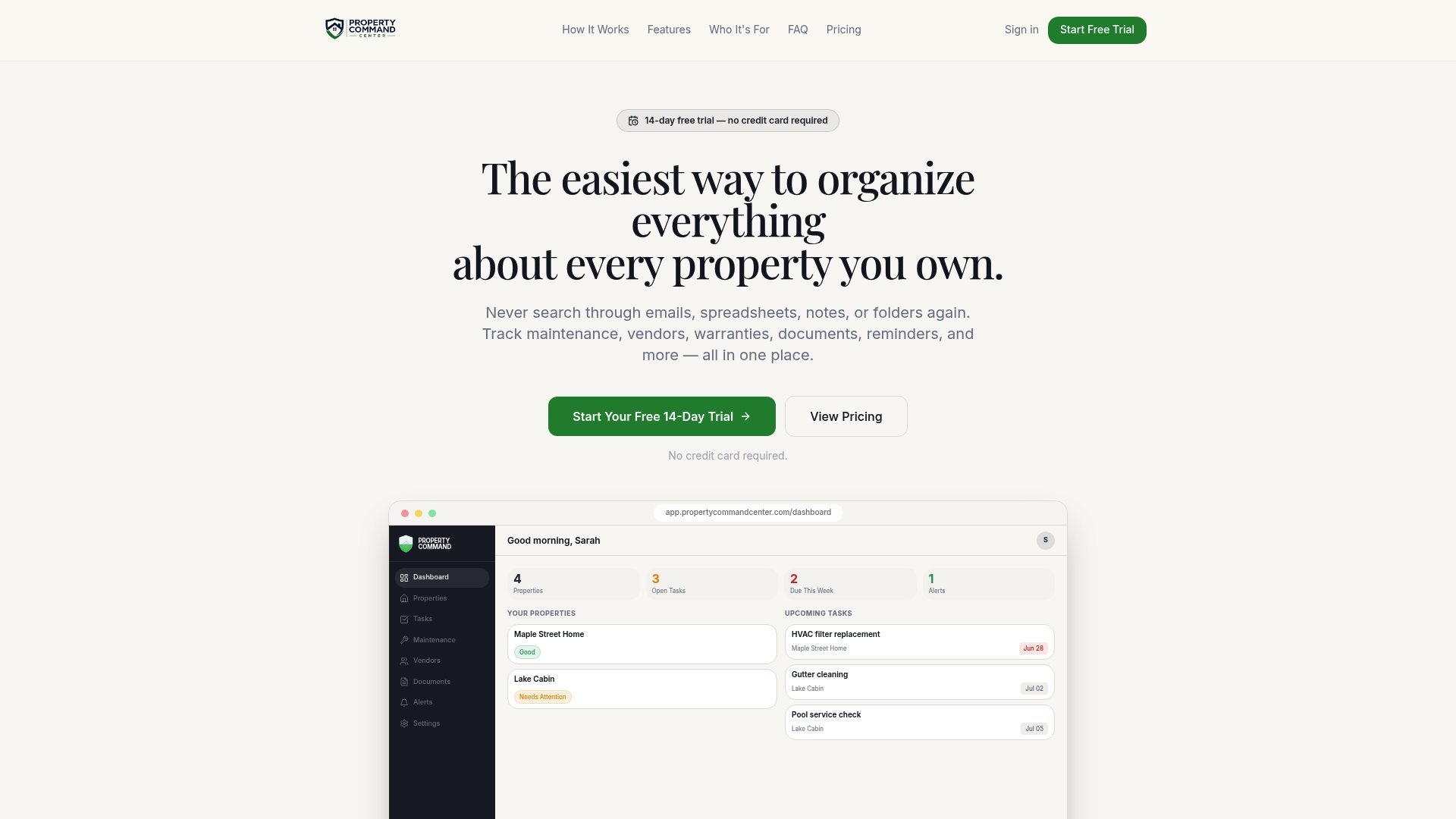
- One plan option fits owners managing a smaller number of properties who want core dashboard and task tracking features.
- Another plan suits owners who need to manage more properties and require more extensive vendor and document tracking.
Both plans are listed on the pricing page, and you can try the platform with a 14-day free trial before committing to either one.
FAQ
How often should I inspect a rental or vacation property?
Extension guidance recommends inspecting a home at least every 3 to 6 months, with shorter intervals preferred for properties that see frequent guest turnover. Short-term rentals benefit from monthly quick checks between deeper seasonal inspections.
How much should I budget for annual home maintenance?
A common rule of thumb is to budget about 1% of your home's market value per year for maintenance and repairs. This is a planning estimate, not a guarantee, so actual costs will vary by property age and condition.
What should I do first when building SOPs for multiple properties?
Start by listing the high-risk systems in each property, such as HVAC, plumbing, and roofing, then assign a cadence and a responsible person to each one. A 90-day starter plan can help sequence this if you own more than one home.
What records should I keep for vendor work?
Keep the service date, vendor name, invoice, a short description of the work, and any warranty terms for every job. Photos of completed work are a useful addition, since manufacturers often require proof of professional service to honor a warranty.
Does Property Command Center handle tenant or rent management?
No, Property Command Center is built for individual owners and families managing their own properties, not for tenant or rent management workflows. It focuses on organizing maintenance schedules, vendor contacts, and documents in one dashboard.
Sources
- Preventative Home Maintenance | NC State Extension Publications
- Home maintenance checklist | USU Extension
- Maintenance checklist | ENERGY STAR
- Home maintenance checklist | CAES Field Report (UGA)