
Yes, you can automate maintenance schedules, vendor coordination, task tracking, and document storage using one dashboard-style tool. A unified system like Property Command Center pulls these pieces together so you stop guessing when the filters were last changed. Setup takes a focused weekend, and the payoff shows up fast: fewer missed tasks and quicker insurance or repair paperwork when something breaks.
TL;DR:
- Automating routine tasks like filter changes, detector tests, and water heater flushes reduces missed maintenance and speeds up repairs across multiple properties.
- Using standardized templates and vendor profiles allows setup to be completed within a weekend, with minimal ongoing adjustments after the first 90 days.
- Storing all property records, warranties, and receipts in a centralized digital vault streamlines emergency responses and insurance claims.
- A single dashboard consolidates maintenance schedules, vendor contacts, and documents, saving time spent searching across different apps and physical files.
- The Property Command Center offers a free trial, supports vacation rentals, and scales with the number of managed properties for efficient multi-home maintenance management.
Table of Contents
- What to automate: task categories and recommended cadence
- How to set up automation quickly for multiple properties
- Four ready-made workflows owners can copy
- Why a single dashboard saves time and reduces stress
- Try Property Command Center: start the Smart Setup or the free trial
- FAQ
- Sources
What to automate: task categories and recommended cadence
Not every property task needs the same attention. Some run on a fixed clock, others happen once and then sit in storage until you need them.
Maintenance tasks benefit most from automation because they repeat on a predictable schedule. The EPA's WaterSense program recommends checking or replacing HVAC filters every 30 to 60 days, testing smoke and carbon monoxide detectors annually, and flushing water heaters at least once a year. Gutters and irrigation systems typically need seasonal attention rather than monthly checks.
- HVAC filters: every 30 to 60 days, per WaterSense guidance
- Smoke and CO detectors: tested yearly
- Water heaters: flushed annually
- Gutters and irrigation: checked seasonally, especially before winter and after heavy storms
WaterSense also recommends that homeowners look into leak-detection devices and annual system checks, since undetected leaks waste water and money year-round, according to EPA WaterSense.
Documentation deserves its own automated home. Oklahoma State University Extension advises keeping appliance manuals, warranty certificates, and proof of purchase in a centralized digital vault, noting that electronic records are acceptable as long as they stay legible and accessible. A printable maintenance checklist can anchor this system for each property you own.
Finally, recurring admin work like payment reminders, contract renewals, and seasonal vendor prep fits naturally into an automated calendar rather than your memory.

How to set up automation quickly for multiple properties
A weekend is enough time to get the core system running, even across several homes.
- Collect the essentials for each property. Gather service history, appliance manuals, and vendor contacts before you open any software. A property information sheet speeds this up by giving you one template to fill out per home.
- Standardize your naming and templates. Build one recurring "Filter change" task template and one seasonal checklist template, then reuse both across every property instead of recreating them from scratch.
- Create vendor profiles and set escalation rules using professional building maintenance software. Assign a default plumber, electrician, and HVAC contact to each property, then configure reminder escalation so a missed task notifies you again instead of disappearing.
- Test one workflow, then duplicate it. Run the filter-change reminder on a single property first. Once it works, copy it across your other homes, which usually takes one to two hours per property once the templates exist.
Expect the first 30 to 90 days to involve some adjustment as you fine-tune reminder timing and vendor assignments. After that, the system runs mostly on its own.
Pro Tip: Build your templates before adding a second property. Retrofitting naming conventions after the fact takes far longer than starting clean.
Four ready-made workflows owners can copy
These four templates cover most of what multi-property owners need, so you can implement them directly instead of designing your own system from zero.
- Seasonal checklist workflow: Triggered by date (start of spring, fall), this workflow assigns gutter cleaning, HVAC inspection, and irrigation checks to you or a vendor, following the pattern in municipal seasonal checklists.
- Emergency documents and insurance claim flow: Store photos of each room and major system in your document vault, organized by property, so you can share them instantly with an adjuster after storm or fire damage.
- Vendor quote and hire flow: Request details from two or three vendors, compare quotes side by side, schedule the winning bid, then capture the final invoice in your document vault for future reference.
- Repair history and warranty tracking: Log every repair as it happens, scan the receipt, attach the invoice, and link it to the appliance record so warranty claims have the documentation they need.
A chronological repair log paired with scanned receipts matters because some warranty claims require proof of regular, professional maintenance, not just a receipt. For a deeper look at building this habit across several homes, see our guide on tracking service history across properties.
Why a single dashboard saves time and reduces stress
Searching five different apps, a shoebox of receipts, and three email threads for one warranty document wastes more time than the repair itself usually takes. A unified dashboard removes that friction by keeping property status, maintenance schedules, vendor contacts, and documents in one place.

This matters most in two moments: when something breaks and you need a vendor fast, and when you file an insurance claim and need documentation immediately. A consolidated digital vault speeds up disaster recovery because the records already exist in one accessible location instead of scattered across devices and drawers.
A setup guide walks new users through building their first property profile, and a blog post on building four multi-property workflows in a weekend outlines exactly the kind of templates covered above. Keeping maintenance checklists current and following EPA guidance on filters and detectors turns reactive scrambling into routine upkeep you barely think about.
— Francisco
Try Property Command Center: start the Smart Setup or the free trial
We built Property Command Center around the four workflows above: one dashboard that holds your maintenance templates, vendor directory, and document vault together, so you stop rebuilding the same spreadsheet for every home you own.
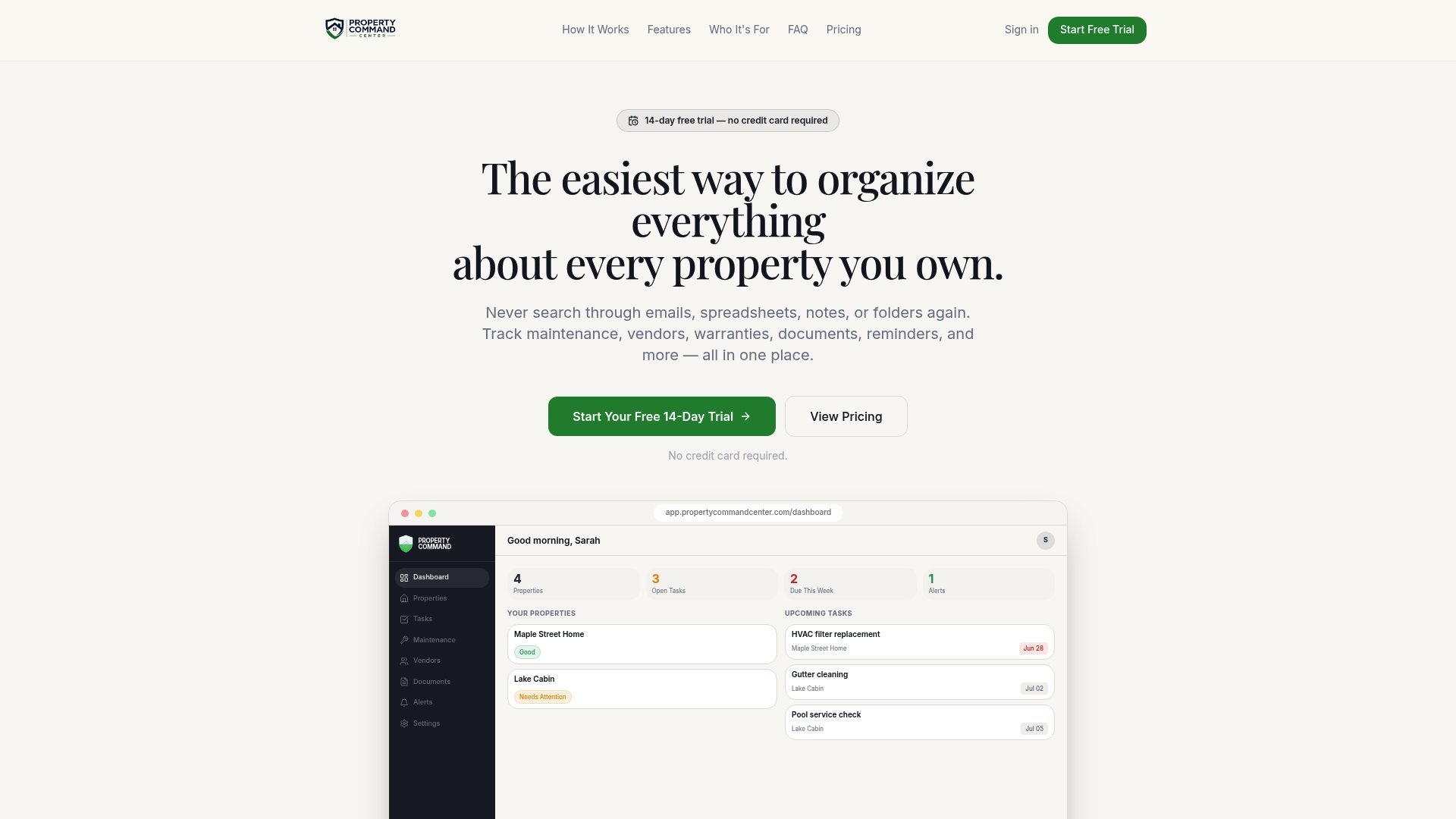
- Compare the Starter and Pro plans to find the right fit for how many properties you manage.
- Check the vendor directory feature to see how contractor coordination works across multiple homes.
- Run a setup guide and have your first property profile ready before Monday.
A free trial lets you test the workflows on one property before deciding whether to subscribe.
FAQ
How long does it take to automate maintenance for multiple homes?
A focused weekend covers the core setup: collecting property details, building two or three reusable templates, and testing one workflow. Expect one to two hours per additional property once your templates exist, with the first 30 to 90 days used for fine-tuning reminder timing.
What should go in a property document vault?
Keep appliance manuals, warranty certificates, proof of purchase, and insurance documents, along with an up-to-date household inventory, according to Colorado State University Extension. Digital copies should stay legible and backed up, though originals like deeds and titles belong in a secure, fireproof location as well.
How often should I replace HVAC filters?
Check or replace HVAC filters every 30 to 60 days, per EPA WaterSense guidance. Smoke and carbon monoxide detectors need annual testing, and water heaters should be flushed at least once a year.
Does Property Command Center work for vacation rentals too?
Yes, the dashboard supports vacation homes and short-term rental properties alongside primary residences, using the same maintenance schedules, vendor directory, and document vault. Pricing is based on the Starter and Pro plans, which scale by number of properties.
How do I choose a vendor for a repair?
Match the job to the right professional: licensed electricians and plumbers for major systems, and local handymen or hardware stores for smaller fixes, following municipal guidance on when to call a pro. Keeping a vendor directory with notes on past work speeds this decision for recurring issues.
Sources
Maintenance cadences and record-keeping guidance below come from EPA WaterSense, university extension programs, and municipal checklists.
- Home maintenance tips | WaterSense | US EPA
- Getting your records in order: Organizing household records | Oklahoma State University Extension
- Home Maintenance Checklist for Every Season | City of Shasta Lake
- Your important papers: what, why, and how long to keep | Colorado State University Extension