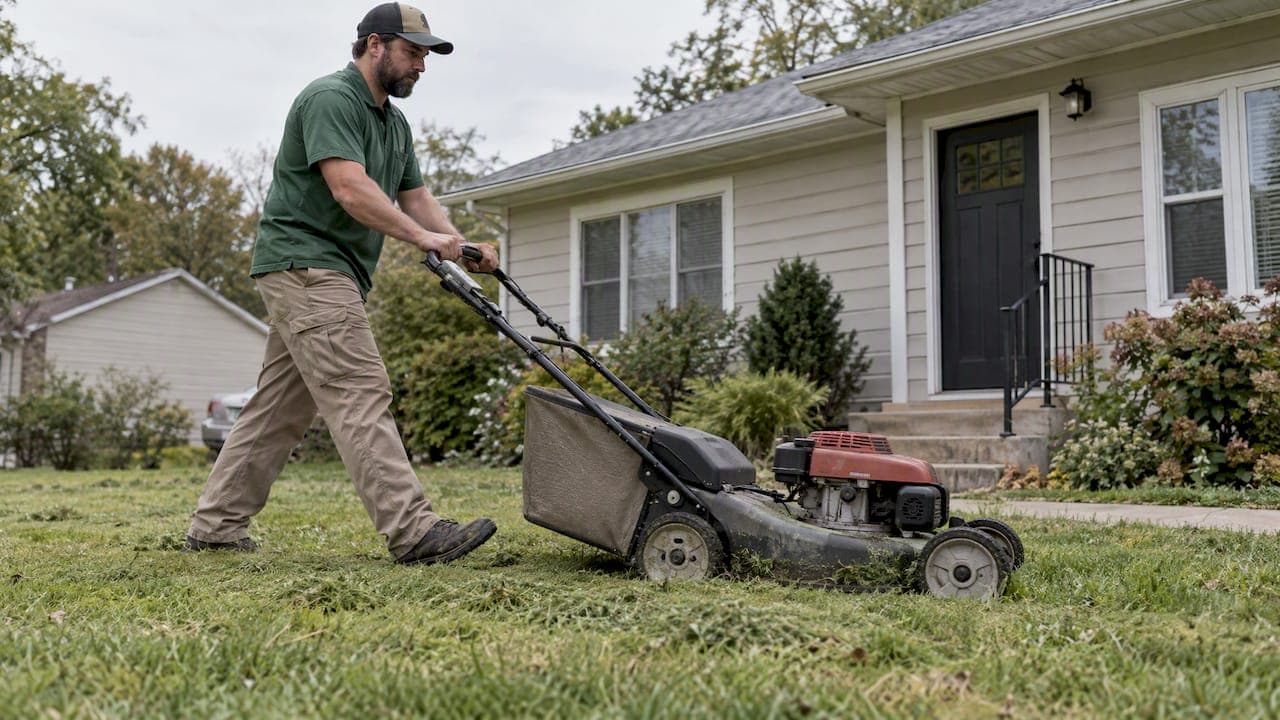
Assign lawn responsibility in writing, then run one predictable seasonal schedule and record every visit. Follow the extension "one-third rule" for mowing and university extension calendars for seasonal timing. Then put the recurring task in a tool like Property Command Center, or set a fixed cadence with a vendor, so no turnover depends on memory.
TL;DR:
- For tall fescue in spring, mow every 5 to 7 days at 2.5 to 4 inches, removing no more than one third of the blade.
- Use local extension calendars for fertilizing and overseeding, because timing shifts with climate; Bermuda and zoysia lawns need separate schedules.
- Check local watering rules, lawn ordinances, and association requirements, since lease assignments do not remove owner liability for hazards such as broken sprinklers.
- Annual budgets should use each property’s actual visit quote times yearly visits, plus seasonal work and a reserve for storm cleanup or reseeding.
- Hire a professional when turnovers are frequent, you cannot visit, or curb appeal affects bookings; schedule seasonal aeration and overseeding separately from routine mowing.
Table of Contents
- Who is responsible for the lawn in a rental?
- What does a seasonal lawn care schedule look like?
- What routines and templates keep the schedule running?
- When should you hire a pro, and what goes in the contract?
- How should you budget for lawn care across rentals?
- Why can you trust these standards?
- What legal points should you check for lawn care in a lease?
- What I would do with a small portfolio
- How can we help you organize recurring lawn care?
- FAQ
- Sources
Who is responsible for the lawn in a rental?
Most rentals fall into one of three models, and each works if you write it down.
- Owner covers everything. You or your vendor handle mowing, edging, and seasonal care. This suits short-term rentals, where curb appeal drives bookings.
- Tenant handles basic upkeep. The tenant mows and waters, and you handle seasonal work like fertilizing or overseeding.
- Owner hires a vendor. You pay the vendor, or you bill the tenant under the lease terms.
Whichever you pick, the lease or vendor agreement should state the frequency (for example, setting a regular mowing schedule during the growing season), the scope (mowing, edging, clippings, watering), and the proof required (dated photos after each visit). This is operational guidance, not legal advice.
Keep these records for every property:
- Vendor name and contact
- Recurring service dates
- Invoices and receipts
- Before and after photos
What does a seasonal lawn care schedule look like?
A cool-season lawn (tall fescue, fine fescue, Kentucky bluegrass) follows a predictable year. The NC State Extension home lawn calendar lays out month-by-month tasks for these blends, including summer care and fall renovation timing, and it recommends adjusting to local conditions. Use it as your baseline, then shift dates to match your climate.
- Spring: Clear winter debris, test your irrigation for leaks and clogged heads, and make the first mow of the season. Plan fertilizing and overseeding according to your local extension calendar, not a fixed date.
- Summer: Mow on the growth curve, not the calendar. Under the one-third rule, you never remove more than one-third of the blade in one mowing. For tall fescue, that typically means every 5 to 7 days in peak spring growth, at a height of about 2.5 to 4 inches. Water early in the morning, and check weekly for brown patches or disease.
- Fall: This is the best window for renovation on cool-season grass. Aerate, overseed, and apply your final fertilizer. Service mowers and trimmers before storing them. Missouri's turfgrass guidance also times renovation and reseeding around early fall for cool-season grasses.
- Winter and slow months: Keep leaves from smothering the grass, book your vendor for the next season, and plan upgrades such as new edging or irrigation repairs.
Grass type matters. Warm-season lawns grow and rest on a different rhythm, so a Bermuda or zoysia property needs its own calendar. Missouri's guidance suggests asking how the area will be used, how much maintenance you expect, and how much shade, climate, and soil type you have before you set the plan.
What routines and templates keep the schedule running?
A schedule only works if someone can follow it without you. Here is a short checklist you can hand to a tenant, a vendor, or a co-host.
Recurring checklist:
- Mow at the target height for your grass, never cutting more than one-third of the blade
- Edge walkways, driveways, and beds
- Leave clippings on the lawn when they are short; extension guidance from K-State Research and Extension notes grasscycling can return up to 25% of a lawn's annual fertilizer needs
- Blow clippings off hard surfaces
- Pick up trash and pet waste
Vendor instruction template (paste into an email or vendor portal):
- Service window: on the agreed day, between [time] and [time]
- Scope: mow, edge, blow, and remove debris
- Proof: send two dated photos after each visit
- Invoice: send one invoice per property per month
- Rescheduling: notify us as soon as possible if a guest stay changes access
Fill the bracketed items in before sending. Record each recurring visit as a calendar event with a reminder, and keep photos in one folder per property, named by date. If you want a bigger framework around this, our guide to rental property maintenance schedules and recordkeeping shows how to log recurring vendor visits and invoices.
Pro Tip: On turnover day, do a quick pass: blow off the walkway, trim any edge that has crept over, and pick up visible debris. It takes less time than a full mow and it fixes what guests notice first.

When should you hire a pro, and what goes in the contract?
Hire when your turnover frequency is high, you cannot be on site, or consistent curb appeal affects your bookings. A pro who shows up on a fixed day removes a recurring decision from your plate.
A solid recurring service contract should include:
- Cadence: regular mowing during the growing season, with a named schedule for the off-season
- Scope: exactly what each visit covers
- Cancellation and rescheduling terms for guest stays
- One named contact who answers your messages
- Photo proof after each visit
- Proof of insurance on file before the first visit
Match the cadence to the job. A recurring visit can cover mowing, edging, and blowing. A separate seasonal visit can cover heavier tasks such as aeration, overseeding, fertilizing, and weed control. Many owners schedule both regular mowing and a seasonal comprehensive visit. For help sequencing those bookings, see our guide on seasonal home maintenance and when to book pros.
How should you budget for lawn care across rentals?
Per-visit cost depends mostly on lot size, how often the vendor visits, and any extras such as fertilizing, aeration, or leaf removal. A larger lot or a weekly cadence costs more per month, while a basic mow-only visit costs less than a visit that includes edging and cleanup.
Use a simple annual method:
- Get a quote for each property based on its actual cadence
- Multiply the per-visit price by the number of visits in a year, then add seasonal extras
- Add a small reserve for storm cleanup or a failed patch that needs reseeding
- Total it per property, so you can see which yards cost the most
For bookkeeping, tag every invoice with the property name and save recurring-service receipts in the same folder as your photos. That makes tax time and vendor disputes much easier. If you run several rentals, our post on short-term rental maintenance cadences covers how to batch these costs across properties.
Why can you trust these standards?
The mowing and timing advice here comes from university extension sources: the one-third rule from the University of Kentucky, early-morning watering guidance from K-State, and seasonal calendars from NC State and Missouri. Those are the same references a good vendor will use. In our own product, we built maintenance schedules and vendor contacts into one dashboard, so you can drop this calendar straight into your property workflow with reminders attached.
What legal points should you check for lawn care in a lease?
Lawn obligations vary by state, city, and lease, so treat this as a checklist of questions rather than a legal opinion, and confirm specifics with a local attorney or your state's landlord-tenant resources.
First, the lease controls. If it says the tenant mows, the tenant mows. If it says nothing, many owners find that silence creates disputes, so write the responsibility down clearly, including how often and to what standard.
Second, local rules can override your plan. Cities and homeowners associations may set limits on grass height, require removal of dead vegetation, or fine properties that look neglected. Check who receives those notices and who pays the fine, and state that in the lease.
Third, watering and fertilizer rules can apply. Some areas restrict watering days or fertilizer use, so a tenant or vendor following your schedule could still break a local rule.
Fourth, think about liability. If a tenant is injured by an unrepaired sprinkler head, a hidden hole, or a poorly maintained walkway, responsibility can still land on you as the owner, even when the lease assigns mowing to the tenant.
Fifth, protect yourself with documentation. Dated photos and written vendor instructions show you met your obligations.
Finally, short-term rentals add another layer. Your platform or local registration rules may expect the property to meet certain exterior standards, so read those terms alongside your lease or vendor agreement.

What I would do with a small portfolio
If you own a few rentals, stop chasing a perfect lawn. Pick one cadence you can actually keep, whether that is a weekly vendor or a tenant you check on monthly, and stick with it. Then document it: photos after each visit and a short instruction note cut turnover time more than any fertilizer ever will. A decent lawn kept on schedule beats a great lawn maintained once.
— Francisco
How can we help you organize recurring lawn care?
We built Property Command Center for owners who juggle more than one property and want one place for the details. The platform helps you organize property details in one place:
- Maintenance schedules and reminders for recurring tasks like mowing and seasonal visits
- A vendor directory, so your lawn pro's contact details sit with the property, as described on our vendors page
- A document vault for important property documents

You can start a free trial with no credit card, then pick a plan on our pricing page: Starter is 19 USD per month and Pro is 49 USD per month. Set up your first property and add a recurring lawn task today.
FAQ
What is a good schedule for lawn maintenance?
Mow when the grass needs it, not on a fixed weekday, and follow your local extension calendar for fertilizing and overseeding. For tall fescue at peak spring growth, that usually means every 5 to 7 days at about 2.5 to 4 inches, according to University of Kentucky guidance. Water early in the morning, and save aeration and overseeding for early fall on cool-season lawns.
Can you write off lawn care for a rental property?
Lawn care for a rental is generally treated as an ordinary operating expense, so keep invoices tagged by property. Rules vary by situation and jurisdiction, so confirm how to report it with a tax professional. Keeping dated invoices and photos makes that conversation faster.
Is 200 a month for lawn care good?
It depends on lot size, how often the vendor visits, and what each visit includes. Compare the quote's scope: regular mowing, edging, and cleanup are different from mowing alone. Ask for a per-visit breakdown so you can compare vendors fairly.
What should a lease say about lawn care?
State who is responsible, how often the work happens, and what standard counts as done, such as grass height and edging. Add a proof requirement like dated photos, and say who pays any local fines. Have a local attorney review the final wording.
Sources
- News
- Johnson
- Tall Fescue, Hard (Fine) Fescue, and Kentucky Bluegrass Home Lawn Calendar | NC State Extension Publications