The best short term rental maintenance systems run on a fixed cadence, not memory: check the property at every turnover, handle a short list monthly, deep-clean and service systems by season, and bring in a professional once a year for the big stuff. Follow EPA guidance on moisture control and NFPA standards on alarms and exits, and log every task. Owners who do this consistently see fewer guest complaints and lower repair bills, and a tool like Property Command Center makes the routine easier to actually stick to.
TL;DR:
- Owners should strictly follow a four-cadence maintenance schedule: per-turnover safety checks, monthly utility inspections, seasonal system tune-ups, and annual deep cleans.
- Every maintenance task must be logged with five key fields, including date, description, responsible party, documentation, and cost, to ensure accountability and ease dispute resolution.
- Regular checks on HVAC filters, smoke and CO alarms, plumbing, and appliances prevent costly emergencies and guest complaints, especially when scheduled on fixed dates.
- Safety compliance requires working smoke and CO alarms, moisture control to prevent mold, and adherence to local codes beyond minimum national standards.
- Using management software like Property Command Center consolidates schedules, vendor contacts, and records, reducing reliance on scattered notes and improving maintenance consistency.
Table of Contents
- How to Structure Maintenance Cadences and Keep Records
- What Should Owners Check at Every Turnover?
- Monthly, Seasonal, and Annual Tasks That Keep Small Problems Small
- Preventive Maintenance for the Systems Guests Actually Notice
- Safety, Mold Prevention, and Compliance Basics
- What Should Owners Budget for Maintenance Each Year?
- When Does a Problem Need a Professional, Not a Quick Fix?
- What Owners Get Wrong About Rental Maintenance Routines
- Run Your Maintenance Cadence Without the Spreadsheet Chaos
- Sources
- FAQ
How to Structure Maintenance Cadences and Keep Records
Four cadences cover almost everything a short-term rental needs. Per-turnover tasks happen between every guest: safety checks, quick appliance tests, visible damage scans. Monthly tasks catch slow-building problems: filter swaps, drain checks, pest monitoring. Seasonal tasks match the calendar: HVAC tune-ups before summer and winter, gutter cleaning in fall, pool prep in spring. Annual tasks are the ones easy to forget because nothing visibly breaks until they're skipped: water heater flushes, dryer vent deep cleans, chimney inspections.
None of this works without a record. Every completed task needs five fields: date, task description, who did it (cleaner, vendor, or owner), a photo if there's anything to document, and cost. A sixth field, "follow-up needed," catches the stuff that gets missed, like a slow leak that needs monitoring next visit.
- Cleaners handle per-turnover safety and cosmetic checks during standard turns.
- Owners own the monthly walk-through and record review.
- Licensed vendors handle anything seasonal or annual that touches gas, electrical, or refrigerant systems.
Splitting responsibility this way keeps liability clear and prevents the common failure mode: everyone assumes someone else caught it. A rental maintenance schedule and logkeeping system built around these four cadences turns a vague sense of "I should probably check that" into an actual habit.
Pro Tip: Attach a photo to every closed task, even routine ones. Six months from now, a photo of a drip pan settles an insurance or vendor dispute faster than any memory of "I think it was fine."
What Should Owners Check at Every Turnover?
The per-turnover check is the one that catches guest-facing problems before a guest does. Run this every single time, no exceptions, even on a fast same-day turn:
- Test smoke and CO alarms with the button; confirm the posted address and emergency exit info are visible.
- Scan for obvious hazards: loose railings, tripping hazards, exposed wiring.
- Run the refrigerator and oven briefly, flip HVAC on to confirm it responds, and check that water runs hot and drains clear in every sink and tub.
- Check door and window locks function, then test lighting fixtures and remote controls (TV, thermostat, garage).
- Confirm Wi-Fi is live and the thermostat is reset to the standard guest setting.
- Inspect linens and towels for stains or wear, and swap anything below standard.
Triage rule of thumb: fix anything safety-related or guest-blocking before the next check-in, no matter what else is on the schedule. Cosmetic issues, like a scuffed baseboard, get logged and batched for the next slow week. A two-layer inspection approach that separates "must fix now" from "log and schedule" keeps turnovers fast without letting real problems slide.
Pro Tip: Give cleaners a laminated card with just these six items. A checklist that requires opening an app mid-turnover gets skipped under time pressure; one taped inside a cabinet door doesn't.
Monthly, Seasonal, and Annual Tasks That Keep Small Problems Small
Maintenance-related complaints show up in a large share of negative vacation rental reviews, and staying current on scheduled tasks is what keeps that number down, according to Evolve's maintenance guidance. The tasks that prevent those complaints aren't complicated. They just need a fixed date on the calendar instead of a "someday."
Monthly, roughly the first week:
- Swap or check HVAC filters, especially during peak cooling or heating months.
- Test smoke and CO alarms if they weren't already tested during a turnover that month.
- Run water in every drain to check for slow clogs, and inspect under-sink areas for early leaks.
- Walk the exterior for pest entry points: gaps under doors, torn screens, nesting signs.
- Touch up small surface damage: nail holes, scuffed paint, loose cabinet hardware.
Seasonally, tied to spring and fall:
- Schedule professional HVAC service before the heavy-use season starts, not after it fails.
- Clean gutters and downspouts in fall before leaves clog them.
- Prep or store outdoor furniture, and open or close the pool depending on climate.
- Check exterior caulking and weatherstripping before winter.
Annually, on a fixed date you won't forget:
- Flush the water heater to clear sediment buildup.
- Deep-clean dryer vents, a task that reduces fire risk significantly.
- Inspect the chimney or fireplace if the property has one.
- Bring in a licensed HVAC technician for a full system tune-up, not just a filter check.
Preventive Maintenance for the Systems Guests Actually Notice
HVAC, plumbing, and appliances are where deferred maintenance turns into a 2 a.m. guest text. Preventive steps here are cheap compared to emergency repairs, and most take under an hour.
HVAC: Change filters every 60 to 90 days, more often in high-dust or pet-friendly units. Check the condensate drip pan for standing water or algae buildup at every seasonal visit. Schedule a professional tune-up twice a year, ideally right before peak cooling and heating season.
Plumbing: Inspect under every sink for slow leaks during the monthly walk-through. Replace supply lines proactively around the 8 to 10 year mark rather than waiting for a burst. In freeze-prone climates, winterize exposed pipes before the first hard freeze.

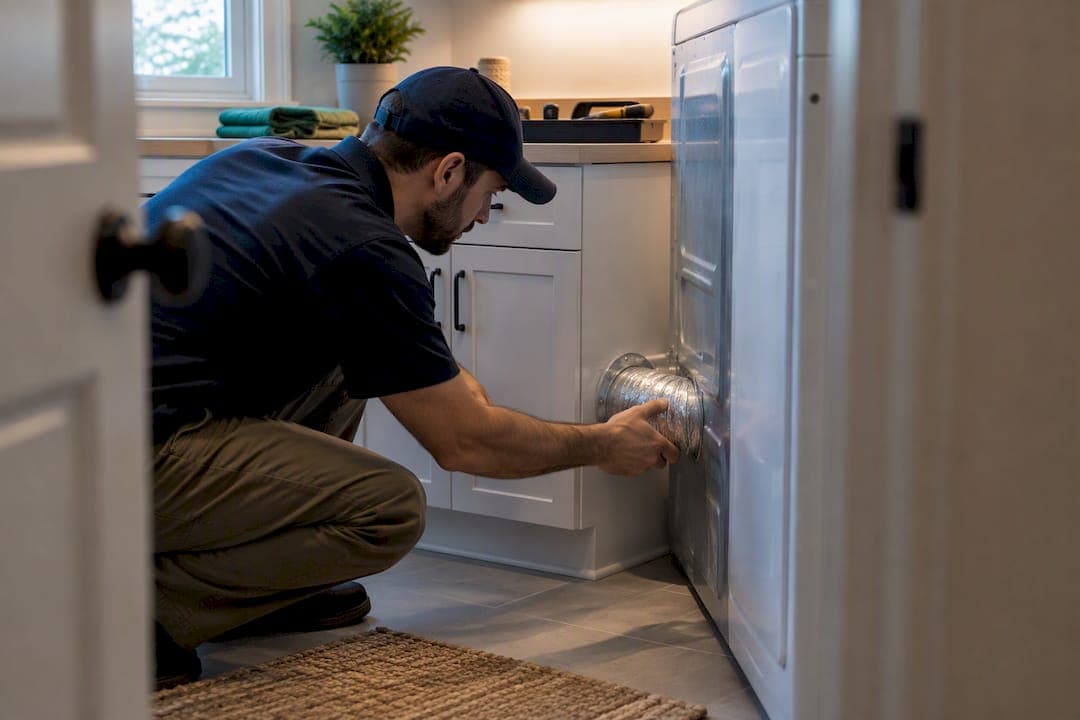
Dryer vents: Clean the vent path at least annually. Warning signs it needs attention sooner include clothes taking longer than usual to dry or a burning smell during operation.
Appliances: Run a full functional test on the refrigerator, oven, dishwasher, and washer/dryer at each seasonal visit. Clean refrigerator coils, check door seals for gaps, and log every appliance's serial number and warranty expiration in the property record.
Vacation rental checklists consistently flag dryer vent cleaning and HVAC filter changes as the two highest-impact recurring tasks for reducing both fire risk and mid-stay system failures.
- Log every filter change, coil cleaning, and coupling swap with the date and who performed it.
- Flag any appliance over eight years old for closer monitoring, not automatic replacement.
Safety, Mold Prevention, and Compliance Basics
Two agencies set the baseline every short-term rental should follow, though local law can add to it. NFPA recommends working smoke alarms in every sleeping room, alarms outside each sleeping area and on every level, CO alarms where fuel-burning appliances or attached garages exist, an accessible fire extinguisher, and a posted evacuation plan. Test every alarm monthly and replace batteries at least annually.
Mold prevention comes down to one variable: moisture. The EPA's mold guidance recommends keeping indoor relative humidity under 60%, ideally between 30% and 50%, and drying any wet or damp area within 24 to 48 hours. Visible mold is a symptom; the real fix is finding and stopping the moisture source, whether that's a leaking supply line or a poorly vented bathroom.
Short-term rentals aren't regulated like hotels, and alarm and safety-equipment requirements vary by jurisdiction. Owners carry the responsibility to verify their own local rules rather than assume a single national standard applies.
- Test smoke and CO alarms monthly; replace units per manufacturer expiration dates.
- Post exit routes and emergency contact numbers somewhere guests will actually see them.
- Log every test, repair, and battery swap with a date, since that record is what protects an owner if a dispute ever arises.
Local codes on top of NFPA's baseline are common, so check your short-term rental compliance obligations before assuming your setup meets the minimum.
What Should Owners Budget for Maintenance Each Year?
A widely used heuristic is budgeting 5% to 8% of gross rental income annually for repairs and upkeep, with typical preventive maintenance landing between $800 and $1,500 per year for many properties. Both figures shift with property age, size, and how heavily it's booked, so treat them as a planning floor, not a guarantee.
- Track operating maintenance (filters, minor repairs) separately from capital repairs (roof, HVAC replacement) so your reserve fund isn't accidentally drained by small stuff.
- Log every vendor invoice against the property record, not a separate spreadsheet.
- Build a rolling 12-month forecast and compare actual spend against it quarterly to catch drift early.
When Does a Problem Need a Professional, Not a Quick Fix?
Fast triage keeps small issues from becoming five-star-review killers.
- Musty odor or visible mold: Document it, find the moisture source, and dry the area within 24 to 48 hours. Escalate to a professional remediation service if visible mold exceeds 10 square feet or the HVAC system is affected.
- HVAC failure: Check the filter and reset the breaker first. Call a technician immediately for leaks, unusual noises, or a total loss of heating or cooling.
- Pest sighting: Contain the area, remove food sources, and document the sighting with a photo. Call an exterminator if signs recur across two or more turnovers.
What Owners Get Wrong About Rental Maintenance Routines
Most owners don't fail at maintenance because they don't care. They fail because the record lives in three places: a text thread with the cleaner, a folder of receipts, and their own memory. Tools like Property Command Center's inspection tracking exist because that fragmentation, not laziness, is the real problem. Start with one property and one cadence. Build the habit before you scale it.
— Francisco
Run Your Maintenance Cadence Without the Spreadsheet Chaos
Users have access to a dashboard that can centralize maintenance schedules, a vendor directory, and a document vault for warranties, manuals, and insurance paperwork.
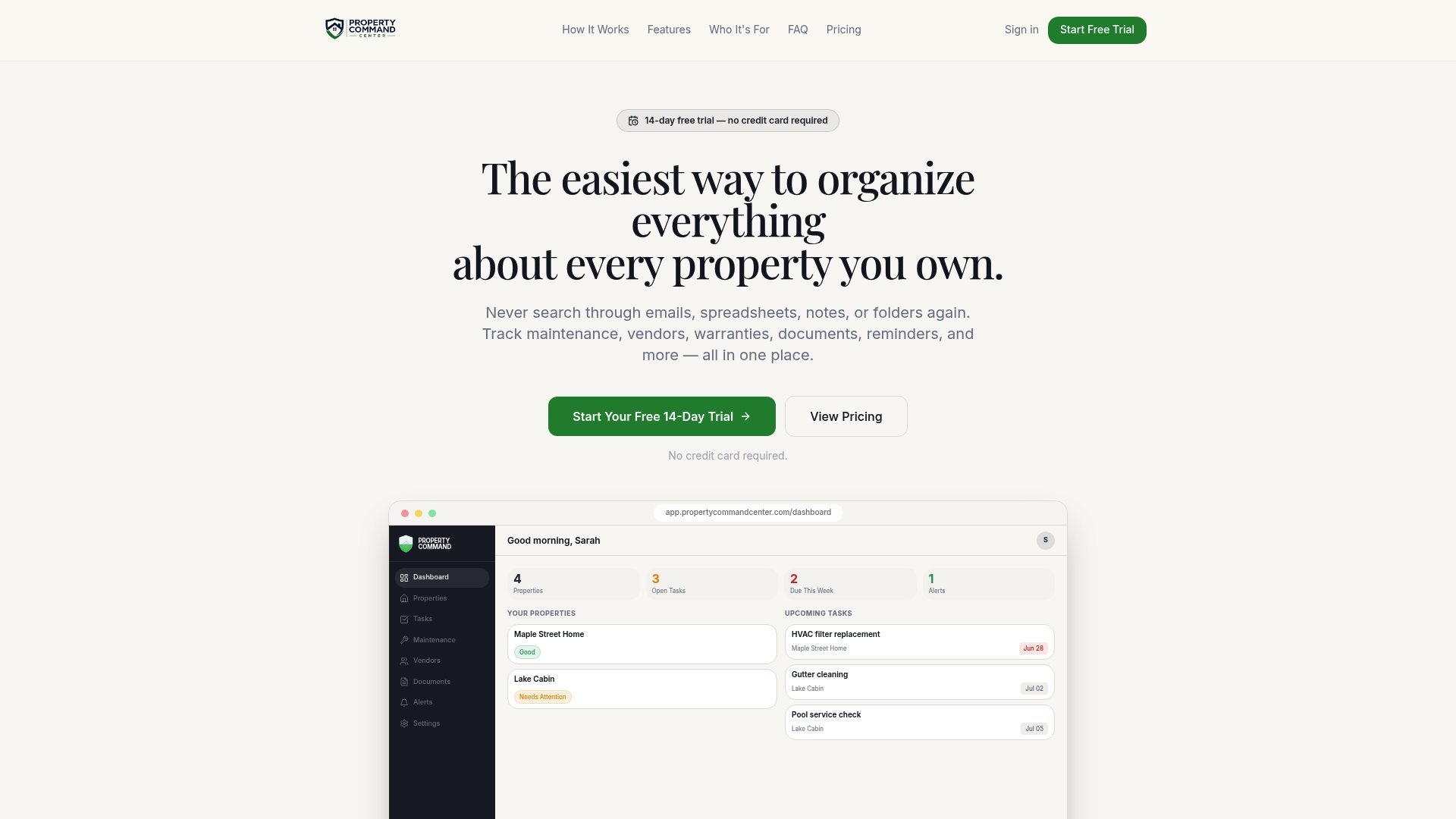
The advantage over juggling spreadsheets and sticky notes is straightforward: this software is designed specifically for owners managing a handful of homes or short-term rentals, focusing on simplicity and ease of use without requiring training. Coordinating a vendor visit around bookings gets easier when the platform behind it borrows from proven hotel check-in workflow practices for handling operational timing, without disrupting guests.
The Starter plan runs $19 per month and the Pro plan runs $49 per month, and you can check current plans and start a free trial with no credit card required. If you manage vendors across multiple properties, the vendor directory feature alone is worth a look before your next turnover.
Sources
- EPA — Mold course, chapter 2
- NFPA — Safety tips for peer-to-peer hospitality
- Lodgify — Vacation rental maintenance guide
FAQ
What Is the 50% Rule for Rental Maintenance Costs?
The 50% rule is a broad landlord budgeting heuristic suggesting roughly half of gross rental income covers operating expenses including maintenance, taxes, and insurance combined, not maintenance alone. For short-term rentals specifically, a tighter and more useful figure is 5% to 8% of gross rent set aside for repairs and upkeep.
What Is the 80/20 Rule for Airbnb Maintenance?
It's a way of prioritizing the small, cheap, recurring checks over reactive fixes after something breaks.
What Is the Average Short-Term Rental Management Fee?
Management fees vary widely by market, service level, and whether the company handles bookings, cleaning, or maintenance separately, so no single fixed rate applies across the industry. Self-managing owners instead spend on maintenance directly, typically $800 to $1,500 per year in preventive upkeep for a single property.
What Is the 7% Rule for Rental Property Maintenance?
The commonly cited figure for rental maintenance sits within the broader 5% to 8% of gross rent range recommended for annual repair and upkeep budgeting. It works best as a planning baseline that gets adjusted up for older properties or higher-turnover units.
How Do I Track Maintenance Tasks Across Multiple Rentals?
The most reliable method combines a fixed cadence (per-turnover, monthly, seasonal, annual) with centralized recordkeeping instead of scattered notes or texts. A dashboard like Property Command Center consolidates schedules, vendor contacts, and documents in one place so nothing depends on memory.