Your first job is habitability: working heat, water, power, and smoke/CO detectors, checked today. After that, book your seasonal HVAC service, set aside a maintenance reserve based on common budgeting heuristics for your property's value annually, and open a maintenance log for every unit you own. This week, test detectors, confirm your next HVAC appointment, add a maintenance date to your calendar, and log your first entry.
TL;DR:
- Regularly schedule seasonal HVAC tune-ups, gutter cleanings, and roof inspections, as these prevent costly damages and extend equipment lifespan.
- Maintain detailed records of all repairs, including date, task, vendor, and photos, to support tax deductions and resolve potential disputes.
- Allocate at least 1% of the property's value annually for maintenance reserves, and set up contracts with key service providers for predictable costs.
- Prioritize immediate action on safety issues such as no heat, burst pipes, or gas leaks, responding within 24 hours, and schedule non-emergency repairs within 72 hours.
- Use a property management dashboard to centralize maintenance schedules, vendor contacts, and documentation, ensuring proactive upkeep and quick access during disputes.
Table of Contents
- What Does Rental Property Maintenance Actually Cover?
- What Are the Most Common Rental Property Repairs?
- When Should You Schedule Preventive Maintenance?
- How Much Should You Budget for Maintenance?
- What Counts as a Maintenance Emergency?
- How Should You Track Maintenance Records for Taxes?
- How Do You Manage a Property Dashboard Alongside Your Repairs?
- A Small Portfolio Owner's Take on Staying Ahead of Repairs
- Try Property Command Center for Your Maintenance Schedule
- Sources
- FAQ
What Does Rental Property Maintenance Actually Cover?
Rental property maintenance splits into three buckets: legal habitability requirements, preventive upkeep that avoids costly failures, and reactive repairs when something breaks. Landlords who treat these as one undifferentiated pile of "stuff to fix" end up perpetually behind, paying emergency rates for problems a $150 inspection would have caught. The owners who stay ahead of it separate the categories from day one and build a system, whether that's a paper binder or a landlord maintenance software tool, around each one.
Landlord responsibilities vs. tenant responsibilities
State habitability laws generally put the big-ticket items on you: structural integrity, roofing, plumbing systems, electrical wiring, heating, and any built-in appliance you provided. Tenants typically handle day-to-day upkeep, minor cleaning, and reporting problems promptly. A lease that leaves this vague is a lease that generates disputes.
Legal guidance consistently recommends spelling out duties in the lease itself rather than assuming shared understanding, because vague responsibility language is one of the most common sources of security deposit disputes. A workable split looks like this:
- Landlord handles: roof, foundation, HVAC systems, water heater, major plumbing and electrical, pest infestations tied to structural issues, and all life-safety devices.
- Tenant handles: light bulb replacement, HVAC filter swaps (if the lease assigns it), reporting leaks or malfunctions within 24 to 48 hours, keeping drains clear of grease and debris, and smoke detector battery checks between your annual inspections.
- Shared or negotiable: lawn care, snow removal, and minor pest issues from the tenant's own habits (unreported food storage, for example).
Lease language should specify not just who does what, but how fast. A clause like "tenant shall report any water leak, electrical malfunction, or loss of heat within 24 hours of discovery" gives you a documented timeline if a habitability complaint ever escalates. Pair that with your own commitment: acknowledge maintenance requests within a set window and note the date you received each one.
That paper trail matters more than most new landlords realize. If a tenant later claims you ignored a leaking pipe for months, your maintenance log and the report date from the tenant's own notice are your defense. Without documentation, disputes tend to default to whoever complains louder, and that's rarely the outcome you want in a security deposit hearing or habitability claim.
What Are the Most Common Rental Property Repairs?
Some repairs threaten safety immediately; others just threaten your budget if ignored. Triage in this order, and you'll rarely get blindsided.
- Smoke and CO detectors. Nonnegotiable, checked at every turnover and at least annually in between. A dead battery is a five-minute fix; a missing detector is a liability problem. Replace units older than 10 years outright.
- Major water leaks. Recognize by staining, warped flooring, or a spiking water bill. Shut off the supply valve immediately, then call a plumber. Delay here turns a $200 fix into a $3,000 drywall and mold remediation job.
- Water heaters. Rumbling noises or rusty water signal sediment buildup or a failing tank. Annual flushing extends lifespan; a full replacement typically runs $1,200 to $2,500 installed.
- HVAC systems. Weak airflow or short-cycling usually means a dirty filter or low refrigerant. Energy Star's maintenance checklist recommends seasonal filter changes and an annual professional tune-up before extreme weather hits.
- Plumbing (toilets, drains). Slow drains and running toilets are DIY-friendly with a $15 flapper or a drain snake. Recurring clogs across multiple fixtures point to a sewer line problem that needs a professional camera inspection.
- Electrical faults. Flickering lights or a breaker that trips repeatedly is never a DIY project. Call a licensed electrician the same day.
- Pests. Ants and occasional spiders are normal; recurring rodent activity or termite evidence needs a licensed pest control contract, not a one-time spray.
- Dryer vents. Lint buildup is a fire hazard and reduces efficiency. Clean annually, more often for high-turnover units.
- Drywall damage. Cosmetic dings wait until turnover; anything tied to water intrusion gets fixed immediately to prevent mold.
Insurers who track claims data list these same categories as the repairs landlords encounter most often, which is useful confirmation that your triage priorities line up with actual risk exposure, not just guesswork.
Preventive maintenance pays for itself several times over. Industry data on rental upkeep shows preventive maintenance can return 4 to 7 times its cost compared with letting issues become emergencies. A $150 HVAC tune-up that prevents a $2,500 mid-summer compressor failure isn't optional spending. It's the cheapest insurance policy you'll buy this year.
When Should You Schedule Preventive Maintenance?
A seasonal rhythm beats reactive firefighting every time, and it doesn't need to be complicated. The framework that works best pairs two heavy rounds a year with lighter monthly and quarterly checks in between.
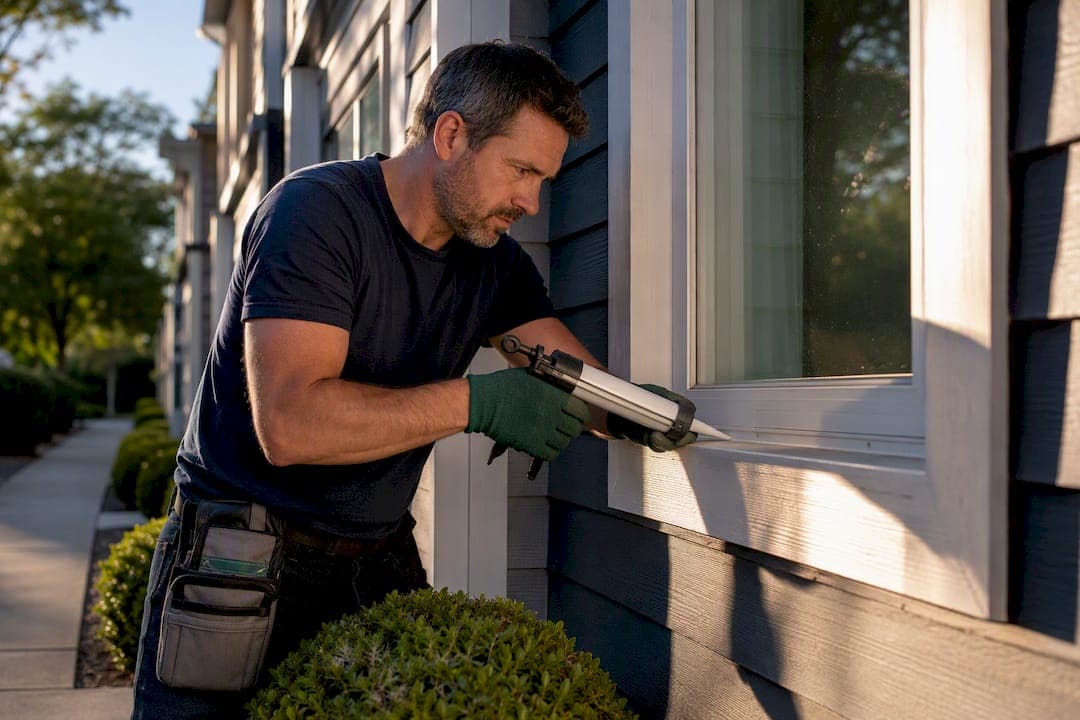
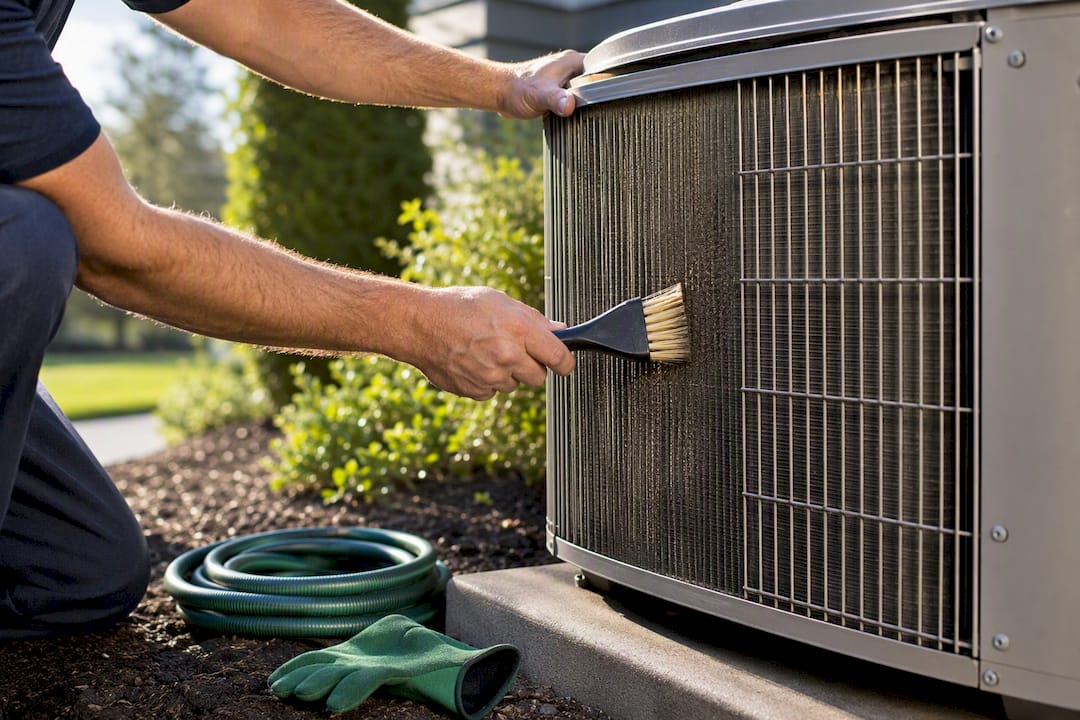
Spring and fall (heavy rounds): clean gutters, service the HVAC system before its peak season, inspect the roof for missing shingles or flashing issues, and recaulk exterior windows and doors. This two-round approach, adjusted for your local climate, catches the failures that cause the most expensive damage before they start.
Monthly: walk the exterior for anything obviously wrong, check for pest activity, and confirm HVAC filters are within their replacement window.
Quarterly: test smoke and CO detectors, flush slow drains with an enzyme treatment, and inspect under sinks for early leak signs.
At turnover: re-key locks, deep clean every room, replace HVAC filters, test all detectors, run every appliance through a full cycle, and photograph the entire unit before the new tenant moves in.
| Task | Frequency | Why it matters |
|---|---|---|
| HVAC filter replacement | Monthly to quarterly | Cuts energy waste and prevents system strain |
| Gutter cleaning | Spring and fall | Prevents roof and foundation water damage |
| Smoke/CO detector test | Quarterly | Life-safety compliance and liability protection |
| Water heater flush | Annually | Extends tank life, prevents sediment failure |
| Roof inspection | Annually (post-storm too) | Catches small leaks before structural damage |
| Turnover deep clean and detector check | Every vacancy | Resets baseline condition, documents starting point |
Older properties and harsher climates need tighter intervals. A 40-year-old building in a freeze-thaw region should have its exterior inspected more often than a five-year-old property in a mild climate. Recommendations for climate and age-adjusted scheduling suggest treating the standard calendar as a floor, not a ceiling, once your property passes the 20-year mark.
The ROI case is straightforward. Say a $400 annual HVAC service contract prevents one $2,800 compressor replacement every five years. That's $2,000 in service fees against one avoided failure. Even with zero other benefits, the math favors prevention. Add in the energy savings from a well-maintained system, and the case gets stronger still.
How Much Should You Budget for Maintenance?
Two rules of thumb dominate landlord budgeting conversations, and both are useful starting points, not gospel.
The 1% rule says to budget roughly a small percentage of your property's value annually for maintenance. On a typical property, set aside a monthly amount based on its value before you touch any other expense. The 50% rule takes a wider view: expect operating costs, including maintenance, property taxes, insurance, and vacancy, to consume about half of your gross rental income. Both rules originate as heuristics for estimating maintenance costs, and both need adjusting for your property's actual age and condition.
Here's the math for that $300,000 property: at 1%, you're setting aside $3,000 annually, or $250 monthly.
Three tactics keep that reserve from getting raided every time something breaks:
- Lock in HVAC and pest control service contracts so predictable costs stop competing with your emergency fund.
- Set up filter delivery subscriptions so a $15 filter change never becomes a skipped task because nobody had one on hand.
- Negotiate net 30 payment terms with your regular vendors so a repair invoice doesn't collide with your mortgage due date.
A maintenance reserve isn't a nice-to-have line item. It's the difference between a $2,500 water heater replacement being an inconvenience or a crisis. Landlords without a dedicated reserve often pull from rent income meant for the mortgage, which is how one deferred repair turns into a cash-flow spiral.
What Counts as a Maintenance Emergency?
An emergency is anything threatening safety or causing ongoing property damage: no heat in freezing weather, a burst pipe, a gas leak, no water, or a broken lock that compromises security. These get immediate action, not a place in next week's schedule.
- Life-safety and active-damage issues get same-day attention. No heat, no water, gas smells, and active flooding don't wait for business hours.
- Acknowledge every maintenance request within 24 hours, even if the fix itself takes longer. A tenant who hears nothing for three days escalates faster than one who got a same-day response and a realistic timeline.
- Schedule non-emergency repairs within 72 hours of the report, with the actual work completed on a timeline you communicate clearly.
Local law varies significantly on notice periods, repair-and-deduct rights, and rent withholding, so treat this as a framework rather than a substitute for checking your specific jurisdiction. Many states allow tenants to arrange their own repairs and deduct the cost from rent if a landlord fails to act on a habitability issue within a reasonable window, and some permit rent withholding entirely. Consult your local housing code or a real estate attorney before assuming your lease terms override those protections. A 90-day plan for meeting landlord maintenance responsibilities is a useful way to structure compliance if you're catching up on gaps.
How Should You Track Maintenance Records for Taxes?
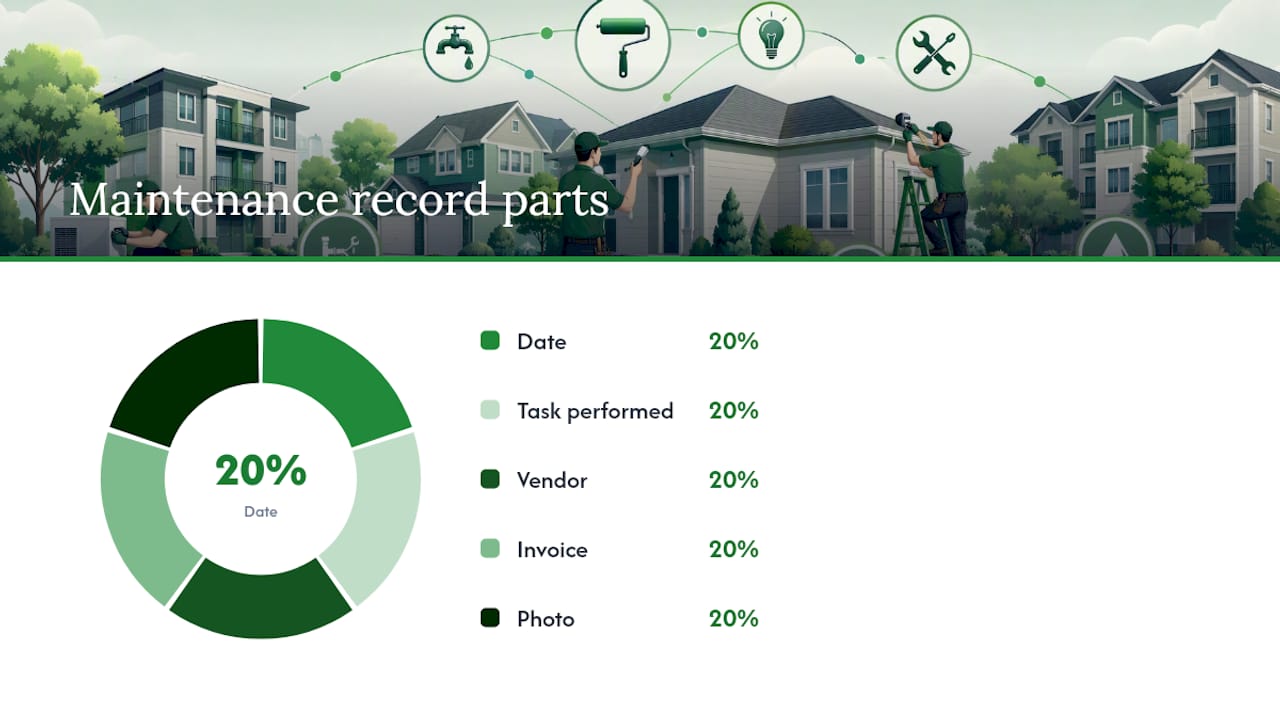
Every repair needs five pieces of documentation: the date, the task performed, the vendor, the invoice, and a photo. That's the minimum that protects you in a tax audit, a tenant dispute, or a future sale.
The distinction between a repair and an improvement matters enormously for taxes. A repair, like fixing a leaking faucet, is typically deductible in the year you pay for it. An improvement, like replacing an entire plumbing system, usually gets depreciated over several years instead. IRS guidance on rental real estate income and deductions is specific about this line, and misclassifying a major improvement as an immediate deduction is one of the more common audit triggers for landlords.
Keep records for at least three years past the filing date of the return that used them, longer if you've claimed depreciation on a capital improvement. Practical retention habits:
- Store every invoice and receipt digitally, not in a shoebox that outlives its usefulness in a flood or move.
- Photograph before-and-after conditions for every repair over $200.
- Use a maintenance log template that timestamps entries automatically.
- Export records annually into a folder your accountant can access without a phone call to you.
How Do You Manage a Property Dashboard Alongside Your Repairs?
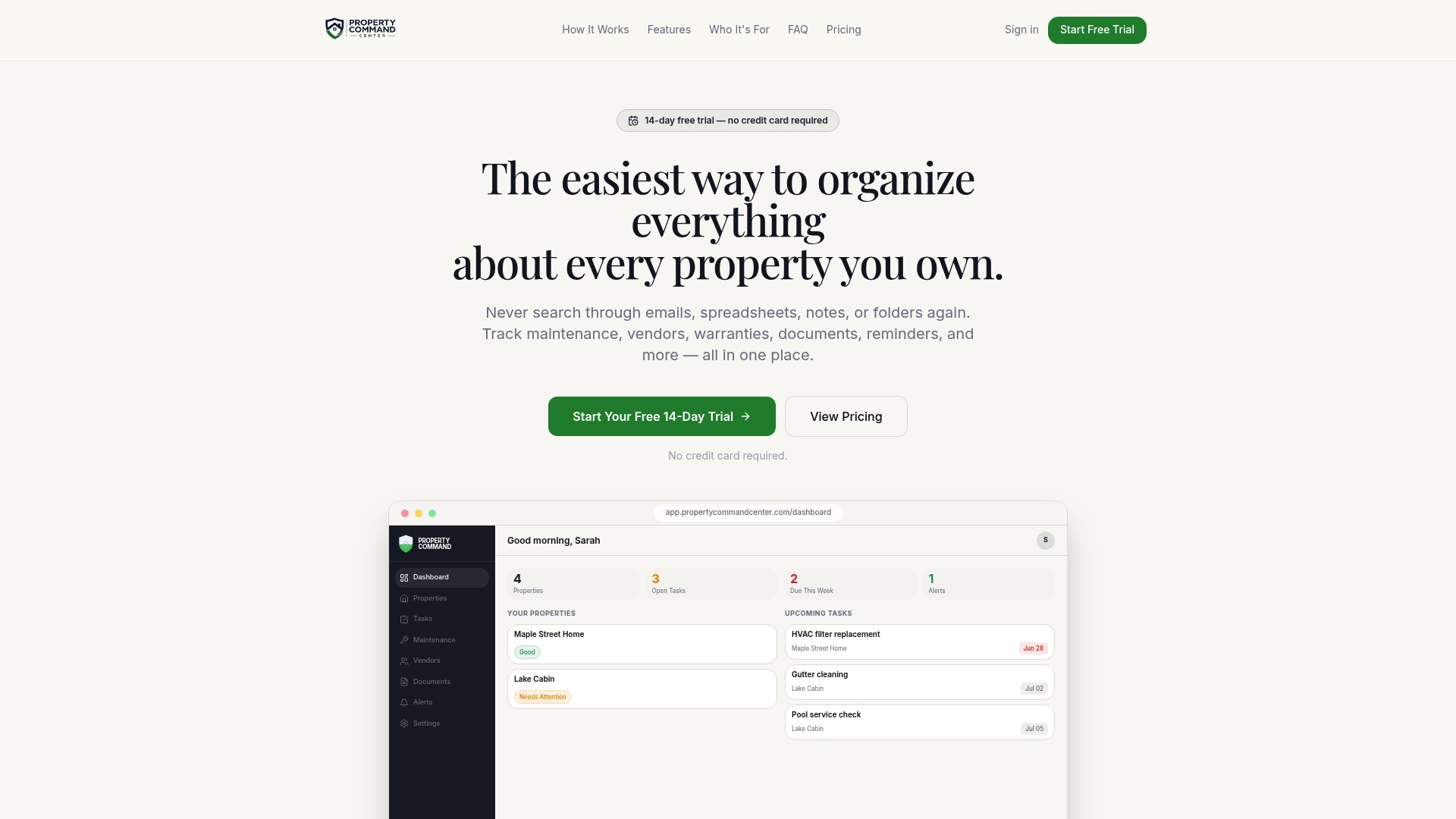
A consolidated dashboard turns your maintenance calendar, vendor list, and paper trail into one searchable system instead of five different apps and a shoebox of receipts. Property Command Center stores your schedules, vendor contacts, invoices, and photos in a single audit trail you can pull up in seconds when a tenant disputes a repair or your accountant asks for documentation.
Sequenced turnover checklists and automated reminders catch the tasks that fall through when you're juggling more than one property. Missed filter changes and skipped detector checks are usually a memory problem, not a diligence problem, and a reminder system solves that directly.
- Reminders fire before your seasonal HVAC or gutter work is due, not after.
- Vendor contacts stay attached to the property they serve, so you're not searching old texts for a plumber's number.
- Every invoice and photo lives with the task it documents.
Pro Tip: Start small. Put your next two seasonal maintenance rounds and one unit's complete service history into a dashboard this week. That single habit is what makes the rest of this system stick.
A Small Portfolio Owner's Take on Staying Ahead of Repairs
Owning three units taught me that consistency beats scale every time. The landlords who struggle aren't managing ten properties badly; they're managing one property without a system. Commit to a preventive calendar and a modest reserve today, and the rest gets easier from there.
— Francisco
Try Property Command Center for Your Maintenance Schedule
Spreadsheets and sticky notes work until you own more than one property, and then they quietly start failing you: a missed HVAC service here, a lost invoice there. A property management dashboard can consolidate maintenance schedules, vendor contacts, a document vault for warranties and manuals, and smart alerts before seasonal tasks slip past due.
It's built specifically for owners who self-manage rather than agencies or large portfolios, which means no features you'll never use and no learning curve you don't have time for. If you're managing vendor relationships across more than one property, the vendor directory alone solves a headache most owners just accept as normal. Start a free trial, no credit card required, and load in your next seasonal round through onboarding today.
This article is general information, not a substitute for advice from a qualified lawyer. Consult a qualified legal professional about your own circumstances before acting on anything here.
Sources
- Tips on rental real estate income, deductions, and recordkeeping - IRS
- Heating and cooling maintenance checklist - Energy Star
- Rental Property Maintenance Schedule: Annual, Quarterly & Monthly Tasks | CapRateCity
- Landlord maintenance checklist - Rocket Lawyer
- The Rental Property Maintenance Schedule: A Season-by-Season Preventive Plan (2026) · DiscoveryMark
FAQ
What is considered a maintenance expense on a rental property?
A maintenance expense is any repair that keeps the property in its current working condition, like fixing a leak or repainting a wall, and it's typically deductible in the year you pay for it. Replacing an entire system, like a roof or HVAC unit, usually counts as an improvement and gets depreciated instead, per IRS guidance.
What maintenance is required by the tenant?
Tenants are typically responsible for minor upkeep like light bulb replacement, keeping the unit reasonably clean, promptly reporting leaks or malfunctions, and any filter or battery changes the lease specifically assigns to them.
What is the 50% rule in rental property?
The 50% rule estimates that operating costs, including maintenance, taxes, insurance, and vacancy, will consume about half of your gross rental income, a common budgeting heuristic that owners adjust based on their property's actual condition and age.
What repairs are landlords responsible for?
Landlords are generally responsible for structural elements, major systems like plumbing, electrical, and HVAC, the roof, and all life-safety devices such as smoke and CO detectors, though exact obligations vary by state and local housing code.
How can I track maintenance across multiple rental properties?
Consolidating your maintenance schedule, vendor contacts, and documentation into one dashboard, rather than scattered spreadsheets and emails, is what platforms like Property Command Center are built to handle for owners managing more than one property.