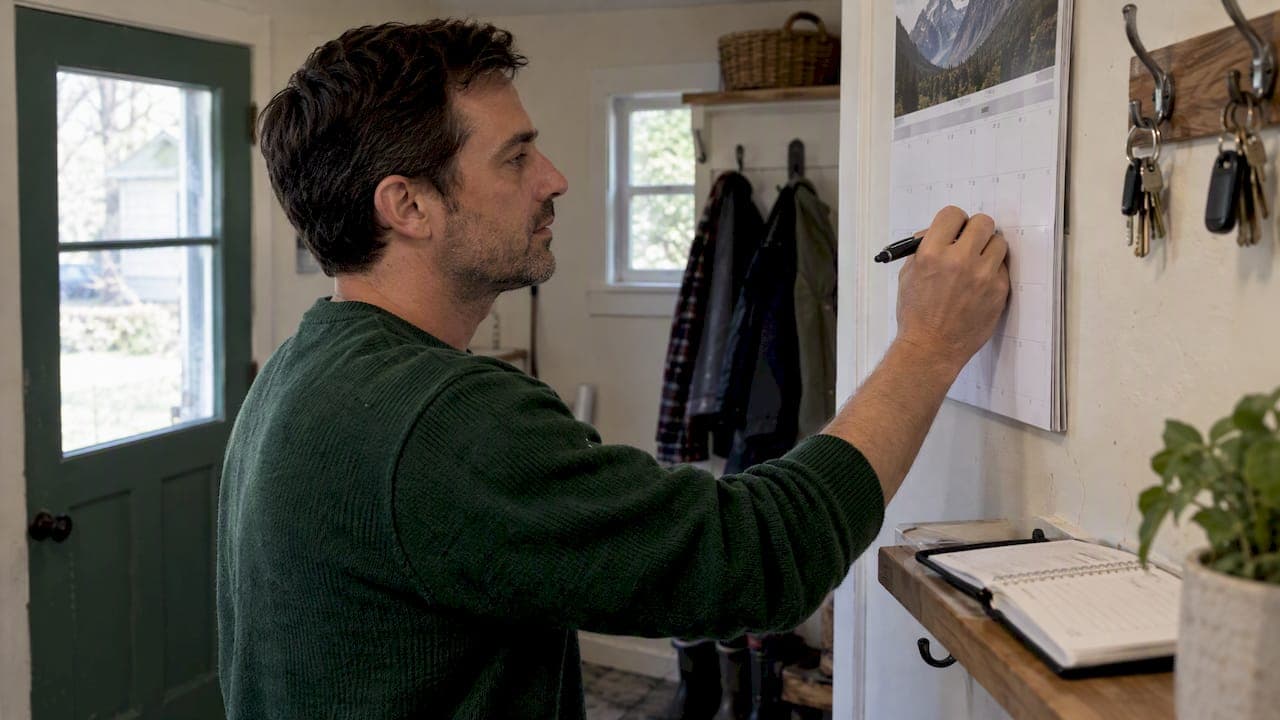
The simplest host maintenance calendar is a month-by-month layout with recurring monthly, quarterly, and annual entries rather than vague "every few months" reminders. Add recurring items to your calendar: a monthly smoke alarm test, HVAC filter checks at the interval recommended by the manufacturer, and a professional HVAC inspection timed to spring or fall. Pick a tool, whether a printable template, a calendar app, or a dashboard built for multiple properties, and schedule the next occurrence of each before you do anything else.
TL;DR:
- HVAC manufacturers often recommend filter changes every 60 to 90 days, but heavy use or wildfire smoke may require more frequent replacement.
- Schedule air conditioner inspections in spring and furnace inspections in fall, before peak demand; regular HVAC maintenance can reduce energy costs by 5% to 10%.
- Track each alarm’s manufacture date, test it monthly, replace batteries annually, and apply the 10 year replacement rule to every unit.
- Filter changes take 10 to 30 minutes, and alarm tests take 2 to 5 minutes per unit; licensed technicians should handle HVAC and electrical work.
- Attach warranty dates, service details, and completed work records to each asset; set renewal reminders 60 to 90 days before coverage expires.
Table of Contents
- How often should you schedule each maintenance task?
- A season-by-season checklist you can copy into your calendar
- How long each task takes and who should handle it
- Setting up your own calendar step by step
- Tools and templates that make setup fast
- Rules worth building directly into your calendar
- Tracking warranty and service contract dates next to your tasks
- Building emergency preparedness into your regular schedule
- Keeping records of what you've already done
- What running a calendar across several properties taught me
- Running this calendar across multiple properties with Property Command Center
- FAQ
- Sources
How often should you schedule each maintenance task?
Vague intervals like "every 90 days" can slip through the cracks because nothing on a real calendar triggers them. Follow the EPA’s filter guidance and set a specific reminder. A specific date, like the first Saturday of each month, turns a loose intention into an actual appointment you can see coming.
Most host maintenance tasks fall into one of four cadences:
- Monthly: test every smoke alarm in the property, a quick task per unit.
- HVAC filters: check and replace them as needed, following the manufacturer’s recommendation.
- Seasonal: clean gutters if the property sits near trees, typically in spring and fall.
- Annual: book a professional HVAC inspection and replace smoke alarm batteries on a fixed date.
Owner's manuals and manufacturer specs often give you a tighter number than generic advice does. Many HVAC manufacturers recommend swapping filters every 60 to 90 days, with more frequent changes during heavy use or when wildfire smoke is in the air, according to the EPA. When a manual lists an exact interval, use it instead of a generic rule. When it doesn't, the cadences above are a solid default.
A season-by-season checklist you can copy into your calendar
Mapping tasks to seasons keeps the calendar grounded in actual weather and system demand instead of arbitrary dates. Here's a practical pass through the year:
- Spring: inspect the air conditioner before cooling season starts, check outdoor fixtures and siding for winter damage, clean gutters, inspect the roof, and continue monthly smoke alarm tests.
- Summer: check exterior caulking and screens, set reminders for pest control visits, prep the pool or sprinkler system, and keep up monthly smoke alarm tests and quarterly filter checks.
- Fall: schedule the furnace inspection before heating season, winterize outdoor plumbing and hose bibs, check attic insulation, clear gutters again, and confirm each smoke alarm's manufacture date against the 10-year replacement rule.
- Winter: verify exposed pipes are insulated, service a backup generator if the property has one, use slower weeks to schedule any repairs you deferred earlier in the year, and double-check that alarm batteries and unit ages are logged for the next cycle.
This rotation lines up with widely cited guidance to inspect the air conditioner in spring and the furnace in fall, since each system gets attention right before the season that will stress it most, per the Department of Energy. If you manage more than one property, our month-by-month calendar breaks this same rotation into individual tasks you can copy directly.
How long each task takes and who should handle it
Blocking realistic time keeps the calendar honest instead of aspirational. Some tasks take minutes; others need a licensed professional and a half-day window.
- Change an HVAC filter: 10 to 30 minutes, owner-handled.
- Test a smoke alarm: 2 to 5 minutes per unit, owner-handled.
- Clean gutters: 1 to 3 hours, owner or a hired crew depending on roof height.
- Seasonal HVAC inspection: 1 to 2 hours, performed by a licensed technician.
HVAC tune-ups, major roof repairs, and electrical work generally call for a licensed vendor rather than a DIY attempt. Batch quick tasks, like filter checks and alarm tests, into one work session so you're not opening a toolbox repeatedly.
Pro Tip: When you book a vendor for one job, ask what else they'd check while on-site; a technician already on the roof for gutter cleaning can often flag shingle wear for free.
Setting up your own calendar step by step
Building a calendar that actually gets used starts with knowing what you own, not with picking an app. Work through these steps once per property:
- Inventory your assets: list the HVAC system, water heater, smoke alarms, roof age, and any major appliances.
- List recurring tasks: write down every task each asset needs, from filter swaps to annual inspections.
- Choose cadences: assign monthly, quarterly, semiannual, or annual frequency to each task, using the manufacturer's manual where one exists.
- Assign dates: convert each cadence into a specific calendar date, not a floating interval.
- Assign responsibility: note whether you, a family member, or a vendor handles the task.
- Add reminders and cost notes: log typical vendor pricing so budgeting isn't a surprise later.
Record the equipment model number and a link to its manual right next to the task so you're not hunting for it during an actual repair. For budgeting, build in a buffer for seasonal demand: HVAC technicians book up fast right before summer and winter, so reminders to schedule ahead can help secure availability and pricing.
Tools and templates that make setup fast
You don't need custom software to start. A printable monthly template works for a single home, while a repeating Google Calendar event handles the basics for anyone comfortable with digital reminders.
- Printable template: post it near the utility closet for a visual, low-tech system.
- Calendar app: set repeating events, like the first weekend of each month for filter and alarm checks.
- Reminder apps: layer in phone and email alerts so nothing depends on memory alone.
- A property dashboard: consolidates schedules across multiple properties instead of juggling separate calendars.
Our printable checklist and 90-day starter plan both give you a ready template instead of a blank page.
Rules worth building directly into your calendar
A few maintenance rules come from federal guidance rather than general habit, and they're worth encoding exactly as written rather than approximating. Fire Administration](https://www.usfa.fema.gov/prevention/home-fires/prepare-for-fire/smoke-alarms/index.html).
Regular HVAC maintenance can cut heating and cooling costs by 5% to 10%, per the Department of Energy, which is reason enough to keep spring AC and fall furnace inspections on a fixed date rather than an afterthought. For filters, choose the highest MERV rating your system can handle without straining the blower, since higher-rated filters catch smaller particles but raise static pressure if the system isn't built for them, per EPA guidance on Indoor airPLUS.
Tracking warranty and service contract dates next to your tasks
A maintenance calendar is incomplete if it only tracks when a task is due and not when a warranty or service contract expires. A water heater warranty, an HVAC parts warranty, or a home warranty service plan all carry hard expiration dates, and missing one often means paying out of pocket for a repair that would otherwise have been covered.
The simplest approach is to log the warranty start date, length, and provider right next to the related maintenance task rather than in a separate file. When you record an HVAC filter task, add a line underneath noting the compressor warranty expiration, along with the contract number and the installer's contact information. The same applies to roofing warranties, appliance protection plans, and any service contract tied to a vendor visit, like an annual pest control agreement or a generator service plan.
Set a reminder 60 to 90 days before each warranty expires so you have time to decide whether to renew a service contract or schedule a final inspection while coverage is still active. This matters even more for owners juggling several properties, since warranty timelines rarely line up across homes and a missed window on one property is easy to overlook when you're tracking several.
Keeping this information attached to the task, rather than buried in an inbox or a filing cabinet, is what turns a maintenance calendar into a genuine record of ownership instead of just a to-do list.

Building emergency preparedness into your regular schedule
Safety inspections and emergency readiness tasks belong on the same calendar as routine upkeep, not in a separate emergency binder you only open during a crisis. Smoke alarm testing already covers part of this, but a complete calendar should also include a fire extinguisher check, a carbon monoxide detector test, and a walkthrough of exits and emergency shutoffs for gas and water.

Add a recurring slot to test carbon monoxide detectors alongside smoke alarms, following the manufacturer’s instructions for each device. Include a recurring check of fire extinguisher pressure gauges, and note the manufacture date so you can follow the manufacturer’s guidance on replacement or recharging. For properties in regions prone to wildfire smoke, the EPA recommends choosing a filtration strategy before an event happens, since high-efficiency filters and portable air cleaners can be harder to find once demand spikes.
If the property has a generator, a sump pump, or a sealed storm shutter system, schedule a seasonal test before the weather event it's meant to handle, not after the first storm warning. A fall test for a generator ahead of winter storms, or a spring check of sump pump function ahead of heavy rain, catches a dead battery or a stuck float switch while you still have time to fix it.
Tying these checks to the same calendar you already use for filters and alarms means you're far less likely to discover a dead extinguisher or an expired detector during an actual emergency.
Keeping records of what you've already done
A maintenance calendar only tells you what's coming next. A maintenance log tells you what's already been done, and that history is just as valuable, especially when you're troubleshooting a recurring issue or preparing a property for sale.
For every completed task, record the date, who performed it, and the cost. A simple note like "furnace inspected, October 14, 2026, $150, Smith HVAC" takes seconds to add and becomes useful the next time that furnace acts up or a buyer's inspector asks for maintenance history. Photos help too: a picture of a new water heater's data plate or a freshly cleaned gutter line gives you a timestamped reference you can compare against later.
Keep this history attached to the same task entry you used to schedule the work, rather than in a separate spreadsheet that's easy to forget. Over a few years, this record becomes a reliable answer to questions like "when did we last replace this filter" or "which vendor did the last roof repair," without digging through old emails or paper receipts.
For owners managing multiple properties, consistent documentation makes it easier to compare maintenance costs and vendor performance, which can help identify unusual costs.
What running a calendar across several properties taught me
Adopting a fixed monthly cadence, rather than reacting to whatever broke that week, cut down the number of emergency repair calls across the properties I was tracking. Start with the core monthly items: smoke alarms and filters. Then try a 30 to 90 day run before adding anything more complex.
— Francisco
Running this calendar across multiple properties with Property Command Center
A calendar works well for one home. It gets harder to manage once you're juggling multiple properties, each with its own filter schedule, vendor list, and warranty dates scattered across emails and sticky notes. Our dashboard consolidates maintenance schedules, vendor contacts, and warranty documents in one place, so you can check them together instead of switching between systems.
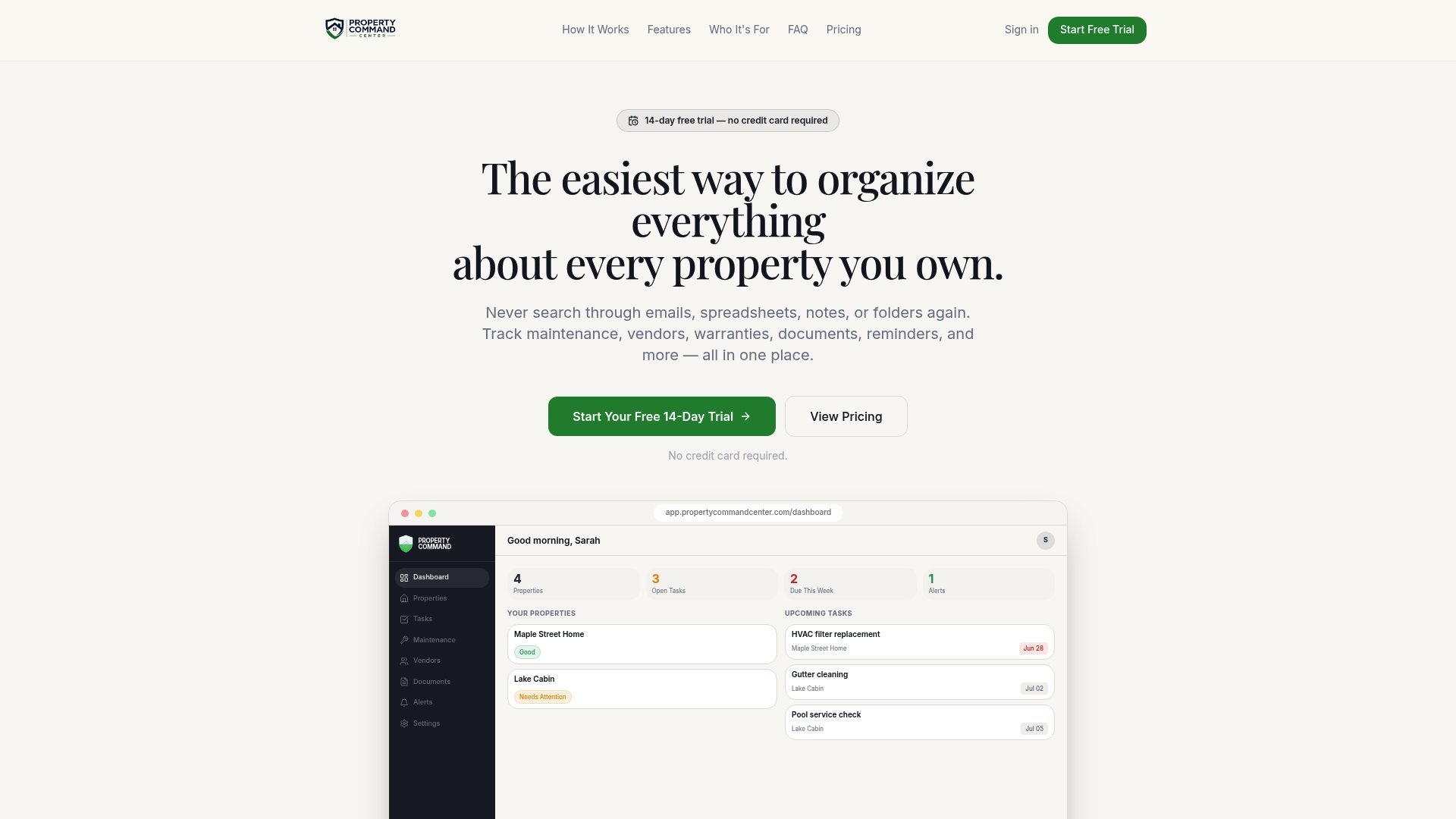
- One dashboard per portfolio: see every property's upcoming tasks without switching between calendars.
- Vendor directory built in: store vendor contact details.
- Document vault: keep warranties, manuals, and insurance papers attached to the asset they cover.
We offer two plans, Starter and Pro, both built for owners managing multiple properties rather than enterprise portfolios. If you'd rather look for help with a specific task, our vendor directory is a good place to find contacts for jobs like recurring cleaning, including options like routine janitorial checklists for shared spaces if your property includes common areas. Import your seasonal checklist and see how the reminders hold up over a free trial.
FAQ
What does "maintenance scheduling" mean?
Maintenance scheduling means assigning specific dates and recurring intervals to upkeep tasks instead of handling repairs only after something breaks. It typically covers recurring tasks tied to each system's manufacturer recommendations.
What is a planned maintenance schedule?
A planned maintenance schedule lists every recurring task a property needs, along with the date it's due and who is responsible for completing it. It's built in advance rather than created reactively when something fails.
What are the four phases of planned maintenance?
Definitions vary by industry, but a common version covers inventory (listing assets and their needs), scheduling (assigning cadences and dates), execution (completing the task), and review (logging what was done and adjusting future intervals). For a host's calendar, this translates to listing assets, setting cadences, assigning responsibility, and documenting completed work.
What does scheduled maintenance mean?
Scheduled maintenance refers to upkeep performed on a set timetable, like a recurring smoke alarm test or an HVAC inspection timed to the season, rather than work triggered by a breakdown. It's the preventive approach that a host maintenance calendar is built around.