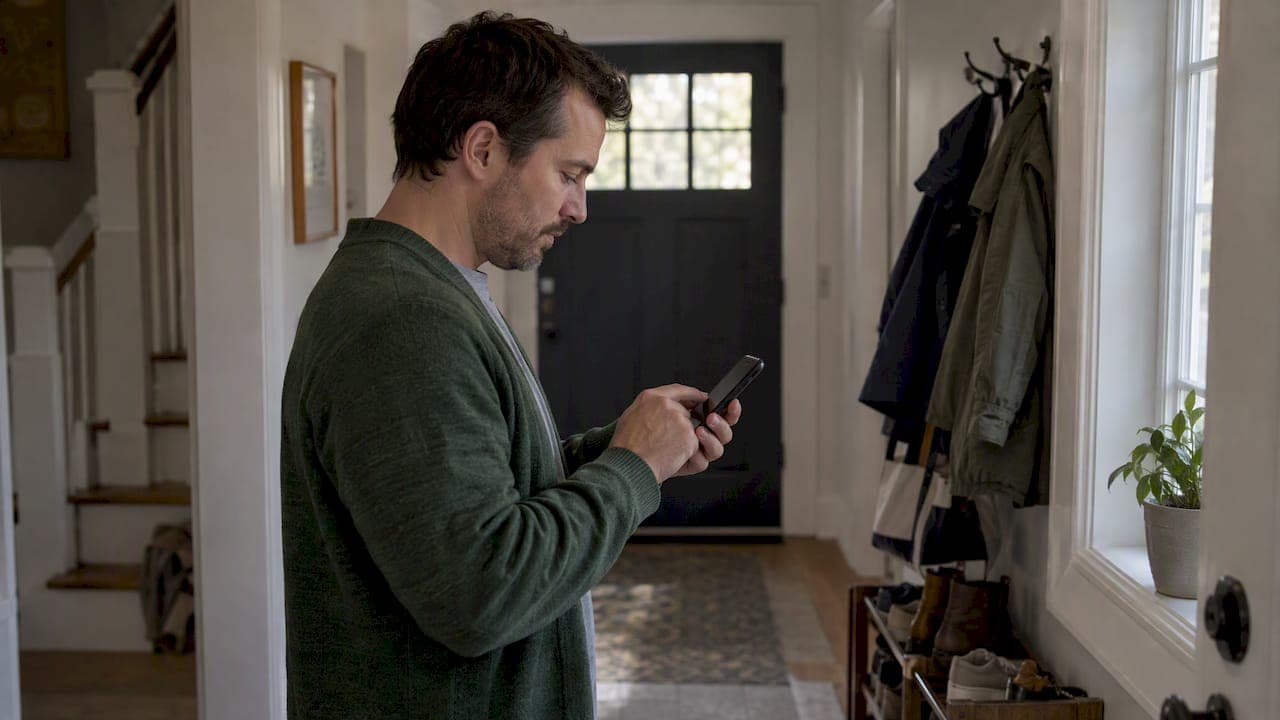
Managing a vacation home remotely is practical, and many owners do it with a short list of systems: automated guest messaging, contactless access, smart monitoring, a local vendor pool, and a set maintenance cadence. Build them in that order. Your next step is simple: switch on one messaging automation this week and save the phone number of one reliable local contact.
TL;DR:
- Tie automated messages to a synced calendar, block dates across every listing, and route late arrivals, damage, leaks, and lockouts to a named person.
- Issue each guest a unique code that expires at checkout, delete it between stays, and keep a lockbox or local key holder as backup.
- Disclose every camera, keep cameras outdoors and away from private spaces, separate the guest Wi Fi network, and enable multifactor authentication on connected device accounts.
- Test alarms monthly, inspect railings quarterly, and schedule annual system checks; keep smoke and carbon monoxide alarms on every level and post escape routes.
- Ask local vendors for insurance, references, urgent response times, and written scopes; require cleaners to send turnover photos and keep contacts, agreements, and invoices together.
Table of Contents
- How can you automate guest communication and bookings?
- How do you set up contactless check-in?
- Which smart devices keep the house safe without invading guest privacy?
- How do you build a local vendor network?
- What maintenance and inspections keep the home safe?
- How do you stock the house and write a guest manual from afar?
- How should you handle payments and bookkeeping remotely?
- Should you self-manage or hire a local manager?
- What workflows can you run from a dashboard?
- What I'd tell any remote owner
- Why a single dashboard keeps remote management simple
- FAQ
- Sources
How can you automate guest communication and bookings?
Most guest questions repeat, so most replies can be scheduled. Set up messages for these moments:
- Booking confirmation, with house rules and a request to confirm the guest count
- Pre-arrival details, including address, parking, and Wi‑Fi instructions
- Arrival logistics with access steps
- A mid-stay check-in asking whether anything is missing or broken
- Checkout reminders: trash, thermostat, lights, door lock
Tie each message to a trigger on a synced calendar. Set a cadence for pre-arrival information, arrival logistics, and checkout steps. If you run several listings, sync every calendar to one source so a booking on one channel blocks the others.
Decide in advance when automation hands off to you or a local contact: late arrivals, damage reports, safety concerns, and anything urgent like a leak or a lockout. Put those phrases in your guest guide so guests know a real person responds. Review your templates each season, since guests often reveal gaps in them through the questions they keep asking.
How do you set up contactless check-in?
Contactless access means no key handoffs and no waiting around for a guest who is stuck in traffic. Your main options:
- Smart locks that issue a unique, time-limited code per booking
- Keypad locks with codes you change on a schedule
- Lockboxes as a low-cost backup
- A local concierge or neighbor handoff when the guest needs a human
The workflow is the same for most setups. Generate a code when the booking is confirmed, set it to activate at check-in time and expire at checkout, send it with the arrival message, and confirm the guest has it. Reset or delete the code between stays. Review the lock's audit log after each stay, and keep any vendor emergency access limited to specific people you can name.
Pro Tip: Keep one offline fallback: a lockbox or a local key-holder with written instructions, plus the number of an on-call locksmith.
Access hardware is a security decision as much as a convenience one. This overview of access control types helps you compare options before you buy.
Which smart devices keep the house safe without invading guest privacy?
Remote eyes on the property cut your response time. A practical device list:
- Water leak sensors near the water heater, under sinks, and by the washer
- Door and window sensors
- Outdoor cameras only, aimed at entrances and driveways
- Smart thermostats with temperature alerts
- Smoke and CO detectors that notify your phone
- Smart plugs for non-critical appliances
Guest privacy comes first. Disclose every camera in the listing and the guest guide, and never place one in a bedroom, bathroom, or other private space.
Connected devices also create accounts that can be breached. Put guests on a separate Wi‑Fi network, and follow the CFPB's multi-factor authentication and passphrase advice, which also covers disabling unused IoT features and backing up data.
The CFPB's cybersecurity tips recommend multi-factor authentication on accounts, a quick step that protects locks, cameras, and thermostats alike.
Route alerts to two people, not one, and decide who can view logs.
How do you build a local vendor network?
You need people who can reach the house promptly when you cannot. Recruit these roles: housekeeper, handyman, plumber, electrician, landscaper, locksmith, and an emergency contact who lives nearby.
- Ask for proof of insurance and references from other property owners.
- Confirm response times for urgent versus routine calls.
- Run a background check where the role involves house access.
- Agree on standing turnover blocks for cleaners and an on-demand ticket process for repairs.
- Write a concise scope for each vendor covering tasks, fees, and what counts as urgent.
- Keep contacts, agreements, and invoices in one place so nothing lives only in your inbox.
Pay attention to how a vendor communicates early on. Photos sent unprompted after a turnover are a strong sign you have the right person.
What maintenance and inspections keep the home safe?
Use layers of cadence. After every turnover, the cleaner follows a checklist and sends photos. Monthly, test alarms, run water in rarely used fixtures, and check for leaks. Quarterly, inspect filters, exterior lighting, decks, and railings. Annually, book professional checks on HVAC, electrical, gas appliances, and the roof.

Safety items come first. The NFPA's fire safety tips for rentals say hosts should have working smoke and CO alarms on each level, a posted floor plan showing escape routes and emergency contacts, and portable fire extinguishers. Insiders quoted in NFPA Journal recommend professional-grade, hardwired, dual-detection smoke alarms. Record the address of the nearest fire station and urgent care in your task tracker.
Pro Tip: Pair vendor photos at turnover with an in-person check every quarter, so a visual problem never hides for long.
Our guide to short-term rental maintenance cadences lays out maintenance schedules, and the inspection checklist shows the photo workflow.
How do you stock the house and write a guest manual from afar?
A well-stocked house prevents most complaints. Keep these on hand and track them in one list:
- Bedding and towels in a full extra set
- Toiletries and paper goods
- Basic kitchen items: coffee filters, dish soap, trash bags
- Cleaning supplies and spare light bulbs
Ask your cleaner to flag anything that falls below a set level during turnover, then trigger a restock order. A vendor ticket works well for this.
Keep the house manual short and scannable. Include a map, Wi‑Fi details, appliance tips, explicit house rules, trash day, and emergency contacts. Offer a digital version through a link or QR code, plus a printed copy in the kitchen, and update both together so they never disagree.
How should you handle payments and bookkeeping remotely?
Know how money reaches you. Platform payouts usually arrive after check-in on the platform's schedule, while direct payments follow whatever terms you set. Keep a separate bank account for the property so income and expenses never mix.
Document damage right away: guest-facing photos, vendor invoices, and a clear record of the refund or deposit decision. Categorize income and expenses monthly and store receipts digitally for tax time.
- Use a separate account for each property
- Photograph damage before cleaning
- Save every invoice in one folder
- Bring in an accountant when your income grows or when local registration and tax rules are unclear
Should you self-manage or hire a local manager?
Weigh four factors: how many properties you own, how far away you live, how much time you can give, and how much guest volume and risk you can handle. Many owners start with a hybrid: keep your automation and vendor network, and pay a local manager only for on-call and emergency response.
- Ask any candidate how fast they respond and during which hours.
- Get fees in writing, including what counts as extra.
- Confirm their insurance coverage.
- Hand off one task at a time, starting with emergencies.
- Measure results by response time, guest reviews, and repair costs before widening their role.
What workflows can you run from a dashboard?
Compact templates beat improvisation. A turnover flow: cleaner arrives, completes the checklist, uploads photos of every room, and flags issues promptly after checkout.
- Guest reports a problem and you confirm receipt.
- Triage it as urgent or routine.
- Dispatch the right vendor and alert yourself.
- Log the outcome and the invoice.
Urgent tickets (leaks, no heat, lockouts) jump the queue, while routine ones wait for the next scheduled visit. For a setup roadmap, see remote home management for owners, and our vacation home checklist covers seasonal tasks.
What I'd tell any remote owner
The owners who sleep well are not the ones with the most gadgets. They are the ones who wrote down who does what when something breaks. My best tip for this week: ask each vendor to text you a photo and a one-line note after every visit, then save those in one place. It takes them little time and gives you a complete history. Above all, put guest safety first and confirm your local rules before your next booking, because platform settings do not replace the law. Airbnb itself tells owners they are responsible for local ordinances and codes.
— Francisco
Why a single dashboard keeps remote management simple
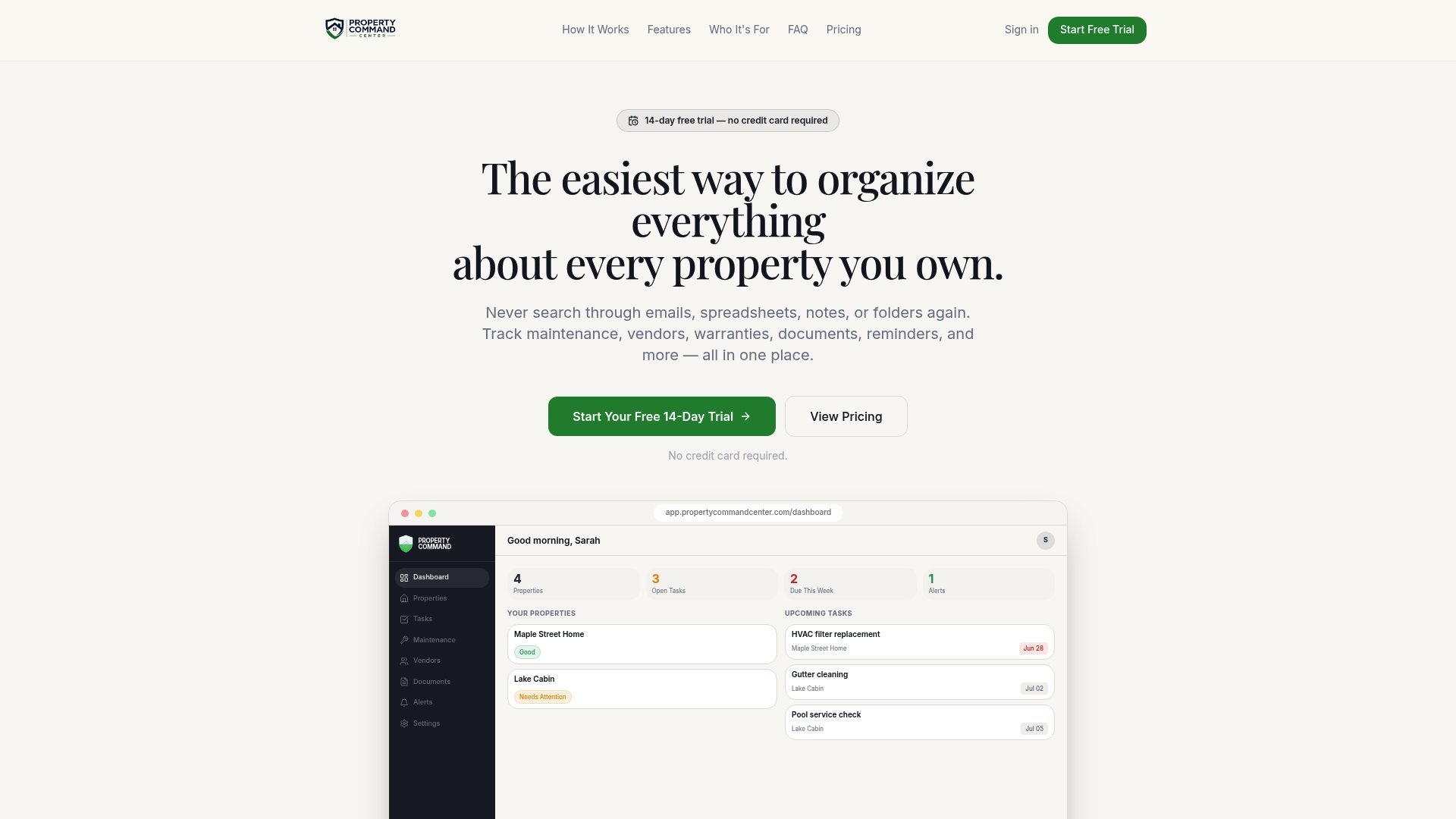
Scattered emails, spreadsheets, and notes are what make distance feel hard. We built Property Command Center to put property status, maintenance schedules, vendor contacts, and documents in one dashboard, so you see what needs attention without digging. No training, no landlord features you will never use, just the organization you need. Try it free with no credit card, or compare plans on our pricing page: Starter is $19 per month and Pro is $49 per month.
FAQ
What is the 80/20 rule for Airbnb?
There is no official rule, so the phrase varies by source. A common reading is that a small share of your tasks, such as messaging, cleaning, and pricing, drive much of your results. Automate those first.
How much do vacation property managers charge?
Fees vary by market and service level, and we do not cite a single figure here. Ask for a written fee schedule that lists what is included and what costs extra, and compare at least three quotes.
How do you manage an Airbnb property remotely?
Combine automated guest messaging, smart locks with unique codes, sensors that alert your phone, and a local team for cleaning and repairs. Back it with a shared checklist and one place to store contacts and documents.
What should you check before choosing a local manager?
Check their response hours, fees, insurance, and how they report on each visit. A short paid trial on emergency coverage shows how they work before you hand over more.
Sources
- Airbnb: Vacation Rentals, Cabins, Beach Houses, Unique Homes & Experiences
- Cybersecurity CyberWise Tips
- Fire Safety at