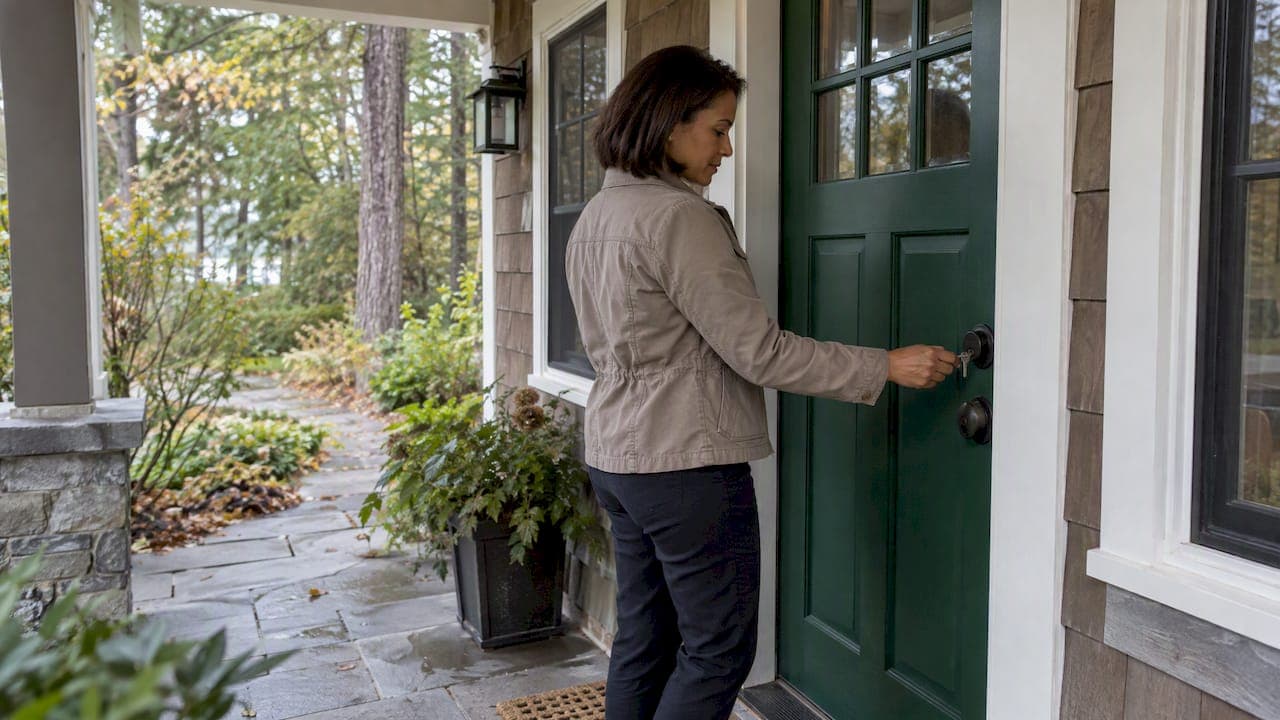
"Closing" means two things for a vacation home owner. First there is the purchase closing, when paperwork, keys and warranties change hands. Then there is the closing you repeat every year, when you shut the house down for the season and leave it empty. This checklist covers both, because the records you collect at the first closing decide how smoothly the second one goes.
TL;DR
- At purchase, collect documents, not just keys: warranties, manuals, inspection reports, insurance papers, and the seller's vendor contacts.
- Before leaving a home empty, plan the shutdown, service the HVAC about three weeks ahead, and update your home inventory and insurance policy.
- Keep utilities that protect the house (alarm power, exterior lights, freeze or humidity control) and shut off the ones that do not.
- Arrange a person to visit regularly, and tell your insurer and alarm company the house will be vacant.
- Keep every list, vendor and date in one place so each season starts from last year's record, not from memory.
Table of Contents
- Part one: the purchase closing checklist
- Part two: closing the house for the season
- Part three: reopening the house
- What records to keep current
- Our perspective
- Put the checklist to work
- Go deeper by property type
- FAQ
- Sources
Part one: the purchase closing checklist
A second home is usually a house you are not in most days. That changes what you need from closing day. A primary residence reveals its quirks as you live there. A vacation home hides them until something goes wrong while you are three states away.
Before closing day
Start with the paperwork you will need to live with for years, not only what the closing agent asks for.
- Read the closing statement line by line and ask your agent or closing attorney about anything you do not recognize. Compare it with the figures you were quoted earlier.
- Ask the seller for everything in writing: appliance manuals, warranty paperwork, receipts for major work (roof, HVAC, water heater, septic or well), and any pool or landscaping contracts.
- Request the service history of the systems that fail quietly when nobody is home: furnace, air conditioning, water heater, sump pump, and the plumbing shutoff locations.
- Get the vendor list. Ask who the seller used for the HVAC, the pool, snow removal, lawn care and the handyman. A trusted local name is worth more than a search later.
- Confirm what is included: furniture, boats, golf carts, outdoor equipment. Photograph each item so you have a baseline for your home inventory.
- Line up insurance before closing. Tell your insurer the home will be a second home or a rental, and ask about any vacancy conditions. Insurers often attach conditions to homes left empty for long stretches, and the vacancy guidance from a California schools risk pool advises confirming those terms with your own insurer.
At the final walkthrough
The walkthrough is your last chance to see the house running. For a vacation home, do these things:
- Run every faucet, flush every toilet, and check under sinks for moisture.
- Turn the heat and the air conditioning on and confirm both respond.
- Test every appliance that is staying.
- Locate and photograph the main water shutoff, the electrical panel and the gas shutoff, and label them.
- Try every key, garage opener, gate code and smart lock.
- Note any change since the inspection, and ask for repairs or a credit in writing before you sign.
In the first week after closing
This is the window where good habits are cheap to set up.
- Change locks, codes and any shared smart-lock credentials.
- Transfer electricity, gas, water, internet and trash service into your name, and decide which accounts stay active while the house is empty.
- Scan or photograph every document you received and file it under this specific property.
- Enter the vendors, warranty end dates and the insurance policy number somewhere you can find from your phone.
- Set the first seasonal reminders: the HVAC service, the pool opening, the gutter cleaning.
If you own more than one home, this is the moment to stop keeping each house in a different folder or spreadsheet. Our guide on second home management for owners of multiple homes lays out a 90-day plan for exactly this stage.
Part two: closing the house for the season
The University of Florida's extension service puts the job in four parts: create a plan, prepare the home inside and out, take security measures, and arrange for someone to check the property. The rest of this checklist follows that order.

Make a plan three weeks out
The same extension guide recommends scheduling central air conditioning service about three weeks in advance, and having the humidistat calibrated. Technicians get booked up at the start and end of the season, so book early.
At this point also:
- Update your home inventory and keep copies somewhere secure, as the same guide advises.
- Review your homeowner's policy and update it if needed.
- Schedule landscaping and pool maintenance if your property has them.
- Inform the proper authorities of your planned absence, which the extension guide also recommends.
A vacation home left unattended for a season can need several repairs when you return. One property-management company's seasonal advice is to budget time and money for opening and closing each year rather than treating it as a surprise.
Water and plumbing
Frozen or leaking pipes cause the most expensive damage in an empty house, so this section deserves the most attention.
- Shut off the water at the exterior meter, unless the same supply feeds lawn irrigation, per the extension guide.
- If water service stays on, an insurer's guide recommends insulating pipes in garages, basements, crawl spaces and attics, or using heat tape or cables according to the manufacturer's instructions.
- Drain systems that do not need water, and keep supply to fire sprinklers if the building has them.
- Consider a leak detection system. The same insurer's guide suggests an electronic system that can close a valve and alert remote monitoring, plus temperature sensors that warn you of freezing pipes.
Heating, cooling and utilities
The rule is to leave on what protects the building and shut off what does not. The vacant property guide describes it this way:
| Utility | Leave on | Shut off |
|---|---|---|
| Electricity | Monitored alarm, alarm backup power, exterior lighting, necessary HVAC | Nonessential appliances such as stoves and ovens |
| Gas | Furnace gas in freezing climates | Gas to water heaters, stoves and ovens |
| Heating and cooling | Heat at 40°F in freezing areas; A/C at 85°F in humid areas | Nothing, if the setting protects the house |
| Water | Supply to fire sprinklers | Other water systems, drained where appropriate |
The extension guide agrees on the cooling side: leave the air conditioner set no higher than 85°F so humidity does not build up in a closed house. In a freezing climate, keeping the heat at 40°F is what prevents frozen pipes and the water damage that follows.
If your property has a well, a septic system, a propane tank or a hot tub, add its shutdown steps to the list. Each has its own service provider, which is another reason to keep your vendor list current.
Kitchen and appliances
Per the extension guide:
- Throw out perishable food.
- Clean the refrigerator with a solution of one tablespoon of baking soda in one quart of water.
- Clean and unplug appliances.
- Leave refrigerator and freezer doors ajar so mold does not form.
Security and monitoring
An empty house advertises itself. The vacant property guide recommends:
- a third-party monitored intrusion alarm, with the alarm company told that the house will be vacant;
- working exterior lighting;
- a fenced and locked perimeter, and secured ground-level windows;
- visits at least weekly, at varying times.
See the full list in the vacant property guide. The varying times matter: a visit pattern that anyone can predict is easy to work around.
Who checks on the house
If you live far away or do not want to do the visits yourself, budget for a caretaker or property manager. One seasonal guide says anyone working on your property should be bonded and/or insured, and that managers typically charge 20% to 60% of rental income, with flat-fee arrangements also available. For a house you do not rent out, a local caretaker paid per visit is often simpler than a full management contract.
Hiring someone to walk through your home is a trust decision. A short read on how to find a housekeeper you can trust covers the questions worth asking before you hand over a key. Whoever you choose, give them a written visit checklist: what to check, what to photograph, what to do if they find water, and whom to call.

Part three: reopening the house
Reopening is closing in reverse, and it goes best when you wrote down what you did in the fall.
- Walk the outside first. Look for damaged power or gas lines, foundation cracks and other exterior damage. FEMA's guidance for returning to a home after a disaster is a useful model after any storm: if you smell gas or hear hissing, leave immediately and contact the fire department.
- Restore utilities carefully. FEMA advises keeping main power and water off until you or a professional can confirm they are safe. If the house flooded, never operate electrical tools or appliances while standing in water. The Illinois Commerce Commission's sheet on shutting off home utilities adds that you should switch individual breakers off before the main, and avoid outlets and appliances in flooded areas because of electrocution risk.
- Turn the water back on slowly and check every fixture and visible pipe for drips before leaving the area.
- Reset appliances, restock, and replace anything that spoiled.
- Compare against your records. Check the inventory, confirm the alarm and sensors report in, and note anything that changed over the season.
What records to keep current
The closing checklist is only as good as the information behind it. For each vacation home, keep these in one place:
- the home inventory, updated each season, with photos;
- the insurance policy, its renewal date, and any vacancy conditions;
- warranties and manuals, with end dates;
- a log of maintenance: what was done, when, and by whom;
- vendor names, phone numbers and what each is authorized to do;
- the shutdown and reopening checklists you used last year.
If you rent the house out part of the year, records matter even more. A rental property record checklist shows the kinds of documents worth having ready if the IRS ever asks about your rental income and expenses.
Our perspective
Most of the problems we hear from vacation home owners are not about a failed pump or a bad thermostat. They are about information: nobody remembers who serviced the furnace, where the warranty is, or which breaker the sump pump runs on.
That is why we built Property Command Center around property knowledge, not rent collection. The closing day documents, the seasonal shutdown list, the vendor who knows your house, the insurance renewal date: they belong in a living record for each property, and not in a spreadsheet you last opened in March.
Our Smart Setup is designed to pull that information out of the files, emails and spreadsheets you already have, so you are not retyping years of history. Then the reminders do the remembering: the HVAC booking three weeks before you leave, the policy review, the first walk-through.
A seasonal closing should feel like running a checklist you already trust. Own more than one home, and that trust is what keeps the portfolio manageable.
Francisco
Put the checklist to work
We built Property Command Center for owners who want this whole list in one place. Each property gets its own record for documents, vendors, tasks, warranties and maintenance history, and reminders tell you when the next shutdown or reopening task is due. You can try it free for 14 days with no credit card. After that, plans start at $19 per month for Starter, and Pro is $49 per month. See the plans and pricing to pick the one that fits your number of properties.
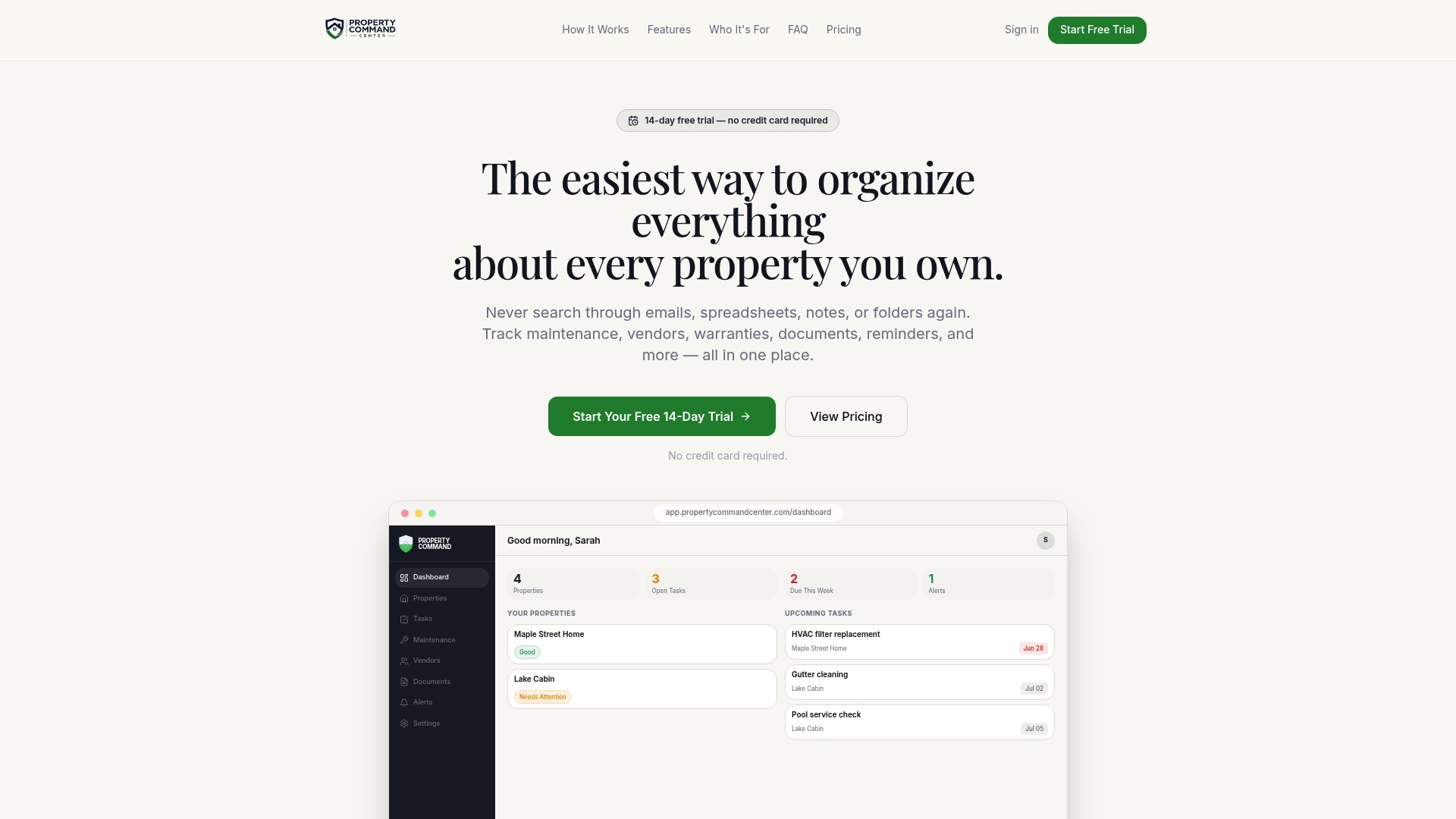
If you want to see how it works before you commit, start from the Property Command Center home page.
Go deeper by property type
The steps differ with the kind of house you own. These guides from our blog go further:
- The complete vacation home checklist for remote owners covers upkeep when you cannot be there.
- If your place is by the water, the beach house maintenance seasonal guide deals with salt, humidity and storms.
- For condos, owner and association duties decide who handles what before you close the unit.
- To set up the reminders themselves, use the maintenance calendar setup guide, and to automate the checking, see how to manage a vacation home remotely.
- Hosts who rent the home can use the host maintenance calendar to schedule turnovers around the seasons.
FAQ
What should be on a vacation home closing checklist?
For a purchase, it should cover the closing statement, the final walkthrough, insurance, utility transfers, and a full set of documents, warranties and vendor contacts. For a seasonal closing, it should cover the plan, water and utilities, appliances, security and who will check on the house. Both lists feed the same property record.
What temperature should I leave a vacation home at?
For a vacant building in a freezing climate, one vacant property guide says to keep the heat at 40°F to prevent frozen pipes. In humid areas it says to keep air conditioning at 85°F. Check your insurer's conditions for vacant homes before you choose.
Should I turn the water off when I leave?
Usually yes, at the exterior meter, unless the same supply feeds lawn irrigation, according to the University of Florida extension guide. If the water must stay on, insulate exposed pipes and consider leak and freeze sensors with remote alerts. Keep water to any fire sprinklers.
How often should someone check an empty vacation home?
The vacant property guide recommends visits at least weekly, at varying times, along with a monitored alarm. Whether you do them yourself or hire a caretaker, use a written checklist so each visit is documented.
Sources
- Utilities Heating/Cooling Security: Protecting Vacant Property
- Vacation/Second Homes: Protect Your Property When It's Unoccupied
- Opening and Closing Your Vacation Home
- Tips for returning home safely after a disaster (FEMA)
- Shutting Off Home Utilities (Illinois Commerce Commission)