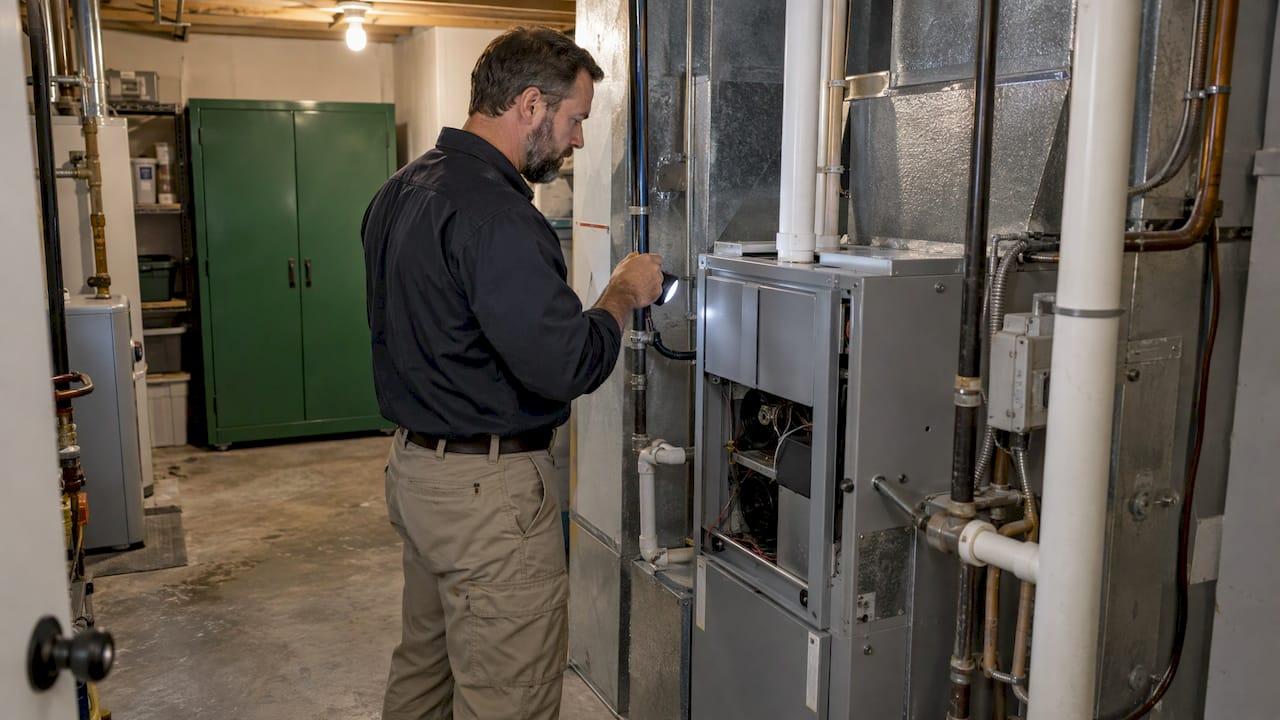
The best off-season rental maintenance plan has three parts: a closing round before the slow season starts, light monthly checks while the property is quiet, and an opening round before the first guest or tenant returns. Every task gets an owner, a date and a record. Do that and the slow months become the cheapest time to fix things, because contractors have openings and no booking is lost while work is done. This guide gives you the tasks, the timing and a way to keep it all organized across more than one property.
TL;DR
- Use the slow season for work that is hard to schedule when guests or tenants are in the property: HVAC service, roof and gutter checks, caulking, leak checks and winterizing outdoor water.
- Plan in three phases: close at the end of the season, check monthly during the quiet stretch, and reopen two to three weeks before the first arrival.
- Book vendors early. Seasonal markets share a small pool of technicians, so name a backup for every critical service.
- Document every inspection, repair and receipt. Records support insurance claims and show the property was looked after.
- With several properties, one calendar and one record per property beat scattered spreadsheets and email threads.
Table of Contents
- Why the off-season is the right time to do the work
- Phase 1: Closing the property at the end of the season
- Phase 2: Monthly checks while the property is quiet
- Phase 3: Reopening before the next season
- A system-by-system checklist
- Vacancy, insurance and your policy
- Scheduling inspections and vendors across properties
- Keeping the records that make the work count
- Bringing it together in Property Command Center
- Our perspective
- FAQ
- Sources
Why the off-season is the right time to do the work
Off-season maintenance means using the slower period to finish work that is harder to coordinate when the property is busy. Rocket Lawyer's off-season checklist lists the usual jobs: energy-efficiency fixes, re-caulking in bathrooms and kitchens, leak checks, testing emergency equipment, HVAC inspection and filter changes, gutter cleaning, roof inspection and winterizing outdoor watering systems. It also notes that furnace service or replacement tends to be cheaper and easier to schedule before fall, and that vacation rental owners can work without worrying about lost bookings during a vacancy.
The logic is simple. A repair done in a quiet month costs one visit. The same problem found mid-season can cost a canceled stay, a refund, a rushed contractor at a premium and a bad review. One industry guide puts it bluntly: almost every winter emergency is a fall task that was skipped. Treat that as a rule of thumb, not a statistic, but anyone who has had a pipe burst in January will recognize it.
"Off-season" also means different things by property type:
- Seasonal vacation homes (lake, ski, beach) may sit empty for months. The focus is closing the house down safely and monitoring it.
- Short-term rentals in year-round markets have shorter lulls. The focus is deep work during low-demand weeks.
- Long-term rentals have no booking season, but turnover gaps and the heating season play the same role.
Phase 1: Closing the property at the end of the season
The closing round protects the property while it is quiet. Allow one to two days for a full house, more if there is a pool, dock or irrigation system. A typical sequence, drawn from Vantesso's Lake Norman off-season checklist and the research behind it, looks like this for a cold-weather property in October or November:
- Drain irrigation and shut off exterior water. Disconnect hoses and cover outdoor faucets. FEMA's winterizing guidance also advises draining garden hoses and knowing where your main water shutoff is.
- Set a safe thermostat minimum. FEMA says to keep the furnace at 55°F or higher so the house stays above freezing, and the Vantesso checklist uses the same 55 degree floor for winter.
- Service the HVAC system and change filters before you leave.
- Clear gutters and downspouts before the first freeze, and confirm water drains away from the foundation.
- Treat plumbing traps with antifreeze where the property will be unheated or lightly heated.
- Take care of pest prevention. Seal gaps, remove food and set up whatever your local pest vendor recommends.
- Coordinate seasonal equipment, such as docks, boat lifts, patio furniture and grills.
The exact dates depend on where you are. In the Pacific Northwest, one local planning guide says September is the best month to get ahead of the wet season, because clearing gutters before leaves are fully down and rain starts is easier and cheaper. In the Sun Belt, the closing round may be about summer heat and storms rather than freezing. Anchor your plan to your own first-frost or storm date, not to a national calendar.
Phase 2: Monthly checks while the property is quiet
The quiet stretch is where small problems turn into big ones, because nobody is there to notice them. The Vantesso checklist suggests a monthly interior walk for leaks, running every fixture, and confirming that HVAC, security and pest status are fine. It adds deeper quarterly checks of plumbing, electrical and the exterior, and filter changes every 90 days.
A monthly visit takes two to four hours. Keep it to a short, fixed route:
- Look for stains, drips, musty smells and condensation near plumbing, windows and the water heater.
- Run each faucet, shower and toilet briefly so traps stay filled and valves do not seize.
- Confirm the heat is holding the temperature you set.
- Test smoke and carbon monoxide detectors.
- Walk the exterior: roof edges, gutters, railings, steps and any storm damage.
- Look for signs of pests or unauthorized entry.
If you live far away, send a local helper or vendor with the same route and ask for dated photos. A visit with no record is a visit you cannot prove later.
If you want a ready-made version of this routine, our vacation home upkeep plan and the complete vacation home checklist for remote owners lay out the monthly route in more detail.
Phase 3: Reopening before the next season
Think of reopening as winterization in reverse. For a seasonal home in a cold climate, Vantesso places spring opening in March and April and recommends starting two to three weeks before the first visit. That gap matters: it leaves time to fix whatever the walk-through finds, rather than discovering it as guests pull in.
A reopening round takes about a day and covers:
- Restoring water slowly and checking every connection for leaks.
- Testing every appliance, including the water heater, dishwasher, washer and dryer.
- Inspecting for moisture, mold and pest activity.
- Testing safety devices and replacing batteries.
- Changing HVAC filters and running both heating and cooling.
- Checking the roof, decks, railings and exterior drainage after the winter.
For rentals, VRMA's framework adds an administrative side to the physical walk-through. VRMA recommends a pre-season review that also checks the listing, house guide, vendor contacts and emergency instructions. A property can pass every physical test and still fail a guest if the Wi-Fi password in the house guide is out of date.
A system-by-system checklist
Use this table as a starting point and adjust it to your climate and property type.
| System | Off-season task | Best timing |
|---|---|---|
| HVAC | Professional service, filter change, test heat and cooling | Before the first cold or hot spell |
| Roof and gutters | Inspect for damage, clear debris, check downspouts | Early fall, before the first freeze or rains |
| Plumbing | Leak check under sinks, drain exterior lines, run fixtures | Closing round, then monthly |
| Kitchen and bath | Re-caulk, check seals around cabinets and toilets | Slow weeks |
| Safety | Test smoke and CO detectors, check extinguishers | Closing, monthly and reopening |
| Exterior | Decks, balconies, railings, drainage, pool or hot tub | Closing and reopening |
| Landscaping and irrigation | Drain, winterize, trim trees away from the roof | Fall |
| Water protection | Leak sensors or automatic shutoffs, known main valve location | Before leaving the property |
CBIZ's vacation rental insurance team recommends prioritizing roofing, HVAC, plumbing, decks and railings, pools and hot tubs, and exterior drainage in the off-season. These are the areas where a missed task is most likely to become a claim.
Vacancy, insurance and your policy
A property that sits empty can behave differently under an insurance policy. Many policies limit coverage for certain losses after a property has been vacant for a set number of days. The wording and the number of days vary by insurer and by policy, so read the vacancy and unoccupied clauses in yours, and call your insurance agent before a long closure. Ask directly whether a seasonal closing or a long gap between guests changes your coverage, and whether monthly inspections or a water-shutoff system affect it. That is a question for your agent, not a guess.

One thing you can control is proof. CBIZ advises owners to document inspections, repairs and upgrades, because detailed records support future insurance claims and demonstrate proactive property management. Dated notes, photos and invoices are what turn "we maintained it" into something an adjuster can read.
Scheduling inspections and vendors across properties
One property is a to-do list. Three properties in different markets are a scheduling problem. Two ideas from the research help.
Build a one-page seasonal plan for each property. VRMA recommends writing one before each operating season. It covers guest profile, heating, cooling, plumbing, power and internet, seasonal amenities, parking and snow removal, primary and backup service contacts, and owner-approved escalation rules. The page is useful because it removes decisions in the moment: the person on site knows whom to call and what they can approve.
Plan vendor capacity, not just vendor names. Seasonal markets depend on a limited pool of cleaners, technicians and snow-removal providers, according to VRMA's Alexa Schlosser. Confirm service windows, after-hours procedures, access instructions and backup coverage well before you need them, and define who may authorize routine work versus when you must approve it.
For a vendor you will rely on, collect and keep:
- Current license and insurance details
- Pricing terms and what counts as an emergency versus routine call
- After-hours phone number
- Access instructions (lockbox code, alarm, gate)
- A named backup
Our guides on choosing vendors for a vacation rental and when to book pros and how long tasks take go deeper on this. If you run several rentals, the four seasons of a host maintenance calendar and the four cadences for short-term rental maintenance show how to stagger work so one vendor is not asked to be everywhere in the same week.
A useful rule: book the closing round when you book the season, not when the weather turns. Furnace service, gutter cleaning and winterization all cluster in the same few weeks, and the vendors you want will be full if you wait.
Keeping the records that make the work count
Maintenance you cannot find later is maintenance you may pay for twice. For each property, aim to be able to answer these questions in under a minute:
- When was the HVAC last serviced, and by whom?
- How old is the water heater, and is it under warranty?
- Where is the manual, the receipt and the warranty for each major appliance?
- Who is the plumber, and what did they charge last time?
- What did the last walk-through find, and was it fixed?
- Where is the current insurance policy?
For most owners, the answers live in a spreadsheet, a Google Drive folder, a Gmail thread, a few PDFs and a notes app. That works until a vendor leaves, a pipe bursts or a claim needs a paper trail. The fix is not a better spreadsheet. It is one record per property that holds the history, documents, vendors, tasks and reminders together.
If you are planning a seasonal closure from scratch, our vacation home closing checklist and the guide to beach house maintenance show what to capture on each visit. Condo owners can use the seasonal condo maintenance guide to separate what the owner handles from what the association handles. For multiple units, the two-layer inspection approach keeps quality checks consistent.
Bringing it together in Property Command Center
Property Command Center is built for owners who manage more than one property and want one place for what they already have. Its AI-powered Smart Setup can help extract and organize information from your existing files, emails and spreadsheets, and portfolio import tools let you bring in multiple properties without entering them one at a time. Each property becomes a living record with maintenance history, documents, vendors, tasks and reminders, so your closing round, monthly checks and reopening each have a date and a place to log what happened.
The Starter plan is $19 per month and Pro is $49 per month, with plans tiered by number of properties. There is a 14-day free trial, and no credit card is required. You can see the plans on the pricing page.
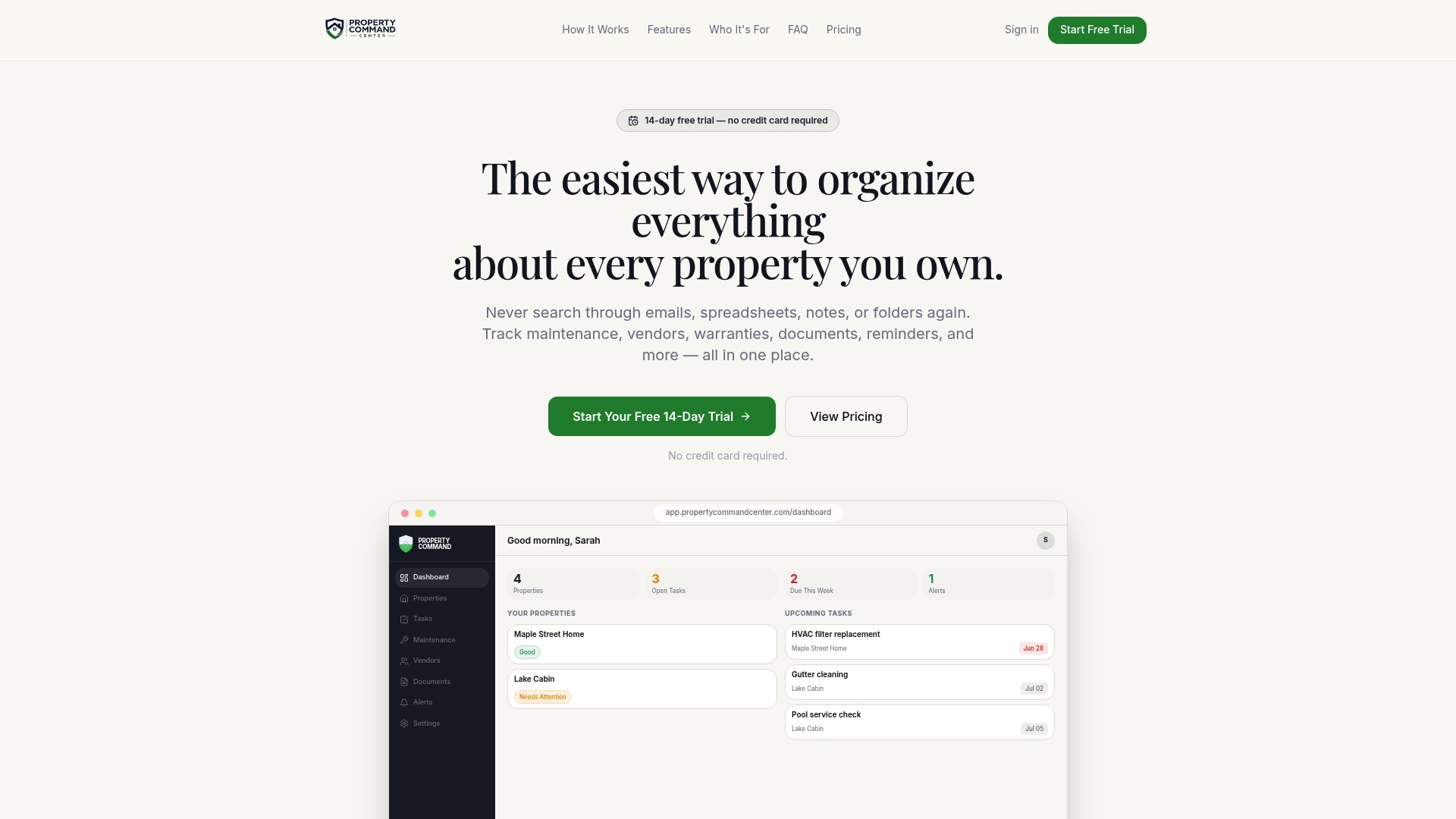
If your off-season plan currently lives in four places, start by importing one property and putting its closing and reopening dates on the calendar. You can start from the Property Command Center home page.
Our perspective
Most owners we talk about do not fail at maintenance because they do not know what to do. They fail because the knowledge is scattered. The HVAC invoice is in an email, the warranty is a photo on a phone, and the plumber's number is in a text from three years ago.
The off-season is when this matters most, because it is the one time of year you can do the work properly. But a good plan only works if it can be repeated next year without starting over. That means every property carries its own history: what was done, who did it, what it cost and what is due next.
That is why we built Property Command Center around property knowledge rather than rent collection or accounting. Owners who self-manage already have the information. They need it organized in one place, with reminders attached, so the off-season checklist runs itself and the records are there when an insurer, a buyer or a new vendor asks.
Francisco
FAQ
When should I start off-season rental maintenance?
Start before the season ends, not after it. For cold-climate properties, the closing round typically falls in October and November, ahead of the first freeze. Book vendors earlier than that, since furnace service, gutter cleaning and winterization all cluster in the same weeks.
What is the minimum temperature to keep a vacant rental at in winter?
FEMA's winterizing guidance says to keep the furnace at 55°F or higher so the house stays above freezing. Also know where your main water shutoff is, and consider leak sensors or an automatic shutoff for properties you cannot visit often.
How often should I inspect an empty rental?
A monthly interior walk is a common routine for seasonal homes, with deeper plumbing, electrical and exterior checks every quarter. Replace HVAC filters about every 90 days. Check your insurance policy for any inspection or vacancy requirements, and ask your agent if you are unsure.
What records should I keep from off-season work?
Keep invoices, dated photos, inspection notes, warranties, manuals and vendor details for each property. Insurance professionals advise documenting inspections, repairs and upgrades because detailed records support future claims. Store them by property so you can find them in minutes.
Sources
- Off-Season Rental Maintenance and Prep Checklist, Rocket Lawyer
- Preventive Maintenance Calendar for Rental Properties 2026
- Lake Norman Vacation Home Off-Season Checklist, Vantesso
- How Can Winterizing Your Home Help You Prepare?, FEMA
- A Preventive Maintenance Calendar for Rental Properties, Puget Sound Property Services
- Managing Vacation Rentals Across Seasonal Markets, VRMA
- What Smart Vacation Rental Owners Do During the Off-Season, CBIZ