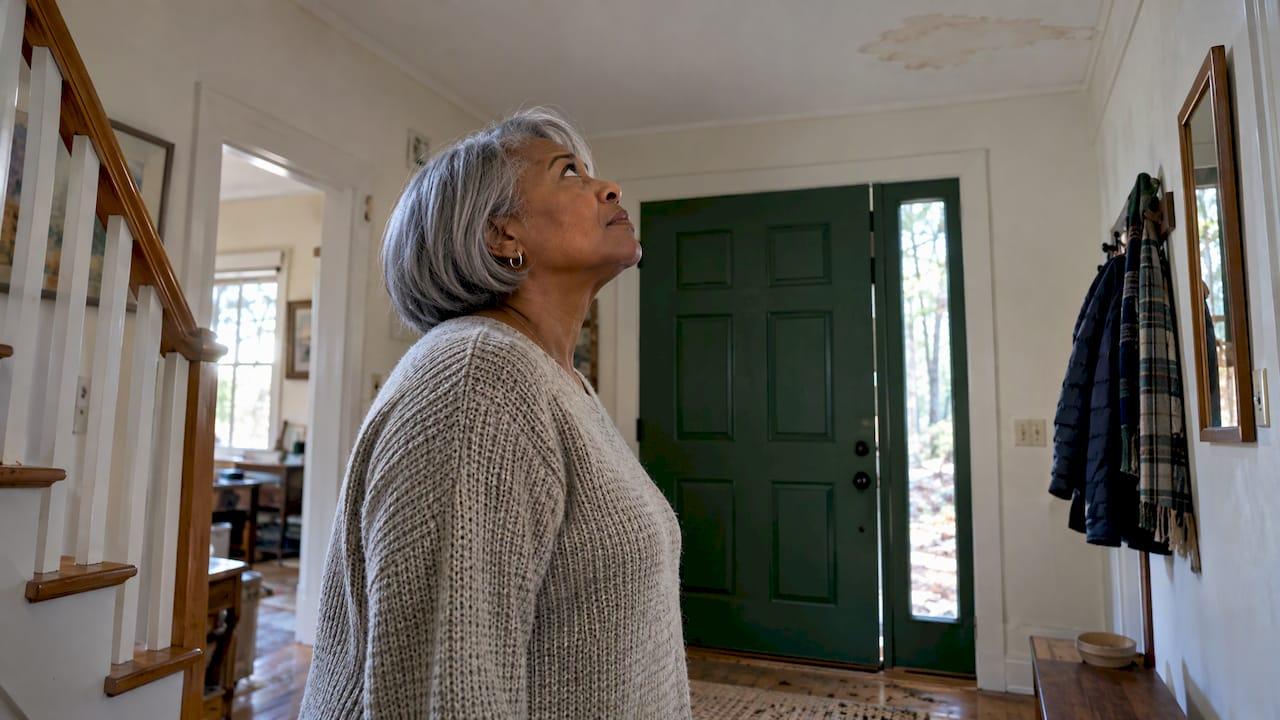
Good vacation home upkeep comes down to three habits. Run a short check every time the house is used, schedule the bigger jobs by season, and keep one record of what was done, by whom and when. A house you visit a few weeks a year can't tell you it has a problem, so the routine has to do that job. Below is a plan you can adapt, from the quick walk-through to preparing the house for months of vacancy.
TL;DR
- Do a short walk-through at every arrival and departure: water, power, HVAC, detectors, pests, and anything that looks or smells different.
- Group the rest by cadence: monthly, quarterly, seasonal, annual. Match it to your climate, not just the calendar.
- If the house will sit empty, handle utilities, temperature, water lines, insurance and a trusted person who can check in before you leave.
- Keep warranties, vendor contacts, invoices and service history in one place so any repair starts with facts, not a hunt through old emails.
- If you rent the home out, photograph its condition before and after each stay.
Table of Contents
- Why a vacation home needs its own routine
- The routine, by cadence
- Preparing the house to sit empty
- If you rent the home out
- Match the plan to your climate
- Keep one record for every property
- Seasonal jobs that call for a contractor
- Our perspective
- Put the plan into one place
- FAQ
- Sources
Why a vacation home needs its own routine
A primary residence gets daily attention. Someone hears the odd noise, sees the drip under the sink, and notices the musty smell in the hall closet. A vacation home gets none of that, so small issues grow quietly between visits.
The problems that show up most often in closed-up homes are water-related. Homes and Gardens lists frozen or burst pipes, plumbing leaks, flooding, mold growth and musty odors among the issues that can develop when a vacation home is shut for long enough. It also mentions cracking walls and drywall, sagging floors and cracking concrete slabs. Nearly all of these begin small and get expensive when nobody is there.
That changes how you plan. At a primary home, maintenance is reactive and you fix what you notice. At a second home, it has to be scheduled, delegated and written down, because you are often hundreds of miles away when something goes wrong.

The routine, by cadence
The tasks themselves are the same ones any homeowner knows. What differs is how they are spaced and who does them. Here is a workable split for a home you use part of the year.
| Cadence | Typical tasks | Who usually does it |
|---|---|---|
| Every arrival and departure | Run each faucet and flush each toilet, check under sinks, test smoke and CO detectors, look for pest signs, reset thermostat, confirm locks work | You, a guest, or your cleaner |
| Monthly | Check HVAC filters and replace if dirty, test GFCI outlets, run water in unused bathrooms, check caulk around tubs and sinks, test exterior lighting | You, a local handyman, or a caretaker |
| Quarterly | Clean the dryer lint trap and vent duct, clean the range hood filter, check toilet flappers for slow leaks, inspect appliance door seals, test garage door auto-reverse, check lock batteries | Handyman or a local vendor |
| Spring and fall | HVAC service (cooling in spring, heating in fall), gutter cleaning, exterior and roof look-over, water heater flush, pool or hot tub opening and closing | Licensed professionals |
| Annual | Roof inspection, termite or pest inspection, electrical review, detector battery and age audit, insurance review | Licensed professionals, plus you |
Treat this as a starting point. Appliance manuals set the real intervals for each machine, so keep the manuals where you can find them. If you want a printable version of the routine for a regular house, our home maintenance checklist covers it, and the vacation home checklist for remote owners adapts it to a house you are not in.
The arrival and departure walk-through
This is the most valuable habit and the cheapest. When you arrive, walk the house before you unpack. Open the water, check under every sink, look at ceilings for stains, and note any smell. Run each faucet and flush each toilet so the traps refill and you see any slow leak. Test the detectors and note anything that needs a new battery.
When you leave, do the reverse. Reset the thermostat to your away setting, close the blinds, empty the fridge of anything perishable, take out the trash, and make a note of anything you spotted but did not fix. That note is the start of your next to-do list, and it only works if it goes somewhere you will see it again.
Reopening after a long closure
After a winter or other long closure, give the house a proper reopening clean. Homes and Gardens advises wiping down surfaces and furniture, mopping and vacuuming, dusting, cleaning the bathrooms and cleaning outdoor furniture. Water-resistant and non-water-resistant pieces need different handling, so check what yours are made of before you scrub.

Preparing the house to sit empty
The biggest upkeep decisions come when you leave for weeks or months. The University of Florida's Closing Your Seasonal Home guide lays out a timeline that works well in any climate.
About three weeks before you leave:
- Schedule the annual central air conditioning service.
- Calibrate the humidistat.
- Decide which utilities to suspend temporarily.
- Review your homeowner's insurance and update the home inventory.
- Arrange for someone trusted to check on the house.
- Book landscaping and pool maintenance.
About one week before:
- Clean the refrigerator and test the dehumidifier.
- Vacuum upholstered furniture.
- Remove potted plants.
- Clear food from the cabinets.
On the day you leave:
- Disconnect the refrigerator and clean the garbage disposal.
- Turn off the water heater.
- Cover drains and toilets.
- Unplug appliances.
- Set the security alarm.
If you use our vacation home closing checklist, it follows the same logic for shutting a home down.
Temperature and water
Temperature is the part owners most often get wrong. Chubb recommends keeping a consistent temperature of 55°F or higher in cold climates to help prevent frozen pipes. It also suggests winterizing by draining water lines and insulating pipes, testing backup generators weekly, removing garbage, pest-proofing the home and installing motion-sensor exterior lights.
In hot, humid regions the risk runs the other way: shutting the cooling off entirely invites mold. The right setpoint depends on your area and your equipment, so ask the HVAC technician who services the house what they recommend for your location.
Insurance and vacancy
Check your policy before a long absence. Chubb notes that a home with no furniture or personal property and no one living in it for more than 30 days may be considered vacant. Policies treat vacant and unoccupied homes differently, so ask your agent how yours defines it and what steps it expects you to take. Put the answer in writing with your policy documents.
Someone on the ground
No checklist replaces a person. Groundworks recommends giving a reliable neighbor a key, installing and monitoring smart equipment and security systems, keeping the indoor temperature consistent and considering a property manager when you are away for weeks or months. See their vacation home maintenance guide for more on this. Whoever you pick, give them a short written list: what to check, how often, whom to call and what they are authorized to spend.
If remote oversight is your main challenge, our piece on how to manage a vacation home remotely shows how to switch on one automation at a time.
If you rent the home out
Short-term guests change the upkeep equation. The house is used harder, turned over often and judged on its condition each time.
Between stays, a good turnover includes a room-by-room reset, a supply check, a safety check and a test that the guest can get in. Many owners assign the quick checks (thermostat reset, faucet run, detector test, pest spotting) to the cleaning team and keep monthly and quarterly tasks for a handyman or themselves.
Documentation matters just as much. Photograph each room soon after a guest leaves, before cleaners begin, and again when the house is ready for the next arrival. Capture serial numbers on electronics and meter readings if you bill utilities. Timestamps help if you ever have a damage dispute or a claim. Our guide on guest damage documentation explains what to capture and keep, and the vacation rental inspection article describes a two-layer check for owners with more than one unit. For a rhythm across the year, see the host maintenance calendar, and for how often to inspect, the rental inspection schedule.
Match the plan to your climate
A calendar is a guide, not a rule. Failure modes differ by region, so weight your schedule toward what actually breaks where you are:
- Hot desert or sun-belt homes: put HVAC first, service the system before summer and check filters more often.
- Gulf and hurricane-prone coasts: roof, drainage and shutters get priority before storm season.
- Mountain cabins: heating and freeze protection come first, before the first cold snap.
- Humid regions: dehumidification and mold prevention matter year-round.
- Lake or beach houses: check for salt, moisture and wind damage on exteriors and decks.
A local contractor who works in your area will know the seasonal pattern better than any national guide. Ask them what they see most often in homes like yours, then put those jobs on the calendar.
Keep one record for every property
Upkeep fails most often at the point of memory. Who fixed the water heater? When does the warranty on the dishwasher end? What was the name of the plumber who came out two summers ago? If the answers sit in old emails, a spreadsheet and a drawer at the house, you will spend time hunting instead of deciding.
A workable record for each property includes:
- Asset list: appliances and systems with brand, model, purchase date, vendor and warranty expiration.
- Maintenance history: every repair with the date, what was done, who did it, the cost, and photos or invoices.
- Vendor directory: plumber, electrician, HVAC, pest control, cleaner, landscaper, with current phone numbers.
- Documents: manuals, insurance policies, permits, warranties.
- Schedule: recurring tasks with reminders, so nothing depends on you remembering.
If you own several properties, add a layer above that for documents that cover the whole portfolio, such as umbrella insurance and agreements with vendors who serve more than one house. Keep each repair tied to the right property so costs never blur together.
The record also makes handoffs easier. When a caretaker, family member or new cleaner steps in, they can see what happened and what comes next without a phone call.
Seasonal jobs that call for a contractor
Some upkeep is not a DIY weekend: HVAC replacement, roof work, water heater swaps, septic pumping. These can arrive as a surprise bill, so build them into a multi-year plan using the expected life of each system. When a major system fails and you need to spread the cost, some owners look at HVAC financing options before scheduling the work. Either way, keep the quote, the invoice and the warranty paperwork with that property's record.
Our perspective
We built Property Command Center around one observation: most owners already have the information they need to maintain their homes well. It is just scattered across spreadsheets, Google Drive, Gmail, PDFs and notes.
At a vacation home, scattered information costs more than it does anywhere else, because you are not there to fill in the gaps. A routine is only as good as your ability to see what was done last time and what is due next.
That is why we focus on property knowledge rather than rent collection or accounting. Each property becomes a living record with its maintenance history, documents, vendors, tasks and reminders. Our Smart Setup is designed to help pull that information out of the files and emails you already have, so you are not retyping everything one property at a time.
Our advice is simple: pick one place for every property's record, and put the next dates on the calendar before you leave the house.
Francisco
Put the plan into one place
Property Command Center is built for owners of vacation homes, second homes, short-term rentals and small portfolios. You can keep each property's maintenance history, vendors, warranties, insurance documents, tasks and reminders together, and bring in existing spreadsheets and files instead of starting from scratch.
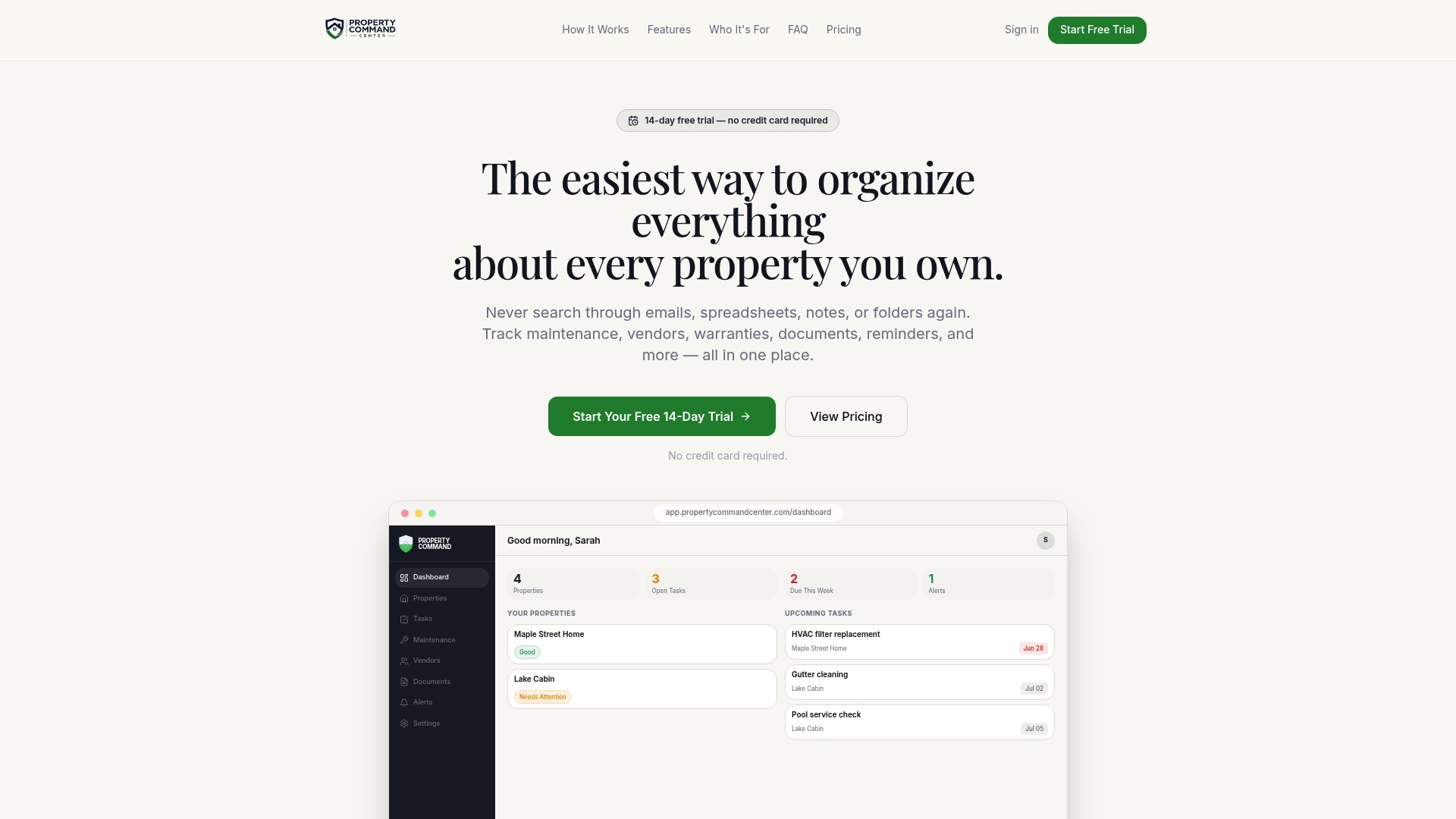
There is a 14-day free trial with no credit card required. After that, Starter is $19 per month and Pro is $49 per month, with plans tiered by number of properties. See the plans and pricing to find the fit for your homes.
FAQ
What is considered routine maintenance on a vacation home?
Routine upkeep means regular checks and small jobs: running water in unused fixtures, testing smoke and CO detectors, changing HVAC filters, testing GFCI outlets, cleaning gutters and servicing heating and cooling each year. Spacing depends on how much the house is used. Check appliance manuals for each machine's recommended interval.
What should I do when I leave my house for three months?
Follow a closing timeline: service the HVAC, review insurance, arrange someone to check on the house, clear food, disconnect or unplug appliances, turn off the water heater and set the alarm. In cold climates, keep the temperature at 55°F or higher or winterize the water lines, as Chubb advises. Ask your insurer about vacancy terms first.
How often should I inspect a vacation home?
Walk through at every arrival and departure, run a monthly check of filters, detectors and leaks, and schedule seasonal service in spring and fall. If you are away for long stretches, have a trusted local person look in on a regular schedule and report back with photos.
How do I keep track of maintenance across more than one property?
Keep a separate record for each property with its appliances, warranties, repair history, vendors and recurring tasks, plus a portfolio layer for shared documents. One tool or one folder system beats several, as long as every repair gets logged with the date, vendor, cost and invoice.
Sources
- The ultimate vacation home maintenance checklist, Homes and Gardens
- Closing Your Seasonal Home, University of Florida IFAS Extension
- Vacant but protected: Tips for safeguarding vacant homes, Chubb
- How to Maintain Your Vacation Home, Groundworks
- HVAC No Credit Needed Financing, Zip-Loan