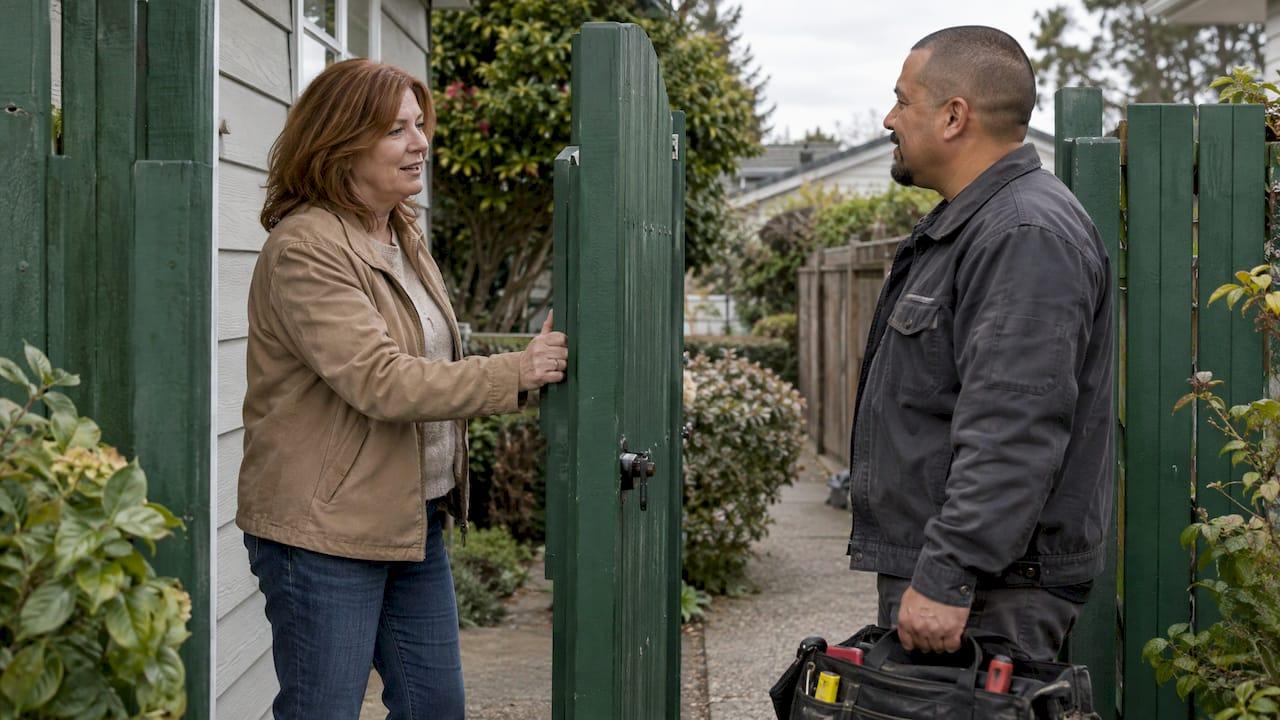
Coordinating home services comes down to three habits: keep one record per property, keep one vendor list you trust, and keep one calendar that says what is due and who is booked. Do those three things and a plumber visit, a furnace tune-up or a midnight leak stops being a scramble. This guide shows how to set each one up, whether you own a second home, a few rentals or a handful of short-term rental listings.
TL;DR
- Give every property one living record: service history, documents, warranties, vendors and open tasks in the same place.
- Vet vendors before you need them. Get written estimates, confirm licensing with your state, and brief each pro with the same short checklist.
- Build a forward-looking calendar of seasonal, quarterly and annual tasks, and keep a separate log of what was actually done.
- Decide in advance how urgent repairs and access work for tenants or guests, and check your state and local rules on notice and entry.
- Replace scattered spreadsheets, inboxes and folders with one system, so any service call takes minutes to arrange.
Table of Contents
- What coordinating home services actually involves
- Build one record per property
- Find, vet and brief your vendors
- Schedule maintenance before it becomes a repair
- Coordinate urgent repairs and access
- Our perspective
- Put it all in one place
- A 30-day plan to get coordinated
- FAQ
- Sources
What coordinating home services actually involves
For one house, coordination is mostly memory: you know the HVAC company, you remember when the gutters were last cleared. Add a second property and memory starts to fail. Add a rental or a vacation home you visit four times a year and it fails completely.
Coordinating home services means managing five moving parts:
- Who does the work: a vendor directory with trade, contact, rates and notes.
- What needs doing: a task list covering repairs, inspections and routine upkeep.
- When: a calendar with recurring and seasonal items, plus reminders.
- Where: the right property, the right system, and how to get in.
- Proof: invoices, photos, warranties and manuals tied to the job.
Most owners already have all five, just in different places: a spreadsheet for expenses, a Gmail thread with the roofer, a PDF warranty in Drive, a phone contact named "Mike plumber." The problem is rarely missing information. It is that nothing connects it.
Build one record per property
Start with a single page or file per property, not per topic. When the water heater fails at the lake house, you want everything about the lake house in one view, not five searches across five tools.
A useful property record holds:
- Address, access details, lockbox or smart lock instructions, and shutoff locations for water, gas and electric
- Major systems and appliances with install dates, model numbers and warranty terms
- A service history, newest first
- Documents: insurance policies, manuals, warranties, inspection reports
- The vendors who have worked there
- Open and upcoming tasks
If you want a lightweight way to start the history portion, our guide to tracking service history with six fields walks through a 90-day setup for owners with several homes.
What to log for every service call
A record is only useful months later if it captures the details you will actually need. For each repair or service visit, write down:
| Field | Why it matters later |
|---|---|
| Date of service | Lets you spot patterns and check warranty windows |
| Property and system | "Unit B, water heater" beats "plumbing" |
| Vendor and contact | Who to call back if it fails again |
| What was done | Parts replaced, scope, whether routine or a major fix |
| Final cost | Budgeting and your tax preparer |
| Invoice and photos | Proof of work and of condition |
| Warranty on the work | So you can claim it before it lapses |
Save the invoice and before-and-after photos with the entry rather than in a camera roll. Ask your tax preparer which expense records they want kept for each property, since the rules differ between repairs and improvements.
Find, vet and brief your vendors
The best time to build a vendor list is when nothing is broken. A bench of trusted pros is what turns an emergency into a phone call.
Where to look and what to collect
Ask neighbors, local landlord groups and the property manager of the building next door. For a vacation home, ask the people who live there year-round: the caretaker, the hardware store, the neighbor who watches your place. The Federal Trade Commission's advice on hiring a contractor is to check references, get written estimates from several firms and remember that the lowest bidder is not always the best choice.
Before a vendor goes on your list, collect:
- Business name, direct phone, email and the name of the person you deal with
- Trade and service area, so you know whether they will drive to your second home
- License number where your state requires one, and proof of liability insurance
- Typical rates, trip fees and emergency availability
- Notes from past jobs: punctual, tidy, good with tenants, slow to invoice
Check licensing with your state
Contractor licensing is set by states, and some trades are regulated more strictly than others. Most state licensing boards offer a free online lookup where you can confirm a license is active. Do this for every property's state, because your lake house and your city rental may sit under different boards. The FTC notes that contract requirements vary by state, so confirm what your state requires in writing before work begins.
Brief every vendor the same way
A clear brief prevents most callbacks. Send the same short message each time:
- Property address and the specific location of the problem
- A plain description of the symptom, with photos
- How to get in: tenant contact, guest checkout time, lockbox code or caretaker
- A spending limit above which they must call you first
- Where to send the invoice, and what the invoice should list: labor and materials separately, plus any warranty
Save the brief as a template. For a single place to keep the contacts, our vendor directory is built for exactly this.
Schedule maintenance before it becomes a repair
The cheapest service call is the one you booked on your own schedule. Preventive maintenance covers seasonal, monthly, quarterly and annual tasks, and one practical way to manage it is two documents: a forward-looking calendar listing each task with its frequency, and a chronological log of what was done.

The calendar looks ahead. The log looks back. Keep them separate and both stay clean.
A simple cadence
- Monthly: test smoke and carbon monoxide alarms, replace HVAC filters if needed, check under sinks for slow leaks
- Quarterly: inspect exterior drainage, test garage door safety reversal, run water in rarely used fixtures
- Seasonal: HVAC service before heating and cooling seasons, gutters in fall, winterization or de-winterization for properties that sit empty
- Annual: water heater flush, roof and chimney inspection, dryer vent cleaning, pest inspection
Timing matters as much as the task. HVAC techs and roofers get booked solid at the first cold snap or storm season, so book pros weeks ahead. Our guide to seasonal home maintenance covers when to book and how long jobs tend to take. For a month-by-month view, see the maintenance calendar by month, and if you host guests, the host maintenance calendar splits the year into four seasons across multiple listings.
Batch work by location
If two properties are in the same town, ask one vendor to handle both in a single trip. For a far-away vacation home, schedule annual inspections together and tie them to your own visits, so you can be there when the pro arrives or hand off access to a caretaker. Owners who rent short term should also read our piece on four maintenance cadences for short-term rentals, since turnover days limit when work can happen.
Coordinate urgent repairs and access
Urgent work is where coordination pays off, because you have no time to look anything up. Settle the rules ahead of time.
Write an emergency playbook per property
One page, stored where you and a backup person can reach it:
- Shutoff locations for water, gas and the main electrical panel, with photos
- Your first-call vendor for plumbing, electrical, HVAC and roofing, plus a backup
- Who is authorized to approve spending, and up to how much
- Insurance carrier, policy number and claim line
- Who has keys or codes
Give tenants or your property's caretaker a short version so they know what counts as an emergency and who to call first.
Access for tenants and guests
With tenants, entry is governed by state and local law. Virginia, for example, requires at least 72 hours' notice for routine maintenance the tenant did not request, unless that is impracticable, while allowing entry without consent in an emergency. Other states set different notice periods, so look up the landlord-tenant statute where each property sits and write the notice period into your task template.
With short-term rental guests, the lever is scheduling. Aim non-urgent work for gaps between bookings, keep a calendar of check-ins and check-outs next to your service calendar, and give vendors a clear window and entry method. If a repair affects a guest during a stay, contact the guest first and keep a record of what you told them and when.
Know your responsibilities
There is no single nationwide checklist. You need to check state and local property, building, fire, permit, licensing and habitability rules for each address. As a reference point, the 2024 Property Maintenance Code as adopted by the General Services Administration says equipment, systems, devices and safeguards must be kept in good working order, and that the owner or authorized agent is responsible for maintenance. Your own jurisdiction may adopt a different code or edition, so ask your local building or code office which one applies. For electrical, gas or structural work, hire licensed professionals and ask whether a permit is needed.
Our perspective
Owners with several properties rarely lack information. They lack one place where it all lives. The service history is in an email thread from 2023, the warranty is a PDF in a folder nobody remembers naming, and the plumber's number is on a phone that got replaced.
That is why we built Property Command Center around property knowledge rather than rent collection or accounting. We think the most valuable thing an owner can have is a living record for every property: what happened, who did the work, where the paperwork is, and what is coming due.
We also think setup should not mean retyping everything. Smart Setup is designed to pull structure out of the spreadsheets, files and emails you already have, and portfolio import brings in many properties at once. Then the vendors, tasks and reminders sit next to the history they belong to, and coordinating a service call becomes a few clicks instead of an afternoon of searching.
If you manage your own properties and want fewer things living in your head, that is the problem we are here to solve.
Francisco
Put it all in one place
A spreadsheet can hold a vendor list. It cannot remind you that the furnace service is due in three weeks, show you the warranty for that furnace, and list who serviced it last year in the same view. That is the gap Property Command Center fills for owners of homes, vacation properties and short-term rentals.
Our plans start at $19 per month for Starter and $49 per month for Pro, tiered by the number of properties you manage, and every account begins with a 14-day free trial with no credit card required. You can see the details on the pricing page.
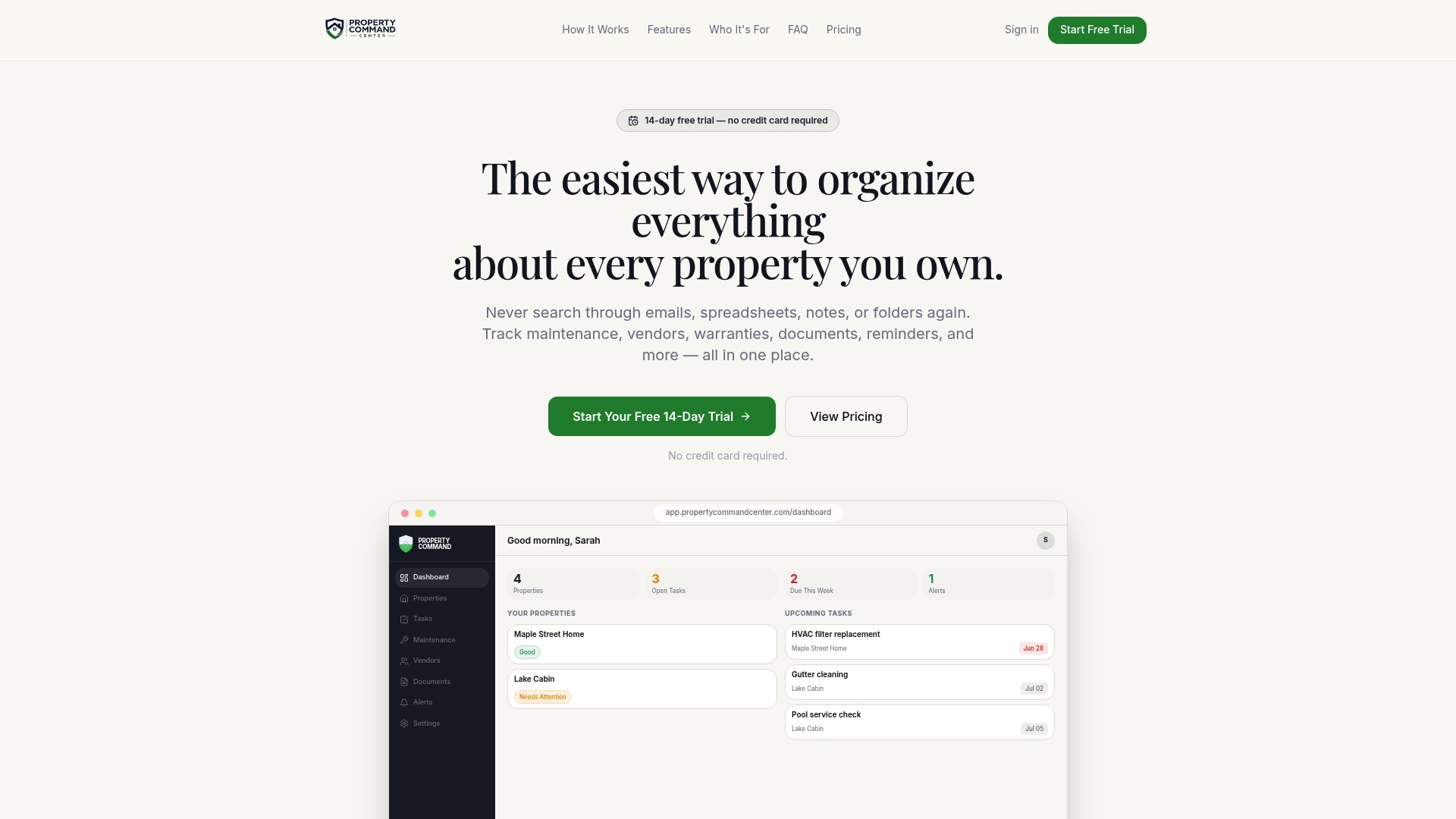
If you would rather see how it works with your own data, start from the Property Command Center home page and import a few properties first.
A 30-day plan to get coordinated
You do not need to fix everything at once. A realistic month:
- Week 1: list every property, its systems and its known vendors. Gather insurance and warranty documents into one place.
- Week 2: fill in the service history from invoices and emails, newest first. Use the fields in the table above.
- Week 3: build the forward calendar. Our maintenance calendar setup guide starts with two checks, and the 90-day first-property plan works well for small portfolios.
- Week 4: vet and add a primary and backup vendor for each core trade. Write the emergency playbook for each property.
Owners with rental units may also want our guide to rental property maintenance schedules and recordkeeping, and homeowners can start with the home maintenance checklist.
FAQ
How do I coordinate home services when I don't live near the property?
Pick one local contact, such as a caretaker, neighbor or trusted handyman, and give them a written emergency playbook and a spending limit. Schedule recurring inspections and seasonal work in batches tied to your visits. Keep invoices and photos in the property record so you can review work remotely.
How many vendors do I need for each property?
Aim for a primary and a backup in each core trade: plumbing, electrical, HVAC, roofing and general handyman work. Add specialists, such as pest control or a pool service, as the property requires. Having a backup matters most for HVAC and plumbing, which are often urgent.
What should I put in a service request to a vendor?
Include the address, the exact location of the problem, a short description with photos, how to get in, a spending limit and where to send the invoice. Ask for labor and materials to be itemized on the invoice. Using the same template every time makes jobs faster and records cleaner.
How much notice do I have to give tenants for repairs?
It depends on the state and sometimes the city. Virginia, for example, requires at least 72 hours' notice for routine maintenance unless that is impracticable, and allows emergency entry. Check your state's landlord-tenant statute, or ask a local attorney or landlord association, for each property you rent.
Sources
- FTC: Hiring a Contractor
- Chapter 40: Preventive Maintenance, Your Year-Round Home
- Virginia Code § 55.1-1229: Access; consent; correction of nonemergency conditions
- 2024 Property Maintenance Code, Chapter 1 Scope and Administration